Introduction
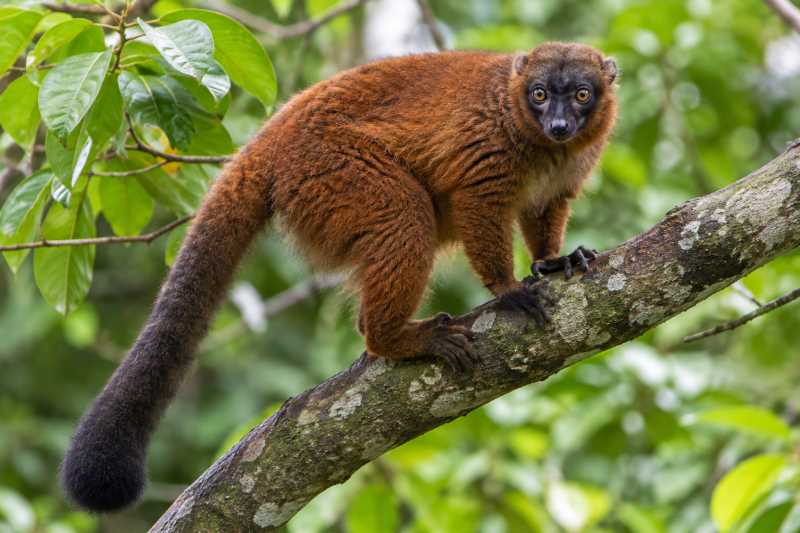
The red-bellied lemur (Eulemur rubriventer) is a fascinating mammal species native to Madagascar. Known for its distinctive reddish-brown fur and unique social behaviors, this primate is a subject of interest for researchers and nature enthusiasts alike. As a member of the Lemuridae family, the red-bellied lemur is one of the many species that make Madagascar’s biodiversity so rich and unique.
Physical Description
Red-bellied lemurs are medium-sized primates with a weight range of 2.2 to 2.3 kg and a body length of approximately 34 to 40 cm, excluding the tail, which can add another 45 to 50 cm. The species exhibits sexual dimorphism, with males and females differing in coloration and markings.
Males are distinguished by their rich chestnut-brown fur and a characteristic white patch on their muzzle. Females, on the other hand, have a more uniformly reddish-brown coat with a creamy-white belly, which gives the species its name. Both genders have striking orange eyes, which are typical of the genus Eulemur.
Range and Habitat
The red-bellied lemur is endemic to the island of Madagascar, specifically inhabiting the eastern rainforests. Their range is primarily concentrated in the areas between the Tsaratanana Massif to the north and the Andringitra Massif to the south. These lemurs thrive in primary and secondary rainforest environments, often residing in the mid to upper canopy layers.
This species is highly dependent on forest ecosystems for survival, relying on the dense foliage for food, shelter, and protection from predators. As such, the conservation of Madagascar’s rainforests is critical to the red-bellied lemur’s continued existence.
Behavior and Diet
Red-bellied lemurs are diurnal, meaning they are active during the day. They live in small family groups typically consisting of a monogamous pair and their offspring. These social units maintain territories that they mark and defend against other groups.
Their diet is primarily frugivorous, meaning they eat mainly fruits, but they are also known to consume leaves, flowers, and nectar. The seasonal availability of food sources influences their foraging behavior and movement patterns within their territory.
Communication among red-bellied lemurs is achieved through vocalizations, scent marking, and body language. These interactions are vital for maintaining group cohesion and managing social relationships.
Identification Tips (Field Recognition Cues)
When attempting to identify a red-bellied lemur in the wild, look for the following characteristics:
- Coloration: Males have a chestnut-brown coat with a white muzzle patch, while females have a more uniform reddish-brown coloration with a creamy-white belly.
- Eye Color: Both sexes have bright orange eyes.
- Size: Medium-sized with a body length of 34-40 cm and a tail length of 45-50 cm.
- Habitat: Found in the mid to upper canopy of Madagascar’s eastern rainforests.
Conservation Status (With Threats and Protections)
The red-bellied lemur is currently listed as "Vulnerable" on the IUCN Red List. The primary threats to their survival include habitat destruction due to slash-and-burn agriculture, illegal logging, and the expansion of human settlements. Additionally, hunting and capture for the pet trade pose significant risks.
Conservation efforts are underway to protect these lemurs and their habitats. Protected areas such as national parks and reserves play a crucial role in safeguarding populations, while conservation organizations work to promote sustainable practices and raise awareness about the importance of preserving Madagascar’s unique biodiversity.
Frequently Asked Questions
Why is this species unique?
The red-bellied lemur is unique due to its specific habitat requirements and social structure. Its distinct coloration and bright eyes make it easily recognizable, contributing to its role as an ambassador species for Madagascar’s rainforest conservation efforts.
What is the red-bellied lemur’s role in its ecosystem?
As a frugivore, the red-bellied lemur plays a crucial role in seed dispersal, helping maintain the health and diversity of Madagascar’s rainforest ecosystems. Their foraging activities support plant regeneration and biodiversity.
How are conservation efforts helping the red-bellied lemur?
Conservation efforts focus on habitat protection, legal frameworks to prevent illegal logging and hunting, and community education programs to promote sustainable living practices. These initiatives are vital to preserving the red-bellied lemur and its environment.
Can red-bellied lemurs be found in zoos?
Yes, some zoos worldwide have red-bellied lemurs as part of their conservation and education programs. These institutions aim to raise awareness about the species and contribute to breeding programs that support genetic diversity.
How does climate change affect red-bellied lemurs?
Climate change impacts red-bellied lemurs by altering their habitat and food availability. Changes in rainfall patterns and temperature can affect the growth of fruiting plants, thereby impacting the lemurs’ diet and survival.
Related posts