The Grey-breasted Sabrewing: A Jewel of the Tropics
The Grey-breasted Sabrewing (Campylopterus largipennis) is a captivating species of hummingbird that graces the lush tropical forests of South America. Known for its impressive size and distinctive plumage, this bird is an enthralling subject for ornithologists and bird enthusiasts alike. With its wide geographical range and adaptability to diverse habitats, the Grey-breasted Sabrewing serves as an important indicator of ecological health and biodiversity in the regions it inhabits.
Physical Characteristics
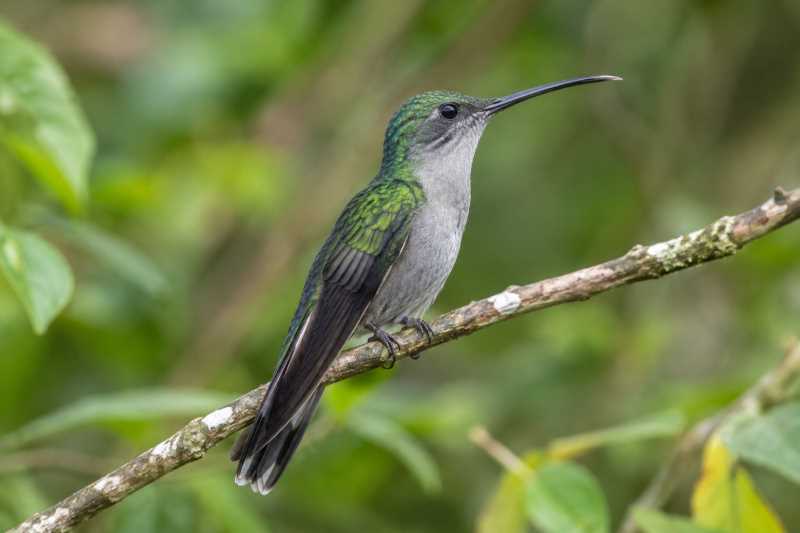
The Grey-breasted Sabrewing is a relatively large hummingbird, measuring approximately 14 to 15 centimeters in length and weighing between 8 to 12 grams. Its robust body is adorned with shimmering green feathers on the upperparts, while the underparts exhibit a subtle greyish tone, giving the bird its name. One of the most striking features of this species is its wings, which are long and slightly curved, resembling a sabre—hence the term ‘sabrewing.’ These wings enable the bird to exhibit remarkable agility and speed, characteristics essential for evading predators and competing for resources.
The male and female Grey-breasted Sabrewings are similar in appearance, although females may exhibit slightly duller coloration. Both sexes possess a straight, black bill that is ideally suited for nectar-feeding. Their eyes are dark and alert, reflecting their keen awareness of the vibrant world around them.
Habitat and Distribution
The Grey-breasted Sabrewing is primarily found in the humid lowland forests and montane regions of northern and central South America. Its range extends from eastern Venezuela through the Guianas and into Brazil, Peru, and Bolivia. These birds thrive in a variety of forested environments, including tropical rainforests, secondary growth, and forest edges. They are also occasionally spotted in gardens and plantations, demonstrating their adaptability to human-altered landscapes.
This species is non-migratory, meaning it generally remains within its home range year-round. However, local movements may occur in response to changes in food availability or environmental conditions.
Feeding Ecology
As a member of the hummingbird family, the Grey-breasted Sabrewing has evolved to specialize in nectar-feeding. It plays a critical role in the pollination of numerous tropical plant species, many of which rely on these birds for reproduction. The sabrewing’s long bill and specialized tongue allow it to access nectar from a wide range of flowering plants.
In addition to nectar, the Grey-breasted Sabrewing supplements its diet with small insects and spiders, which provide essential proteins and nutrients. These food sources are typically gleaned from foliage or captured mid-air in a behavior known as ‘hawking.’
Behavioral Traits
Grey-breasted Sabrewings are solitary creatures, often seen foraging alone or in loose association with other hummingbirds. They are known for their territorial behavior, aggressively defending their feeding and nesting sites from intruders. Males, in particular, are known to perform elaborate aerial displays to establish dominance and attract potential mates.
The breeding season of the Grey-breasted Sabrewing varies depending on the region but generally coincides with peak flowering periods. Females are responsible for nest building, using plant fibers, moss, and spider silk to construct a small cup-shaped nest. This nest is typically placed on a horizontal branch or in the fork of a tree.
Conservation Status
Currently, the Grey-breasted Sabrewing is classified as a species of ‘Least Concern’ by the International Union for Conservation of Nature (IUCN). Its wide distribution and apparent adaptability contribute to its relatively stable population numbers. However, habitat loss due to deforestation and land-use changes poses a potential threat to some populations, particularly in areas where forest cover is rapidly declining.
Conservation efforts aimed at preserving tropical forests and promoting sustainable land management practices are essential for ensuring the long-term survival of the Grey-breasted Sabrewing and the myriad of other species that share its habitat.
Conclusion
The Grey-breasted Sabrewing is a remarkable example of the beauty and complexity of tropical ecosystems. Its role as a pollinator underscores the intricate connections between species and the environment. By studying and protecting this and other hummingbird species, we gain valuable insights into the health of our planet’s biodiversity and the urgent need to preserve the natural world for future generations.
Related posts