The Roraiman Antwren: A Jewel of the Tepui Highlands
The Roraiman Antwren (Herpsilochmus roraimae) is a captivating species of bird that thrives in the unique and isolated environment of the tepui highlands of South America. Known for its distinctive vocalizations and elusive nature, this bird is a subject of interest for ornithologists and birdwatchers alike. In this article, we delve into the fascinating world of the Roraiman Antwren, exploring its habitat, behavior, conservation status, and the challenges it faces in an ever-changing environment.
Habitat and Distribution
The Roraiman Antwren is endemic to the tepui region, a series of tabletop mountains located at the intersection of Venezuela, Brazil, and Guyana. These tepuis, often referred to as "islands in the sky," provide a unique ecosystem that is home to a wide variety of endemic species. The Roraiman Antwren specifically inhabits the montane forests and shrublands that characterize these high-altitude landscapes.
The tepui region is renowned for its biodiversity, partly due to the isolation provided by the steep cliffs and plateaus. This isolation has led to a high degree of endemism, with many species, including the Roraiman Antwren, evolving unique adaptations to their specific environment. These birds are typically found at elevations ranging from 1,000 to 2,500 meters, where they occupy the dense understory of the forests.
Physical Characteristics
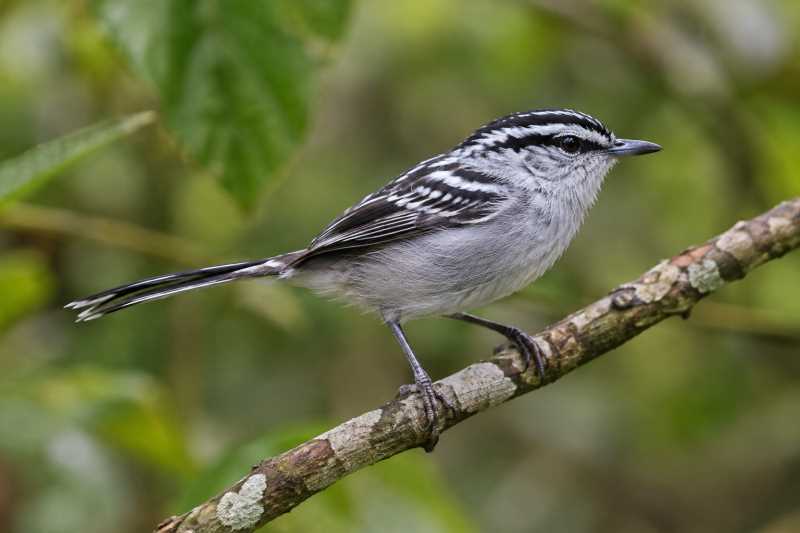
The Roraiman Antwren is a small bird, measuring approximately 11–12 cm in length. It exhibits sexual dimorphism, with males and females displaying distinct plumage patterns. Males are characterized by their striking black and white coloration, with a prominent white supercilium (eyebrow line) and black wings adorned with white spots. Females, on the other hand, have a more subdued appearance with olive-brown upperparts and a paler underbelly.
Both sexes share a slender, pointed bill adapted for gleaning insects from foliage, which forms the primary component of their diet. These birds are also known for their active foraging behavior, often seen flitting through the understory in search of small arthropods.
Behavior and Vocalizations
Roraiman Antwrens are typically observed in pairs or small family groups. They are highly territorial, with pairs defending their feeding and breeding territories from intruders. Their territories are marked by a series of vocalizations, which play a crucial role in communication between individuals and in maintaining territory boundaries.
The song of the Roraiman Antwren is a distinctive series of high-pitched notes that can be heard echoing through the montane forests. These vocalizations not only serve as a means of communication between mates but also as a deterrent to potential competitors. The complexity and variety of their calls reflect the bird’s adaptation to its acoustically challenging habitat, where dense vegetation can impede sound transmission.
Breeding and Reproduction
The breeding season of the Roraiman Antwren is closely tied to the climatic conditions of the tepui region. Nesting typically occurs during the rainy season when food availability is at its peak. Nests are constructed as small, cup-shaped structures made from twigs, leaves, and other plant materials, which are carefully camouflaged within the dense foliage.
Females lay a clutch of 2–3 eggs, which are incubated by both parents. This cooperative breeding strategy not only increases the chances of survival for the offspring but also strengthens the pair bond between mates. Once hatched, the chicks are fed a diet rich in insects, ensuring rapid growth and development.
Conservation Status and Challenges
The Roraiman Antwren is currently listed as a species of Least Concern by the International Union for Conservation of Nature (IUCN). However, its restricted range and specialized habitat make it vulnerable to environmental changes. The tepui region faces threats from climate change, which could alter the delicate balance of the montane ecosystems and impact the availability of resources for the Roraiman Antwren.
Deforestation and habitat fragmentation, although limited in the tepui highlands due to their inaccessibility, pose additional risks. As human activities encroach upon these pristine environments, the need for conservation efforts becomes increasingly important. Protecting the tepui region through the establishment of reserves and promoting sustainable land-use practices are essential steps in ensuring the survival of the Roraiman Antwren and other endemic species.
Conclusion
The Roraiman Antwren stands as a testament to the incredible biodiversity of the tepui highlands. Its existence highlights the importance of conserving these unique ecosystems and the species that call them home. By understanding the ecology and behavior of the Roraiman Antwren, we can better appreciate the intricate web of life that thrives in these "islands in the sky" and work towards preserving them for future generations.
References
- Hilty, S. L. (2003). Birds of Venezuela. Princeton University Press.
- Restall, R., Rodrigues, M., & McMullan, M. (2006). Birds of Northern South America: An Identification Guide. Yale University Press.
- BirdLife International. (2021). Herpsilochmus roraimae. The IUCN Red List of Threatened Species 2021.
Acknowledgments
We extend our gratitude to the researchers and conservationists who continue to study and protect the remarkable biodiversity of the tepui highlands.
Related posts