Socotra Sunbird: Jewel of the Arabian Skies
Nestled amidst the Arabian Sea, the Socotra Archipelago is a biodiversity hotspot, home to a plethora of unique species. Among its many natural wonders, the Socotra Sunbird (Chalcomitra balfouri) stands out as a vibrant symbol of the island’s ecological richness. This article delves into the fascinating world of the Socotra Sunbird, exploring its habitat, behavior, and conservation status.
A Unique Habitat
The Socotra Sunbird is endemic to the Socotra Archipelago, a UNESCO World Heritage site. The archipelago comprises four islands, with Socotra being the largest and most biologically diverse. The island’s isolation has resulted in a high level of endemism, making it a living laboratory of evolution. The Socotra Sunbird thrives in this unique environment, primarily inhabiting the dry scrublands and semi-desert regions, where it finds abundant floral resources.
The landscape of Socotra is characterized by a striking mix of rugged mountains, limestone plateaus, and coastal plains. This diversity in terrain supports a wide range of flora, providing ample feeding opportunities for the sunbird. The island’s endemic plants, such as the iconic Dragon’s Blood tree and the Socotra Desert Rose, offer nectar, which forms the primary diet of the Socotra Sunbird.
Physical Characteristics
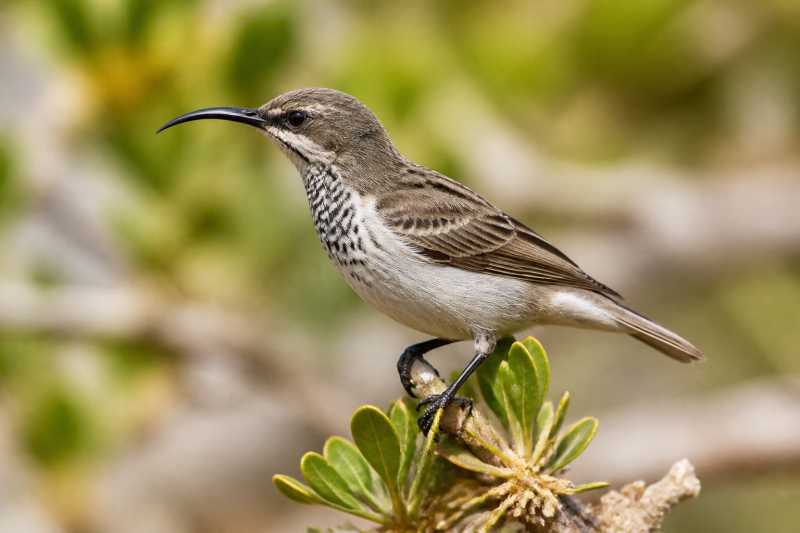
The Socotra Sunbird is a small, agile bird, distinguished by its iridescent plumage which shimmers in the sunlight. Males are particularly striking, with metallic green feathers on their head and back, contrasting with a bright chestnut breast and a black belly. Females, while less flamboyant, possess a subtle beauty with their olive-green upperparts and pale underparts.
Both sexes have a slender, curved bill adapted for nectar feeding, as well as short, rounded wings that facilitate swift, agile flight through the island’s varied terrain. Their diminutive size, typically around 10-12 centimeters in length, belies their energetic and dynamic nature.
Behavioral Traits
Socotra Sunbirds are primarily nectarivorous, relying on the rich floral diversity of Socotra for sustenance. However, their diet is not strictly limited to nectar. They are also known to consume small insects and spiders, providing them with essential proteins. This opportunistic feeding behavior is vital for their survival, particularly during the dry season when nectar sources may become scarce.
These sunbirds are highly territorial, with males often seen vigorously defending their feeding territories from intruders. Their vocalizations, a series of high-pitched calls, serve both as a deterrent to rivals and as a means of attracting potential mates.
The breeding season for the Socotra Sunbird coincides with the periods of maximum floral abundance, ensuring that there is ample food available for their young. Nests are typically constructed in shrubs or low trees, intricately woven from plant fibers and camouflaged with lichen and moss to evade predators.
Conservation Status
While the Socotra Sunbird currently does not face any immediate threats, its restricted range makes it susceptible to environmental changes. The primary conservation concern is habitat degradation, driven by human activities such as overgrazing by livestock, unsustainable tourism, and infrastructure development.
Climate change poses an additional threat, potentially altering the delicate balance of Socotra’s ecosystem. Changes in rainfall patterns could impact the availability of nectar sources, directly affecting the sunbird’s food supply and reproductive success.
Conservation efforts on Socotra focus on sustainable development and habitat preservation. The island’s designation as a UNESCO World Heritage site provides a framework for balancing human needs with ecological preservation. Community-based conservation initiatives aim to involve local populations in the stewardship of their unique natural heritage, promoting practices that safeguard both biodiversity and livelihoods.
Conclusion
The Socotra Sunbird is not merely a biological marvel but also an emblem of the island’s ecological uniqueness. Its shimmering presence is a testament to the evolutionary wonders fostered by Socotra’s isolation. However, the sunbird’s continued survival hinges on the careful management of the island’s natural resources and the proactive engagement of local communities in conservation efforts.
As we celebrate the Socotra Sunbird’s role in the tapestry of life on this extraordinary island, we are reminded of the delicate balance between nature and human activity. Protecting this jewel of the Arabian skies is not just an act of conservation, but a commitment to preserving the natural legacy of Socotra for future generations.
Related posts