The Brown Rock Chat: Nature’s Unassuming Songster
The Brown Rock Chat (Oenanthe fusca) is a relatively obscure bird, yet it holds its unique place in the avian world. Found predominantly in the Indian subcontinent, this small passerine bird is a member of the Muscicapidae family, the Old World flycatchers. Despite its unobtrusive appearance, the Brown Rock Chat captivates bird enthusiasts and ornithologists with its charming behavior and adaptability to diverse environments.
Description and Identification
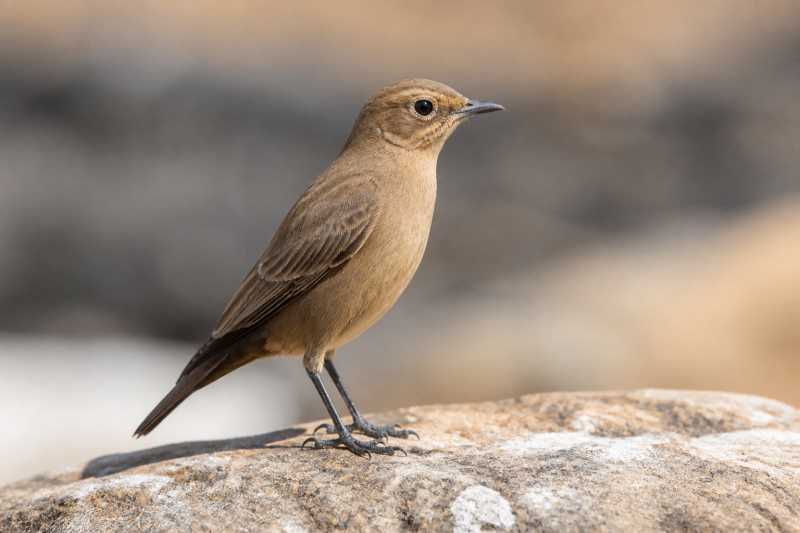
The Brown Rock Chat is a modestly sized bird, measuring around 17 centimeters in length. Its plumage is predominantly brown, which serves as excellent camouflage against the rocky terrains it often inhabits. The bird’s underparts are a lighter shade of brown, while its tail is a darker hue, tipped with white. Its dark eyes stand out in contrast to its overall brown coloration, giving it a distinct appearance that aids in identification.
One of the defining characteristics of the Brown Rock Chat is its lack of sexual dimorphism; males and females look remarkably alike, which is relatively uncommon in the avian world. Both sexes share the same plumage, making them difficult to differentiate. The bird’s song is a melodious series of notes, often described as a cheerful warble, that adds a vibrant soundtrack to its rocky habitat.
Habitat and Distribution
This species is highly adaptable, thriving in a range of environments, from urban areas to rural landscapes. However, it shows a marked preference for rocky habitats, including cliffs, boulders, and even man-made structures such as buildings and ruins. Its adaptability to urban environments is particularly noteworthy, where it often nests in nooks and crannies of old buildings or under the eaves of houses.
Geographically, the Brown Rock Chat is widely distributed across India, Pakistan, and Nepal. Its range extends from the Himalayan foothills to the southern Indian peninsula. This wide distribution and its adaptability to various habitats make the Brown Rock Chat a common sight across its range, although it is often overlooked due to its subtle appearance.
Behavior and Diet
The Brown Rock Chat exhibits a range of interesting behaviors, especially during the breeding season. It is known for its territorial nature, with males often engaging in aerial displays and singing to assert dominance and attract mates. These displays are not only visual spectacles but also auditory treats, as the male’s song is both a declaration of territory and an invitation to potential mates.
In terms of diet, the Brown Rock Chat is primarily insectivorous. It feeds on a variety of insects, which it catches through short flights from a perch or by foraging on the ground. Its diet may also include some seeds and berries, particularly in urban areas where its food sources might be more varied.
Breeding and Nesting
The breeding season of the Brown Rock Chat typically spans from March to July. During this period, the birds become particularly active and vocal. Nesting sites are usually located in rock crevices, although urban populations may choose ledges or niches in buildings.
The nest itself is a simple structure, constructed with twigs, grass, and feathers. The female lays a clutch of 2 to 4 eggs, which are incubated for about two weeks. Both parents are involved in feeding the chicks, which fledge after approximately another two weeks. The shared parental responsibilities highlight the species’ cooperative nature, ensuring higher survival rates for the offspring.
Conservation Status and Challenges
The Brown Rock Chat is currently classified as ‘Least Concern’ by the International Union for Conservation of Nature (IUCN). This classification is largely due to its wide distribution and stable population trends. However, like many avian species, it faces challenges from habitat destruction and urban expansion.
Despite its adaptability, the loss of natural rocky habitats due to mining, quarrying, and construction poses a threat to certain populations. Moreover, increased urbanization leads to competition for nesting sites with other birds, as well as exposure to pollutants and human disturbances.
Conclusion
The Brown Rock Chat may not be the most colorful or flamboyant of birds, but its subtle charm and adaptability make it an integral part of the ecosystems it inhabits. Its ability to thrive in both natural and urban environments speaks volumes about its resilience and adaptability. For bird watchers and naturalists, the Brown Rock Chat offers a delightful glimpse into the avian world, where understated beauty and melodic song blend seamlessly into the landscape.
As urbanization continues to encroach upon natural habitats, understanding and appreciating the Brown Rock Chat’s role in our ecological tapestry becomes ever more important. Preserving its habitat ensures that this unassuming songster continues to thrive, enriching our environments with its presence and song.
Related posts