Hairy-nosed Free-tailed Bat (Setirostris eleryi)
Introduction
The Hairy-nosed Free-tailed Bat (Setirostris eleryi), a unique member of the Molossidae family, is a fascinating species of bat found in Australia. Named after its characteristic hairy nose, this bat has drawn the attention of researchers and conservationists alike due to its distinctive features and ecological significance. Despite its intriguing nature, the Hairy-nosed Free-tailed Bat remains relatively understudied, making it a subject of interest for ongoing scientific exploration.
Physical Description
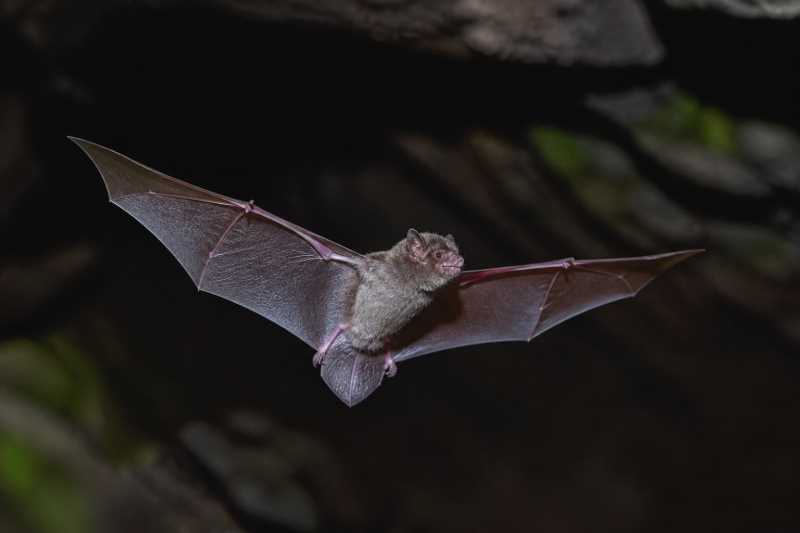
The Hairy-nosed Free-tailed Bat is a small-sized bat, with an average wingspan of 260 to 280 millimeters and a weight ranging from 6 to 12 grams. Its fur is typically a dark brown or gray color, providing effective camouflage against the backdrop of its natural habitat. One of the most distinctive features of this bat is its short, broad muzzle covered with fine hairs, which distinguishes it from other free-tailed bat species.
The species also possesses long, narrow wings adapted for fast and agile flight. These wings enable the bat to maneuver skillfully through its environment, capturing prey with precision. The tail, which extends beyond the membrane, is another characteristic feature, giving the species its name.
Range and Habitat
The Hairy-nosed Free-tailed Bat is endemic to Australia, with its range primarily confined to the arid and semi-arid regions of the country. It is predominantly found in the Northern Territory, South Australia, and Western Australia. The species favors habitats such as dry woodlands, open forests, and grasslands, where it can roost in tree hollows and crevices.
The bat’s habitat preferences are influenced by the availability of suitable roosting sites and foraging grounds. It often inhabits areas with abundant insect populations, which are crucial to its diet and overall survival.
Behavior and Diet
As a nocturnal creature, the Hairy-nosed Free-tailed Bat is most active during the night, when it engages in foraging activities. Its diet primarily consists of insects, including moths, beetles, and other flying insects. The bat uses echolocation to detect and capture prey, emitting high-frequency sounds that bounce off objects and return as echoes, helping it navigate and hunt in the dark.
Socially, these bats are known to form small colonies, often comprising a few dozen individuals. Such colonies provide warmth and protection, essential for survival in the sometimes harsh Australian climate. Despite their social nature, individuals may forage independently, taking advantage of the wide range of insect prey available.
Identification Tips (Field Recognition Cues)
Identifying the Hairy-nosed Free-tailed Bat in the field can be challenging due to its nocturnal habits and small size. However, there are several key identification cues:
- Nose: The presence of fine hairs on the muzzle is a distinguishing feature.
- Tail: Look for the tail protruding beyond the wing membrane.
- Flight Pattern: Observe their fast, agile flight, often involving quick turns and changes in direction.
- Vocalizations: Listen for their high-pitched echolocation calls, which are often inaudible to the human ear without specialized equipment.
- Habitat: Focus on searching in regions known for dry woodlands and open forests.
Conservation Status (with Threats and Protections)
The Hairy-nosed Free-tailed Bat is currently classified as "Near Threatened" on the IUCN Red List. The primary threats to the species include habitat loss due to agricultural expansion, land clearing, and mining activities. These activities reduce the availability of suitable roosting and foraging sites, directly impacting the bat population.
Conservation efforts are focused on habitat protection and management. Protected areas and national parks within the bat’s range provide some level of security, but ongoing monitoring and research are crucial to ensure the species’ survival. Engaging local communities in conservation initiatives also plays a pivotal role in preserving the bat’s habitat.
Frequently Asked Questions
Q1: What is the lifespan of a Hairy-nosed Free-tailed Bat?
The lifespan of a Hairy-nosed Free-tailed Bat in the wild is not well-documented, but similar species in the Molossidae family can live up to 10 years or more under favorable conditions.
Q2: How does the Hairy-nosed Free-tailed Bat use echolocation?
The bat emits high-frequency sounds that bounce off objects and return as echoes, allowing it to navigate and locate prey in complete darkness.
Q3: Are Hairy-nosed Free-tailed Bats solitary or social?
These bats are social creatures, typically forming small colonies that offer warmth and protection, although they may forage independently.
Q4: What conservation measures are in place to protect the Hairy-nosed Free-tailed Bat?
Conservation measures include habitat protection, management of protected areas, and community engagement to preserve the bat’s natural environment.
Q5: What are the main threats to the Hairy-nosed Free-tailed Bat?
The main threats include habitat loss due to agricultural expansion, land clearing, and mining activities, which reduce roosting and foraging sites.
Related posts