The Enigmatic Hairy-breasted Barbet: A Comprehensive Exploration
The avian world is teeming with diversity, but few species exhibit the unique characteristics and charming eccentricities of the Hairy-breasted Barbet, scientifically known as Tricholaema hirsuta. This intriguing bird captivates ornithologists and bird enthusiasts alike with its distinctive features and behaviors. In this article, we delve deep into the world of the Hairy-breasted Barbet, exploring its taxonomy, habitat, behavior, and conservation status.
Taxonomy and Classification
Belonging to the family Lybiidae, the Hairy-breasted Barbet is a small to medium-sized bird predominantly found in the tropical regions of Africa. It shares the Lybiidae family with other barbets, which are known for their stout bodies, large heads, and bristle-fringed bills. The genus Tricholaema, to which the Hairy-breasted Barbet belongs, encompasses several other species, but T. hirsuta is particularly noted for its distinct plumage and vocalizations.
The species name ‘hirsuta’ aptly describes the bird’s appearance, referring to its hairy-like feather texture around the breast area. This characteristic feature not only aids in its identification but also contributes to its common name.
Physical Characteristics
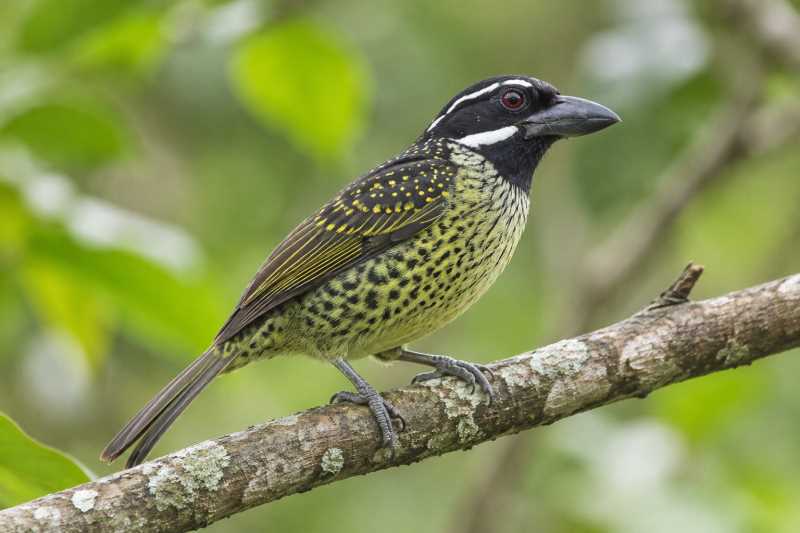
The Hairy-breasted Barbet is a visually striking bird, measuring approximately 17-20 centimeters in length. It is adorned with a colorful plumage that can vary slightly depending on the geographic location of its population. Generally, the bird boasts a combination of olive-green and yellow on its upperparts, with a more subdued yellow or white underbelly. The breast area, which gives the bird its name, features a unique hairy texture that sets it apart from other barbets.
One of the most remarkable features of T. hirsuta is its bill. The bird possesses a robust, sharply hooked bill that is well-suited for its diet and foraging habits. This tool is essential for excavating nests in tree trunks and for consuming a variety of fruits and insects.
Habitat and Distribution
The Hairy-breasted Barbet is native to sub-Saharan Africa, with a distribution range that spans several countries including Uganda, Tanzania, Kenya, and the Democratic Republic of the Congo. It inhabits a variety of forested environments, from lowland rainforests to montane forests, and can occasionally be found in savanna woodlands.
This adaptability to different habitats is a testament to the bird’s resilience and resourcefulness. However, the fragmentation and destruction of forests pose significant challenges to its survival, limiting its available habitat and food sources.
Feeding and Foraging Behavior
The diet of the Hairy-breasted Barbet is predominantly frugivorous, consisting mainly of fruit and berries. This preference for fruit is facilitated by its strong bill, which allows it to break into tough-skinned fruits that other birds might find difficult to access. In addition to fruit, T. hirsuta also consumes a variety of insects, providing a balanced diet rich in proteins and carbohydrates.
The foraging behavior of the Hairy-breasted Barbet is an interesting spectacle. It often forages in pairs or small groups, moving methodically from branch to branch in search of ripe fruit or potential insect prey. Their role as seed dispersers is crucial for the maintenance of their habitat, as they contribute to the regeneration of forest ecosystems.
Breeding and Nesting
The breeding season of the Hairy-breasted Barbet varies across its range, often coinciding with the availability of abundant food sources. Nesting usually occurs in tree cavities, which the birds either excavate themselves or repurpose from existing holes made by other species.
Both male and female barbets participate in the excavation of the nest, showcasing a cooperative breeding strategy. The female typically lays between 2-4 eggs, which are incubated by both parents. This shared parental responsibility extends to feeding and caring for the chicks once they hatch.
The nesting period is a time of heightened activity and vigilance, as both parents take turns guarding the nest against potential predators and competitors.
Vocalizations and Communication
Like many barbets, T. hirsuta is a highly vocal species, using a range of calls and songs to communicate. These vocalizations serve various purposes, including territory establishment, mate attraction, and signaling alarm. The calls of the Hairy-breasted Barbet are often described as loud and repetitive, with a distinctive rhythmic pattern that can be heard echoing through the forest.
In addition to vocal communication, the species also engages in visual displays, such as wing flapping and head bobbing, further enhancing their social interactions.
Conservation Status and Threats
The conservation status of the Hairy-breasted Barbet is currently listed as Least Concern by the International Union for Conservation of Nature (IUCN). However, this does not mean the species is free from threats. Habitat loss due to deforestation and land conversion for agriculture remains the most significant challenge for the species. Climate change also poses a potential threat, as it may alter the distribution of suitable habitats and food sources.
Conservation efforts aimed at preserving tropical forests and promoting sustainable land use practices are essential for the long-term survival of the Hairy-breasted Barbet. Additionally, raising awareness about the ecological importance of barbets as seed dispersers can help garner support for their conservation.
Conclusion
The Hairy-breasted Barbet is a fascinating bird that embodies the vibrant diversity of the tropical ecosystems it inhabits. Its distinctive appearance, engaging behaviors, and ecological role make it a species worthy of appreciation and protection. By understanding and addressing the challenges it faces, we can ensure that this remarkable bird continues to thrive in the wild, enriching the natural tapestry of our world.
Whether you are an avid birdwatcher or a casual nature enthusiast, the Hairy-breasted Barbet invites us to explore and cherish the rich avian life that flourishes in the heart of Africa’s forests. As we strive to protect these natural wonders, we also safeguard the intricate balance of life that sustains us all.
Related posts