Introduction
The Servaline Genet (Genetta servalina) is a fascinating yet elusive mammal native to Central Africa. Known for its striking coat pattern and elusive nature, this small carnivore is a member of the Viverridae family, which includes civets and mongoose-like animals. Despite its enchanting appearance, the Servaline Genet remains relatively understudied compared to its more famous relatives, making it a subject of intrigue for wildlife enthusiasts and researchers alike. This article delves into the unique characteristics, habitat, and behaviors of the Servaline Genet, providing comprehensive insights into its life and the challenges it faces in the wild.
Physical Description
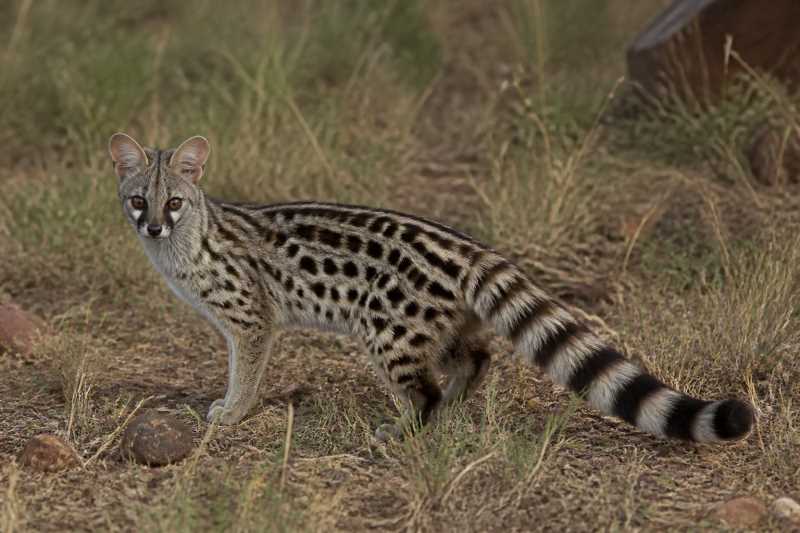
The Servaline Genet is a small, slender-bodied mammal characterized by its spotted coat and elongated body. This species has a distinctive appearance, with a body length ranging from 40 to 55 centimeters and a tail that can measure up to 50 centimeters, making it almost equal to its body length. The coat is pale yellow to reddish-brown, adorned with a series of small, dark spots that form a linear pattern along its sides. These markings provide excellent camouflage in their natural habitat.
The genet’s face is marked by a sharp, pointed muzzle and large, sensitive ears that aid in detecting prey and predators. Its eyes are large and round, adapted for nocturnal vision, allowing it to navigate and hunt effectively in low-light conditions. This species has retractable claws, similar to those of a cat, which are used for climbing and capturing prey.
Range and Habitat
Servaline Genets are predominantly found in the dense forests and savannahs of Central Africa, including countries such as Cameroon, Gabon, and the Democratic Republic of the Congo. Their distribution is closely linked to the availability of forested areas and dense vegetation, which provide both cover and hunting grounds.
These genets are highly adaptable and can thrive in various habitats, from lowland rainforests to montane regions. They are often found near water sources, such as rivers and streams, where prey is abundant. Despite their adaptability, habitat destruction due to logging and agricultural expansion poses significant threats to their natural environments.
Behavior and Diet
The Servaline Genet is primarily nocturnal, spending its days resting in tree hollows or dense foliage and becoming active at night. This nocturnal lifestyle helps it avoid larger predators and human disturbances. It is a solitary animal, with individuals coming together only for mating purposes.
As opportunistic feeders, Servaline Genets have a diverse diet that includes small mammals, birds, reptiles, insects, and even fruit. They are skilled hunters, relying on their keen senses and agility to ambush prey. Their flexible diet allows them to adapt to seasonal changes in prey availability.
Identification Tips (Field Recognition Cues)
Recognizing a Servaline Genet in the wild can be challenging due to its elusive nature and nocturnal habits. However, certain cues can aid in identification:
- Distinctive Coat: Look for the characteristic spotted pattern on a pale yellow to reddish-brown coat.
- Tail Length: Note the long, bushy tail with black rings and a black tip, which is almost equal to the body length.
- Nocturnal Activity: Sightings are more likely at night, especially in areas with dense vegetation.
- Climbing Habits: Observe tree trunks and branches for signs of climbing, such as scratch marks.
- Vocalizations: Listen for their distinctive calls, which include growls, hisses, and purrs.
Conservation Status (With Threats and Protections)
The Servaline Genet is currently listed as Least Concern by the International Union for Conservation of Nature (IUCN). However, this status does not imply immunity from threats. Habitat loss due to deforestation and agricultural development is a significant concern, as it reduces the available habitat and resources for the species.
Additionally, hunting and trapping for the exotic pet trade pose risks to local populations. While the Servaline Genet is not a primary target, incidental capture in traps set for other animals can affect its numbers.
Efforts to conserve the Servaline Genet focus on habitat protection and sustainable land-use practices. Establishing protected areas and promoting community-based conservation initiatives are crucial to ensuring the species’ long-term survival.
Frequently Asked Questions
1. What time of day are Servaline Genets most active?
Servaline Genets are primarily nocturnal creatures, meaning they are most active during the night. They spend the daylight hours resting in secure locations such as tree hollows or dense underbrush, emerging after sunset to hunt and explore their territory.
2. How can you differentiate a Servaline Genet from other genets?
The primary distinguishing feature of the Servaline Genet is its unique coat pattern of small, evenly spaced spots on a pale yellow to reddish-brown background. Additionally, its long bushy tail with black rings and tip, along with its specific range in Central Africa, helps differentiate it from other genet species.
3. Are Servaline Genets endangered?
Currently, the Servaline Genet is classified as Least Concern by the IUCN. However, it faces threats from habitat destruction and hunting pressures. Conservation efforts focus on habitat preservation and reducing human-wildlife conflict to prevent future declines.
4. What do Servaline Genets eat?
The diet of a Servaline Genet is diverse and includes small mammals, birds, insects, reptiles, and fruit. They are opportunistic feeders, adapting their diet based on seasonal prey availability.
5. Can Servaline Genets be kept as pets?
While some people may attempt to keep Servaline Genets as exotic pets, it is generally discouraged due to their specific habitat and dietary needs, as well as legal restrictions in many areas. Additionally, capturing wild genets for the pet trade can negatively impact local populations.
Related posts