Introduction
Ride’s Free-tailed Bat, scientifically known as Ozimops ridei, is a fascinating species of bat that belongs to the family Molossidae. This unique species is named after the renowned Australian mammalogist, Dr. William Ride, who made significant contributions to the study of Australian mammals. As a member of the free-tailed bat family, Ozimops ridei is known for its distinctive tail that extends beyond the edge of its tail membrane. This article delves deep into the various aspects of Ride’s Free-tailed Bat, from its physical characteristics and habitat preferences to its behavior and conservation status.
Physical Description
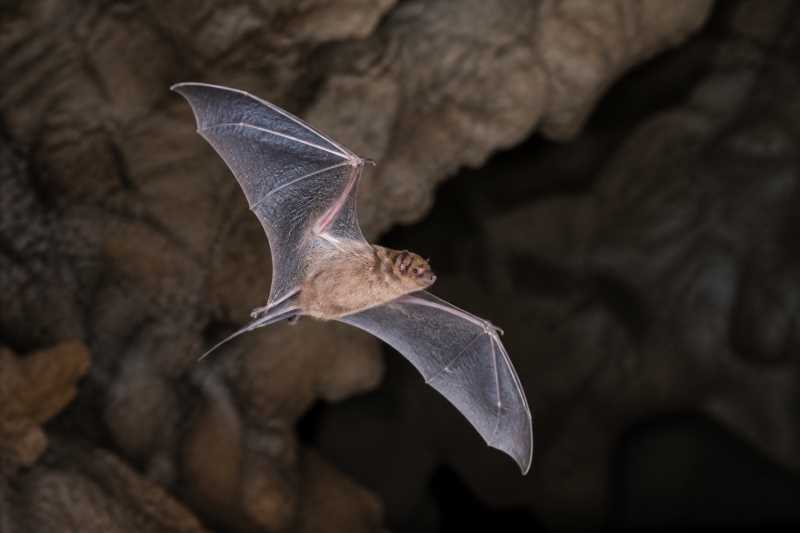
Ride’s Free-tailed Bat is a small to medium-sized bat characterized by a robust body and a distinctive tail that protrudes beyond the tail membrane, a trait common among members of the Molossidae family. The species exhibits sexual dimorphism, with males generally being slightly larger than females. The bat’s fur is typically a dark brown or grayish color, providing effective camouflage against the bark of trees and other natural surfaces in its environment.
The bat’s face is adorned with a relatively short muzzle and large, rounded ears that are separated at the base, unlike some other bat species where the ears are connected. The ears are equipped with a tragus, a small pointed flap of skin, which aids in echolocation by helping to direct sound waves into the ear canal. The eyes of Ride’s Free-tailed Bat are small and adapted for low-light conditions, as the species is nocturnal.
Range and Habitat
Ride’s Free-tailed Bat is predominantly found in Australia, with its range extending across various states including Queensland, New South Wales, Victoria, and South Australia. The species is highly adaptable and occupies a variety of habitats ranging from woodlands and forests to urban areas where it roosts in buildings and other man-made structures.
The bat is often found in areas where there are abundant resources such as insects, its primary food source. Ride’s Free-tailed Bat prefers roosting in tree hollows, under loose bark, and in crevices within rocky outcrops. In urban settings, it has been known to roost in the eaves of buildings and in roof spaces.
Behavior and Diet
As a nocturnal species, Ride’s Free-tailed Bat is primarily active during the night when it emerges from its roost to forage for food. The bat’s diet consists mainly of insects, which it captures in flight using its agile and fast-flying capabilities. It employs echolocation to detect and track prey, emitting high-frequency sound waves that bounce off objects and return to the bat’s sensitive ears.
During the day, the bat rests in its roost, conserving energy for the night’s activities. Ride’s Free-tailed Bat is known to be a social species, often roosting in colonies that can range from a few individuals to several hundred. This social structure provides benefits such as increased protection from predators and shared warmth during colder nights.
Identification Tips
Field identification of Ride’s Free-tailed Bat can be challenging due to its small size and nocturnal habits. However, there are several key features that can aid in its recognition:
- Tail Structure: Look for the characteristic free tail that extends beyond the tail membrane, which is a hallmark of the Molossidae family.
- Ear Shape: The large, rounded ears with a separated base are distinctive.
- Flight Pattern: Observe the bat’s flight, which is typically fast and direct, differing from the fluttery flight of many other bat species.
- Vocalizations: Listen for the bat’s echolocation calls, which can be detected using a bat detector tuned to high frequencies.
Conservation Status
Ride’s Free-tailed Bat is currently listed as a species of Least Concern by the International Union for Conservation of Nature (IUCN). However, like many bat species, it faces threats from habitat destruction, pesticide use, and human disturbance.
Habitat destruction due to urban development and land clearing for agriculture poses a significant threat to the species, as it reduces the availability of suitable roosting and foraging sites. Additionally, the use of pesticides can have a detrimental impact on the bat’s food supply by reducing insect populations.
Conservation efforts for Ride’s Free-tailed Bat include habitat protection and the creation of bat-friendly environments in urban areas. Public education campaigns aimed at increasing awareness of the ecological importance of bats and promoting coexistence are also crucial for the species’ long-term survival.
Frequently Asked Questions
What is the scientific name of Ride’s Free-tailed Bat?
The scientific name of Ride’s Free-tailed Bat is Ozimops ridei. It belongs to the family Molossidae, known for their free-tailed characteristic.
Where can Ride’s Free-tailed Bat be found?
Ride’s Free-tailed Bat is predominantly found in various parts of Australia, including Queensland, New South Wales, Victoria, and South Australia, occupying diverse habitats from forests to urban areas.
How does Ride’s Free-tailed Bat hunt its prey?
Ride’s Free-tailed Bat is an insectivore, primarily hunting insects in flight using echolocation. It emits high-frequency sound waves that bounce off prey, allowing it to detect and capture insects efficiently.
What threats does Ride’s Free-tailed Bat face?
The primary threats to Ride’s Free-tailed Bat include habitat destruction due to urban development, pesticide use affecting its food supply, and human disturbances that disrupt its roosting sites.
How can I help in the conservation of Ride’s Free-tailed Bat?
You can contribute to the conservation of Ride’s Free-tailed Bat by supporting habitat protection initiatives, reducing pesticide use, and participating in public awareness campaigns about the ecological importance of bats.
Related posts