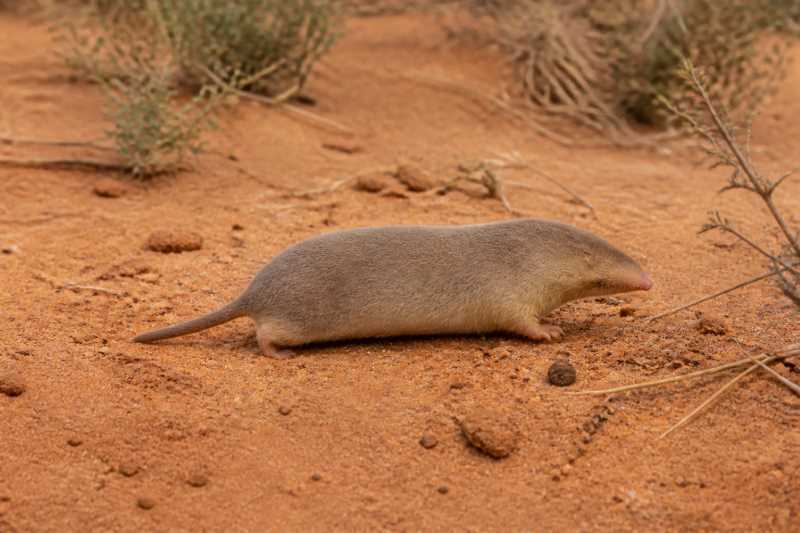
Central Desert Marsupial Mole (Notoryctes typhlops)
Introduction
The Central Desert Marsupial Mole, scientifically known as Notoryctes typhlops, is an intriguing and elusive creature of Australia’s arid landscapes. Despite its name, this marsupial is neither a true mole nor a rodent but belongs to a unique order known as Notoryctemorphia. With its adaptation to a subterranean lifestyle, the marsupial mole has captivated the interest of biologists and nature enthusiasts alike. This article delves into the fascinating world of the Central Desert Marsupial Mole, exploring its physical characteristics, habitat preferences, behavior, diet, and conservation challenges.
Physical Description
The Central Desert Marsupial Mole is a small, burrowing mammal, typically measuring between 12 to 16 centimeters in length and weighing approximately 40 to 70 grams. Its body is perfectly adapted to life underground. Covered in a velvety, golden-brown fur, the mole is camouflaged against the desert sands. Its skin is loose, allowing it to twist and maneuver easily in tight spaces.
One of the most distinctive features of the marsupial mole is its spade-like forelimbs, which are equipped with long, powerful claws. These adaptations enable it to dig effortlessly through the soil in search of prey and shelter. Unlike most mammals, the marsupial mole lacks external ears, reducing resistance as it moves through sand. Its eyes are vestigial and covered by skin, as vision is not necessary in its dark, subterranean environment.
Range and Habitat
The Central Desert Marsupial Mole is endemic to Australia, primarily inhabiting the sandy deserts of the Northern Territory, Western Australia, and South Australia. This species thrives in the vast, arid regions characterized by loose, sandy soils, which are ideal for tunneling.
These marsupials are fossorial, spending the majority of their lives underground. They create complex burrow systems that provide shelter from predators and extreme temperatures. Rarely seen at the surface, these moles emerge only occasionally, usually following rain when the soil is easier to navigate.
Behavior and Diet
The Central Desert Marsupial Mole is an enigmatic creature, and much of its behavior remains shrouded in mystery due to its secretive lifestyle. Known to be solitary, these marsupials typically interact only during the breeding season.
Their diet consists mainly of small invertebrates, including termites, ants, and beetle larvae, which they locate through keen senses of touch and smell. By burrowing through the soil, the marsupial mole encounters its prey, capturing it with its sharp claws and consuming it underground.
Identification Tips
Spotting a Central Desert Marsupial Mole in its natural habitat can be a challenge due to its reclusive nature and subterranean lifestyle. However, there are a few field recognition cues that may help:
- Track Marks: Look for distinctive, shallow track marks on the sand, indicating recent burrowing activity.
- Mound Formations: Note any small mounds of sand that may suggest recent tunneling beneath the surface.
- Surface Disturbance: After rains, check for disturbed areas of soil, which might reveal recent mole activity.
- Local Knowledge: Engage with indigenous communities and local trackers who might have knowledge of mole sightings and behaviors.
Conservation Status
The conservation status of the Central Desert Marsupial Mole is currently listed as "Data Deficient" by the IUCN Red List. This classification highlights the lack of comprehensive data on population size and trends. However, the species faces several threats that could impact its survival.
Threats
- Habitat Degradation: Mining activities, land development, and agricultural expansion have led to habitat loss and fragmentation.
- Predation: Introduced species such as feral cats and foxes pose a significant threat by preying on moles when they surface.
- Climate Change: Alterations in rainfall patterns and increased desertification affect the availability of food and suitable burrowing conditions.
Protections
Efforts to protect the Central Desert Marsupial Mole include habitat conservation initiatives and research to better understand its ecological needs. Collaborations with indigenous communities are crucial for monitoring and conserving this species.
Frequently Asked Questions
What are the main adaptations of the Central Desert Marsupial Mole?
The Central Desert Marsupial Mole has several adaptations for underground life, including spade-like forelimbs for digging, vestigial eyes, and a streamlined body covered in loose, velvety fur to move easily through sand.
How does the Central Desert Marsupial Mole find food?
The mole uses its keen sense of touch and smell to locate invertebrates like termites and ants while tunneling through the soil. Its specialized claws enable it to capture and consume prey efficiently.
Why is the Central Desert Marsupial Mole difficult to study?
The mole’s subterranean lifestyle, elusive nature, and preference for remote desert habitats make it challenging for researchers to observe and collect data, resulting in a "Data Deficient" status from conservation assessments.
What conservation efforts are in place for the Central Desert Marsupial Mole?
Conservation efforts focus on habitat protection, reducing threats from invasive species, and collaborating with indigenous communities to enhance monitoring and research on this elusive species.
Are Central Desert Marsupial Moles social animals?
No, Central Desert Marsupial Moles are solitary creatures that primarily interact during the breeding season. They spend most of their lives independently, navigating their underground burrow systems.
Related posts