Introduction
Leschenault’s Rousette, scientifically named Rousettus leschenaultii, is a fascinating member of the Pteropodidae family, commonly known as megabats or fruit bats. This species is widely recognized for its essential role in pollination and seed dispersal, which significantly contributes to maintaining healthy ecosystems. Found across diverse regions in Asia, Leschenault’s Rousette is a subject of interest for both researchers and wildlife enthusiasts due to its unique behavior and adaptability. This article delves deep into its characteristics, habitat preferences, dietary habits, and conservation status.
Physical Description
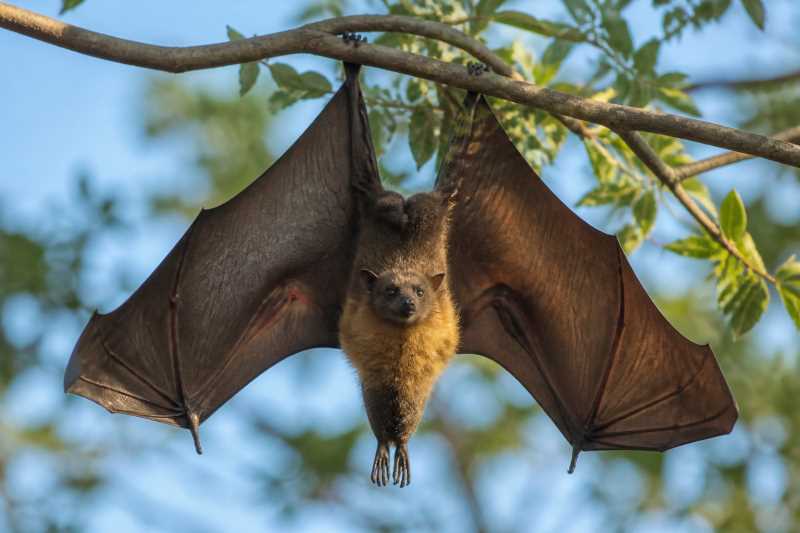
Leschenault’s Rousette exhibits a robust body covered in thick fur that varies in color from grayish-brown to a more reddish hue, depending on age and location. Its wings are long and narrow, with a wingspan ranging from 60 to 70 centimeters, which facilitates efficient flight over long distances in search of food. The face of this species is fox-like, with large, forward-facing eyes adapted for enhanced night vision, a feature characteristic of the fruit bat family. Remarkably, Leschenault’s Rousette possesses a simple form of echolocation, unlike most other fruit bats, which helps it navigate and locate food in the dark. Adults typically weigh between 70 to 120 grams, and they exhibit sexual dimorphism, with males generally being larger and possessing a more pronounced throat sac used in communication and mating displays.
Range and Habitat
The geographical range of Leschenault’s Rousette extends across South and Southeast Asia, covering countries such as India, Sri Lanka, Myanmar, Thailand, and parts of Indonesia. This species thrives in a variety of habitats, including tropical and subtropical forests, mangroves, and even urban areas where fruit trees are abundant. Leschenault’s Rousette is highly adaptable and can often be found roosting in caves, old buildings, and occasionally in trees. These bats prefer environments that offer ample food supply and suitable roosting sites, making them a common sight in areas where human agricultural activities intersect with natural landscapes.
Behavior and Diet
Leschenault’s Rousette is primarily nocturnal, emerging at dusk to embark on foraging expeditions. They are frugivorous, with a diet predominantly consisting of fruits such as figs, bananas, and mangoes. Occasionally, they supplement their diet with flowers and nectar, playing a vital role in pollination. The social structure of Leschenault’s Rousette is complex; they form large colonies that can number in the thousands, which provides safety in numbers from predators. Communication within these colonies is facilitated through a variety of vocalizations and scent markings. During the breeding season, males become territorial and engage in displays to attract females, with mating typically occurring in the warmer months.
Identification Tips
Recognizing Leschenault’s Rousette in the field involves several key characteristics:
- Size and Shape: Look for a medium-sized bat with a wingspan of 60 to 70 centimeters and a body weight of 70 to 120 grams.
- Coloration: Note the grayish-brown to reddish fur; males tend to be slightly larger with a more prominent throat sac.
- Flight Pattern: Observe the steady, purposeful flight as they navigate through forest canopies or urban areas.
- Vocalization: Listen for their distinctive echolocation clicks, which are unique among fruit bats.
- Roosting Habits: Identify preferred roosting sites such as caves, old buildings, and dense tree foliage.
Conservation Status
Leschenault’s Rousette is currently listed as Least Concern on the IUCN Red List. However, like many bat species, it faces several threats that could impact its future survival. Habitat destruction due to deforestation, urbanization, and agricultural expansion poses significant risks. Additionally, hunting and culling in certain regions, driven by misconceptions about bats and their association with disease transmission, have led to localized population declines. Conservation efforts are crucial to ensure the protection of this species, including the establishment of protected areas, public education to dispel myths about bats, and research into their ecological roles. International cooperation through agreements such as the Convention on the Conservation of Migratory Species of Wild Animals (CMS) also plays a key role in their conservation.
Frequently Asked Questions
1. What is the primary diet of Leschenault’s Rousette?
Leschenault’s Rousette primarily feeds on a variety of fruits, including figs, bananas, and mangoes. They also consume flowers and nectar, contributing to pollination.
2. How does Leschenault’s Rousette use echolocation?
Unlike most fruit bats, Leschenault’s Rousette uses a simple form of echolocation, emitting clicks with their tongues to navigate and locate food in the dark.
3. Where can Leschenault’s Rousette be found?
This species is found across South and Southeast Asia, in countries like India, Sri Lanka, Myanmar, and Thailand, inhabiting forests, mangroves, and urban areas.
4. What are the main threats to Leschenault’s Rousette?
The main threats include habitat destruction, hunting, and culling due to misconceptions about bats. Conservation efforts are needed to mitigate these threats.
5. How can you identify Leschenault’s Rousette in the wild?
Look for a medium-sized bat with grayish-brown to reddish fur, a wingspan of 60 to 70 cm, unique echolocation clicks, and roosting in caves or old buildings.
Related posts