Introduction
Harris’s Antelope Squirrel (Ammospermophilus harrisii), a small yet fascinating mammal, is a species of ground squirrel native to the arid regions of the southwestern United States and northwestern Mexico. These resilient creatures are well adapted to survive in the harsh desert environments, showcasing an array of unique behavioral and physiological traits. This article delves into the intriguing aspects of Harris’s Antelope Squirrel, from their physical characteristics to their habitats, behaviors, and conservation status.
Physical Description
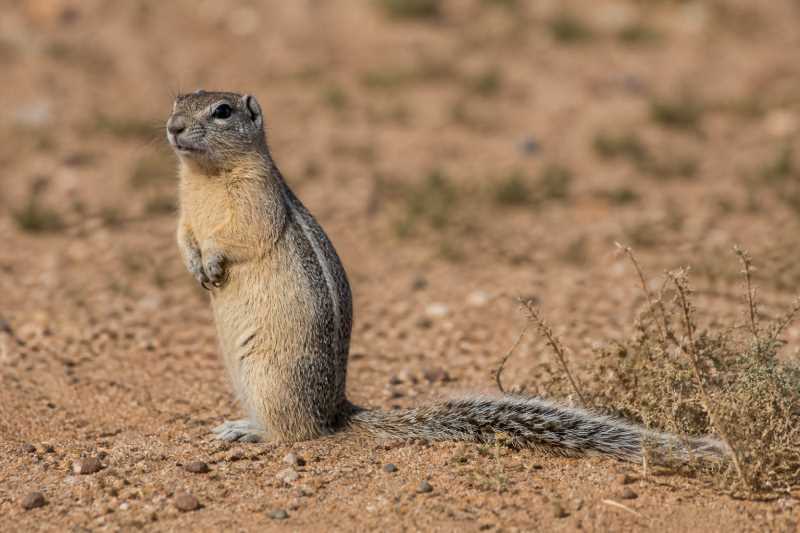
Harris’s Antelope Squirrel is a small rodent, typically measuring 8 to 10 inches (20 to 25 cm) in length, including its bushy tail which accounts for about one-third of its total length. These squirrels weigh between 3 to 4 ounces (85 to 115 grams). Their fur is predominantly grayish with a distinctive white stripe running down each side of their body, starting from the shoulder down to the hip, which is a key feature for distinguishing them from other ground squirrels.
The underside is usually a lighter shade, ranging from white to light gray, while their tails are bushy with a mix of black and white hairs, often carried arched over their backs. Their ears are relatively small and rounded, adapting them to conserve moisture and resist the heat of their desert habitats.
Range and Habitat
Harris’s Antelope Squirrel is primarily found in the Sonoran Desert, covering parts of Arizona, California, and extending into Sonora, Mexico. They thrive in desert scrub and rocky areas, favoring environments with sparse vegetation that provide shelter and food.
These squirrels are adept at living in extreme temperatures, often inhabiting landscapes with creosote bushes, saguaro cacti, and palo verde trees. They are also known to occupy areas with loose, sandy soils that facilitate their burrowing lifestyle, crucial for avoiding predators and extreme temperatures.
Behavior and Diet
Harris’s Antelope Squirrels are diurnal, meaning they are active during the day, particularly in the cooler hours of the morning and late afternoon to evade the midday heat. They are known for their high-energy behavior, often seen running and foraging for food.
Their diet is varied and opportunistic, consisting mainly of seeds, nuts, fruits, insects, and occasionally small vertebrates. Cacti, especially prickly pears and their fruits, are a staple in their diet, providing essential moisture and nutrients. Harris’s Antelope Squirrels are also known to cache food, storing surplus in burrows for periods when resources are scarce.
These squirrels have developed behavioral adaptations to cope with extreme temperatures. During the hottest parts of the day, they will retreat to their burrows or seek shade, sometimes exhibiting a behavior known as ‘heat dumping,’ where they lie flat on cool surfaces to dissipate body heat.
Identification Tips (field recognition cues)
Identifying Harris’s Antelope Squirrel in the field can be straightforward if you know what to look for:
- Distinctive White Side Stripes: Look for the prominent white stripe running along each side of their body, a key identifying feature.
- Behavior: Observe their behavior; they are often seen carrying their tails over their backs and are typically more active during cooler parts of the day.
- Size and Shape: Note their small size, slender build, and relatively short legs compared to other ground squirrels.
- Habitat: They are generally found in open desert areas, often around cacti and rocky terrains.
Conservation Status (with threats and protections)
Currently, Harris’s Antelope Squirrel is classified as a species of Least Concern by the International Union for Conservation of Nature (IUCN). Their population is considered stable, with no major widespread threats identified. However, they face several localized threats that could impact their numbers.
Threats
- Habitat Loss: Urbanization and agricultural expansion lead to habitat fragmentation and loss, posing a significant threat to their populations.
- Climate Change: Increasing temperatures and changing precipitation patterns can affect their habitats and food availability.
- Predation: They face natural predators like hawks, snakes, and coyotes, although this is a natural ecological interaction.
Protections
Conservation efforts focus on habitat preservation and monitoring population trends to ensure their numbers remain stable. Protected areas within their range, such as national parks and reserves, provide crucial habitats for these squirrels.
Frequently Asked Questions
How do Harris’s Antelope Squirrels survive in the desert?
Harris’s Antelope Squirrels have adapted to desert life through various means. They are active during cooler parts of the day to avoid heat, and their diet includes moisture-rich foods like cacti. Their burrowing behavior helps them escape predators and extreme temperatures.
What do Harris’s Antelope Squirrels eat?
These squirrels are omnivorous, primarily consuming seeds, nuts, fruits, and insects. They have a particular fondness for prickly pear cacti, which provide essential hydration.
Where can I find Harris’s Antelope Squirrel?
Harris’s Antelope Squirrel is found in the Sonoran Desert, notably across parts of Arizona and California in the United States, and extending into northwestern Mexico.
Are Harris’s Antelope Squirrels endangered?
No, they are not endangered. The IUCN lists them as a species of Least Concern, with a stable population.
How can I identify a Harris’s Antelope Squirrel?
Look for a small squirrel with a distinctive white stripe along its sides, a bushy tail often carried over its back, and a preference for desert habitats.
Related posts