Introduction
The Black-headed Squirrel Monkey (Saimiri vanzolinii) is a fascinating primate species that captivates wildlife enthusiasts and researchers alike. Known for its distinctive appearance and dynamic social behavior, this small New World monkey is endemic to the Amazon rainforest. As a member of the family Cebidae, the Black-headed Squirrel Monkey is closely related to other squirrel monkeys, but it sets itself apart with unique adaptations and ecological roles. Understanding this primate’s characteristics and conservation needs is crucial for ensuring its survival amidst the rapidly changing environment of the Amazon.
Physical Description
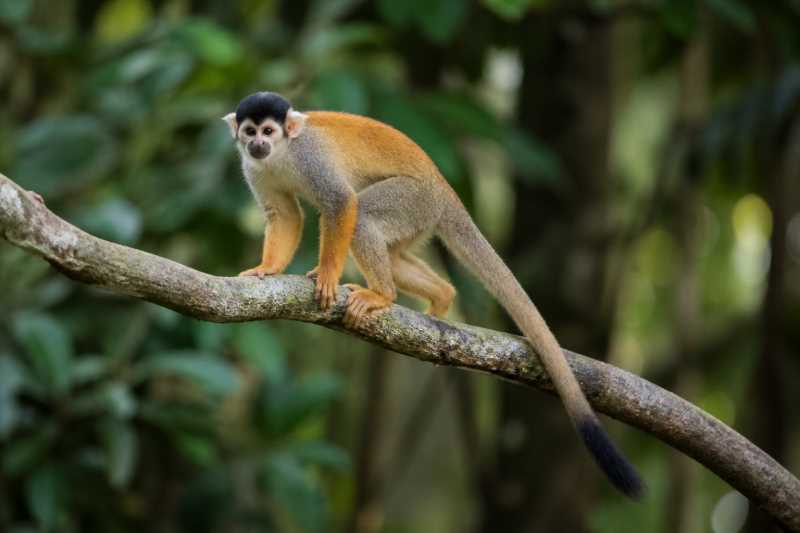
The Black-headed Squirrel Monkey is a diminutive primate, with adults typically weighing between 600 to 1,100 grams and measuring about 25 to 35 centimeters in length, excluding their tails. The species is easily recognizable by its striking black cap, which contrasts sharply with its white facial mask and yellowish-orange fur on the rest of its body. Their tails, often longer than their body, serve as a balancing tool, though they are not prehensile. This species exhibits sexual dimorphism, with males generally larger and more robust than females.
Their large eyes and acute vision are adapted for their diurnal lifestyle, aiding in foraging and navigation through the dense canopy. The Black-headed Squirrel Monkey also possesses sharp nails and dexterous fingers, which facilitate the handling of food and grasping of branches.
Range and Habitat
Saimiri vanzolinii is native to a relatively small region in the central Amazon Basin, primarily within Brazil. The species is most commonly found in the Mamirauá Sustainable Development Reserve, which is a key area for its conservation. This region is characterized by seasonally flooded forests known as várzea, where water levels can vary dramatically throughout the year.
The Black-headed Squirrel Monkey thrives in this rich, biodiverse environment, relying on both the forest canopy and the understory for food and shelter. Its habitat is marked by a complex mosaic of waterways, dense foliage, and a variety of tree species, which provide ample opportunities for foraging and nesting.
Behavior and Diet
Black-headed Squirrel Monkeys are highly social animals, living in troops that can consist of 20 to 75 individuals. Their social structure is matrilineal, with females typically remaining in their natal groups, while males disperse upon reaching maturity. These primates are known for their vocal communication, using a range of calls to maintain group cohesion and warn of predators.
Their diet is omnivorous, consisting primarily of fruits, insects, and small vertebrates. The availability of food varies seasonally, with the monkeys adapting their foraging strategies accordingly. During the wet season, when fruit is abundant, they focus on frugivory, while in the dry season, they rely more heavily on insects and small animals.
Identification Tips (Field Recognition Cues)
Identifying the Black-headed Squirrel Monkey in the field can be facilitated by several distinctive features:
- Black Cap: Look for the characteristic black cap on the top of their head, which sets them apart from other squirrel monkey species.
- White Facial Mask: Their face is marked by a striking white mask that accentuates their dark eyes.
- Yellowish-Orange Fur: The body fur is predominantly yellowish-orange, providing a vivid contrast to the black and white of their face.
- Tail Length: Observe their long, non-prehensile tail, which often exceeds their body length and aids in balance.
- Vocalizations: Listen for their distinctive calls, which are an integral part of their social interactions and can help locate a troop in dense foliage.
Conservation Status (With Threats and Protections)
The Black-headed Squirrel Monkey is currently listed as Vulnerable on the IUCN Red List. The primary threats to its survival include habitat destruction due to deforestation, illegal wildlife trade, and the impacts of climate change. The limited range of the species makes it particularly susceptible to habitat loss, as large-scale agricultural expansion encroaches on the Amazon rainforest.
Conservation efforts are focused on habitat protection and sustainable land use practices. The Mamirauá Sustainable Development Reserve plays a critical role in safeguarding this species by providing a protected area where human activities are regulated. Additionally, local and international conservation organizations are working to raise awareness and implement strategies to mitigate the impacts of climate change.
Frequently Asked Questions
1. What distinguishes the Black-headed Squirrel Monkey from other squirrel monkeys?
The Black-headed Squirrel Monkey is primarily distinguished by its black cap, which contrasts with its white facial mask and yellowish-orange body fur. This species also tends to inhabit the várzea forests of the central Amazon Basin, a unique habitat compared to other squirrel monkey species.
2. How do Black-headed Squirrel Monkeys contribute to their ecosystem?
These primates play a crucial role in their ecosystem by aiding in seed dispersal through their frugivorous diet. Their movement through the canopy helps in the pollination of certain plants, and they also contribute to controlling insect populations.
3. What are the main threats to the Black-headed Squirrel Monkey?
The main threats include habitat loss due to deforestation for agriculture, illegal wildlife trade, and the adverse effects of climate change, which alter the delicate balance of their floodplain habitat.
4. How can we help protect the Black-headed Squirrel Monkey?
Supporting conservation organizations that work to protect the Amazon rainforest and its inhabitants is vital. Advocacy for sustainable agricultural practices and policies that reduce deforestation can also contribute to the preservation of their habitat.
5. Are Black-headed Squirrel Monkeys kept as pets?
While some might attempt to keep them as pets due to their small size and appealing appearance, it is illegal and unethical. They require specific environmental conditions and social structures to thrive, which cannot be replicated in captivity.
Related posts