
Introduction
The Chatham Islands Snipe (Coenocorypha pusilla), an avian gem nestled within the remote and rugged Chatham Islands of New Zealand, represents a remarkable story of survival and adaptation. Known for its elusive nature and distinctive characteristics, the Chatham Islands Snipe is a subject of interest for ornithologists and conservationists alike. This article provides a comprehensive overview of the species, exploring its habitat, behavior, conservation status, and the ongoing efforts to ensure its preservation.
Habitat and Distribution
The Chatham Islands, located about 800 kilometers east of mainland New Zealand, are home to this unique bird species. The islands’ isolation has led to the evolution of a number of endemic species, with the Chatham Islands Snipe being a prime example. Primarily found on the islands of Rangatira and Mangere, these birds inhabit dense coastal forests and scrublands, which provide essential cover and foraging opportunities.
The snipe’s habitat is characterized by a mix of tussock grasslands, fern-filled forests, and areas with dense undergrowth. This environment not only supports their dietary needs but also offers protection from predators. The Chatham Islands’ temperate maritime climate, featuring mild temperatures and moderate rainfall, creates ideal conditions for the snipe’s survival.
Physical Characteristics
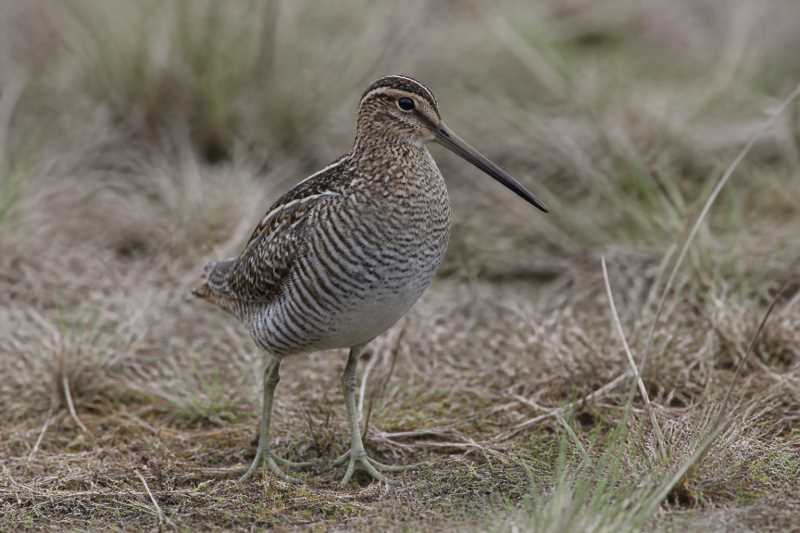
The Chatham Islands Snipe is a small bird, measuring approximately 20 to 25 centimeters in length. Its plumage is primarily brown with intricate patterns of darker streaks and bars, providing excellent camouflage against the forest floor. This cryptic coloration is crucial for avoiding detection by predators.
One of the most distinctive features of the snipe is its long, slender bill, which is used to probe the soil and leaf litter for invertebrates, its primary food source. The bird’s legs are relatively short, adapted for maneuvering through thick vegetation rather than lengthy flights.
Behavior and Ecology
Chatham Islands Snipes are predominantly nocturnal and crepuscular, meaning they are most active during the night and the twilight hours of dawn and dusk. This behavior helps them avoid many of their natural predators. During the day, they rest under dense vegetation, relying on their camouflage for protection.
The snipe’s diet mainly consists of invertebrates such as worms, beetles, and other small arthropods. It uses its sensitive bill to detect prey in the soil and leaf litter. Their probing behavior is a fascinating aspect of their ecology, demonstrating specialized adaptations to their environment.
Reproduction and Lifespan
Breeding typically occurs during the austral spring and summer, from September to January. The snipe’s courtship involves a series of displays and vocalizations, including a unique “drumming” sound produced by the bird’s outer tail feathers during flight.
Nesting takes place on the ground, with the female laying two eggs, which are incubated by both parents. The chicks are precocial, meaning they are relatively mature and mobile shortly after hatching. This trait is advantageous in their environment, where rapid development and the ability to forage independently are necessary for survival.
Conservation Status
The Chatham Islands Snipe is classified as “Near Threatened” by the International Union for Conservation of Nature (IUCN). While the population is currently stable, its limited distribution and small population size make it vulnerable to environmental changes and introduced predators.
Historically, the introduction of rats, cats, and other predators to the Chatham Islands has threatened many native species, including the snipe. However, conservation efforts have been successful in eradicating these threats from some of the islands, allowing the snipe population to recover in those areas.
Conservation Efforts
Conservationists have implemented several measures to protect the Chatham Islands Snipe and its habitat. Predator control programs on Rangatira and Mangere Islands have been instrumental in reducing the risk of predation. Additionally, habitat restoration projects aim to preserve and enhance the native vegetation essential for the snipe’s survival.
Research and monitoring are ongoing to better understand the ecological needs of the snipe and to assess the effectiveness of conservation strategies. Public awareness and education initiatives also play a crucial role in garnering support for conservation efforts and ensuring the long-term survival of this remarkable species.
Conclusion
The Chatham Islands Snipe is a testament to the resilience and adaptability of life in isolated environments. While challenges remain, continued conservation efforts hold promise for the future of this enigmatic bird. By safeguarding the Chatham Islands’ unique ecosystems, we not only protect the snipe but also preserve the rich biodiversity that these islands support.
Through collaborative efforts between scientists, conservationists, and local communities, we can ensure that the Chatham Islands Snipe continues to thrive in its natural habitat, serving as a symbol of the enduring beauty and complexity of island ecosystems.
Related posts


