Introduction
The Greater Indo-Malayan Chevrotain, scientifically known as Tragulus napu, is a fascinating and elusive mammal that captures the interest of wildlife enthusiasts and researchers alike. Often referred to as the "mouse-deer," this diminutive ungulate is neither a true deer nor a rodent, but belongs to a unique family of small hoofed mammals known as Tragulidae. Known for its secretive nature and nocturnal habits, the Greater Indo-Malayan Chevrotain is a master of camouflage in its dense forest habitat, making it a challenge to observe in the wild.
Chevrotains are among the smallest ungulates in the world, and the Greater Indo-Malayan Chevrotain is no exception. This species plays a crucial role in its ecosystem, serving as both a prey species and a seed disperser, contributing to the overall health and biodiversity of its habitat. As human activities continue to encroach upon its environment, understanding and conserving this species becomes increasingly important.
Physical Description
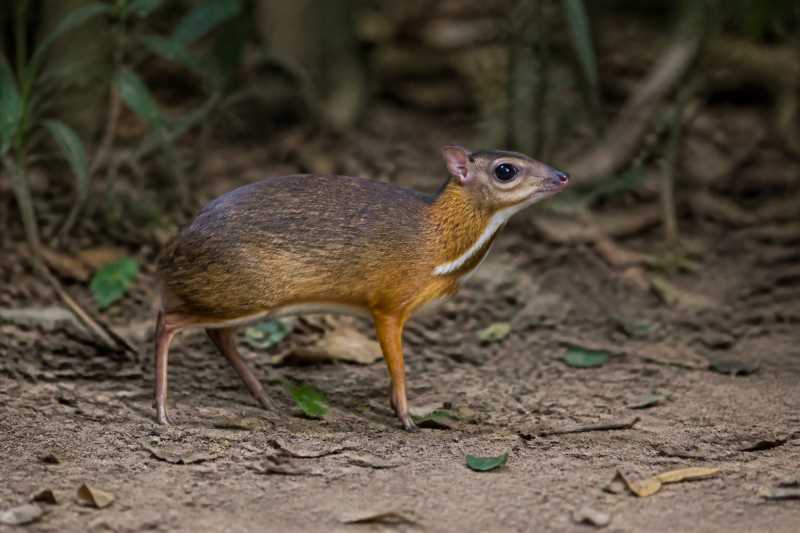
The Greater Indo-Malayan Chevrotain is characterized by its small, stocky body and delicate legs, adapted for navigating the undergrowth of tropical forests. Adults typically weigh between 5 to 8 kilograms (11 to 18 pounds) and measure approximately 70 to 75 centimeters (27 to 30 inches) in length, with a shoulder height of about 30 to 35 centimeters (12 to 14 inches).
Its coat is a rich, reddish-brown color with a lighter underbelly, providing excellent camouflage amidst the forest floor. Distinct white markings adorn the throat and chest, often forming a pattern of horizontal stripes that aid in individual identification. The head is small and rounded, with large, dark eyes positioned high on the skull, enhancing its peripheral vision. Notably, chevrotains lack antlers, a feature commonly associated with deer, and instead, males possess small, tusk-like canines used in intraspecific competition.
Range and Habitat
The Greater Indo-Malayan Chevrotain is found across a wide geographical range in Southeast Asia, inhabiting countries such as Thailand, Malaysia, Indonesia, and the southern regions of Vietnam and Myanmar. Its preferred habitat includes dense tropical and subtropical forests, often near water sources such as streams and rivers. These environments provide ample cover and abundant food resources, essential for the chevrotain’s survival.
Chevrotains are primarily ground-dwelling, although they are capable swimmers. They favor forest areas with thick underbrush, where they can easily hide from predators. Deforestation and habitat fragmentation pose significant threats to their survival, as these activities reduce available habitat and increase the risk of predation.
Behavior and Diet
Greater Indo-Malayan Chevrotains are predominantly nocturnal, emerging at dusk to forage and returning to their secluded resting spots by dawn. Their solitary nature means they are rarely seen in groups, except during mating season or when a mother is with her young.
The diet of the Greater Indo-Malayan Chevrotain is primarily herbivorous, consisting of leaves, fruits, and flowers. They play a vital role in their ecosystem as seed dispersers, aiding in the propagation of numerous plant species. Their browsing habits also help maintain the undergrowth, promoting forest regeneration.
In terms of behavior, chevrotains are known for their shy and elusive nature. When threatened, they remain motionless or flee into the dense underbrush. Males may exhibit territorial behavior, using their tusk-like canines to fend off rivals.
Identification Tips (Field Recognition Cues)
Identifying a Greater Indo-Malayan Chevrotain in the field requires keen observation due to their secretive nature and excellent camouflage. Here are some tips to aid in their identification:
- Size and Build: Look for a small, stocky animal with a body length of about 70 to 75 cm and a shoulder height of 30 to 35 cm.
- Coloration: Note the reddish-brown coat with a lighter underbelly. The distinct white markings on the throat and chest are key identifiers.
- Behavior: Chevrotains are most active during twilight and night. Observing them during these times increases the chances of a sighting.
- Habitat: Focus on dense forest areas with thick undergrowth near water sources, as these are preferred habitats.
- Sound: Listen for rustling in the underbrush or soft footfalls, as chevrotains move quietly through their environment.
Conservation Status (with Threats and Protections)
The Greater Indo-Malayan Chevrotain is currently classified as "Least Concern" by the International Union for Conservation of Nature (IUCN). However, the species faces multiple threats that could impact its population in the future.
Threats
- Habitat Loss: Deforestation for agriculture, logging, and human settlement is the most significant threat, leading to habitat fragmentation.
- Hunting: Although not a primary target, chevrotains are sometimes hunted for bushmeat or captured for the illegal pet trade.
- Predation: Increased edge habitats due to fragmentation make chevrotains more vulnerable to predators.
Protections
- Protected Areas: Some populations reside within national parks and reserves, offering a degree of protection from human activities.
- Conservation Programs: Efforts to promote sustainable land-use practices and reforestation help mitigate habitat loss.
- Research and Monitoring: Ongoing studies aim to better understand chevrotain ecology and inform conservation strategies.
Frequently Asked Questions
1. What is the difference between a chevrotain and a deer?
Chevrotains, or mouse-deer, belong to the family Tragulidae and differ from true deer in several ways. They lack antlers, have tusk-like canines, and are much smaller in size. Additionally, chevrotains are more primitive, representing an earlier evolutionary branch of ungulates.
2. Why are Greater Indo-Malayan Chevrotains important to the ecosystem?
These chevrotains play a crucial role in seed dispersal, aiding in plant diversity and forest regeneration. Their browsing habits help maintain the forest undergrowth, supporting the overall health of their habitat.
3. How can I help in the conservation of Greater Indo-Malayan Chevrotains?
Supporting conservation organizations focused on habitat preservation and sustainable land management can aid in protecting chevrotains. Additionally, raising awareness about the species and its ecological importance is vital.
4. Are Greater Indo-Malayan Chevrotains endangered?
Currently, they are classified as "Least Concern" by the IUCN, but they face threats such as habitat loss and hunting. Conservation efforts are essential to ensure their long-term survival.
5. What adaptations help chevrotains survive in their environment?
Their small size and cryptic coloration provide excellent camouflage, while their nocturnal habits help avoid predators. Their tusk-like canines in males are used for defense and territorial disputes.
Related posts