The Yellow-billed Cuckoo: A Mysterious Denizen of North America’s Woodlands
The Yellow-billed Cuckoo (Coccyzus americanus) is a bird that has long fascinated ornithologists and nature lovers alike. Known for its elusive nature and distinctive call, this enigmatic species holds a unique place in the avian world. Native to North America, the Yellow-billed Cuckoo can be found in a variety of habitats, including deciduous woodlands, riparian zones, and even urban parks, where it continues to intrigue those fortunate enough to encounter it.
Identification and Physical Characteristics
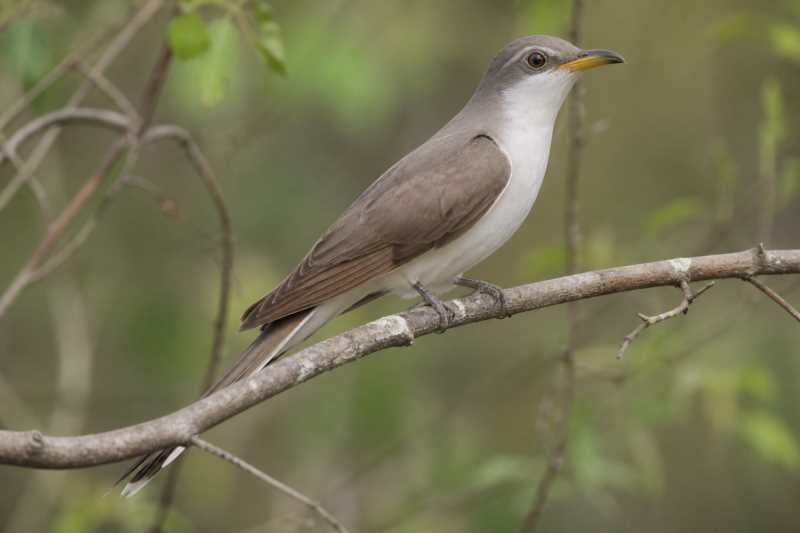
The Yellow-billed Cuckoo is a medium-sized bird, measuring approximately 11 to 12 inches in length. It is easily recognized by its slender, elongated body, which is complemented by a long tail adorned with bold white spots. Its plumage is primarily brownish-gray on the upperparts, with a striking white underbelly. True to its name, this cuckoo is distinguished by its vivid yellow lower mandible, which contrasts with the darker upper mandible. Additionally, the bird’s large, black eyes are surrounded by a subtle yellow eye-ring, adding to its distinct appearance.
Habitat and Distribution
The Yellow-billed Cuckoo is primarily found in North America, with a range extending from southern Canada through the United States and into northern Mexico. During the breeding season, which typically lasts from May to September, these cuckoos favor dense, deciduous forests and riparian woodlands. They are particularly fond of areas with abundant caterpillar populations, as these insects form a large part of their diet.
In the winter months, Yellow-billed Cuckoos migrate to Central and South America, where they inhabit similar woodland habitats. This migration, which can cover thousands of miles, is a spectacular feat of endurance and navigation, showcasing the bird’s remarkable adaptability.
Behavior and Diet
The Yellow-billed Cuckoo is known for its secretive and solitary nature. It often remains concealed within dense foliage, making it a challenging bird to observe. Despite this elusive behavior, the cuckoo’s distinctive call—a rapid series of staccato notes followed by a softer cooing—often betrays its presence. This call is most frequently heard during the early morning and late afternoon, particularly during the breeding season.
Dietarily, the Yellow-billed Cuckoo is an opportunistic feeder, with a preference for caterpillars and other insects. It is especially fond of hairy caterpillars, which are often avoided by other bird species due to their irritating bristles. In addition to caterpillars, the cuckoo’s diet includes beetles, grasshoppers, and occasionally small fruits and berries.
Breeding and Nesting
The breeding habits of the Yellow-billed Cuckoo are as intriguing as the bird itself. Unlike many other cuckoo species, which are known for their brood parasitism, the Yellow-billed Cuckoo builds its own nest. These nests, constructed from twigs and lined with leaves, are typically located in the fork of a tree branch, well-concealed within dense foliage.
During the breeding season, which coincides with the abundance of caterpillars, the female cuckoo lays a clutch of two to five eggs. These eggs are pale blue and hatch after an incubation period of approximately 9 to 11 days. Interestingly, the incubation period is shared by both parents, and the chicks are altricial, meaning they are born helpless and require significant parental care. The young fledge within two to three weeks, a rapid development that allows the family to take advantage of the peak insect abundance.
Conservation Status and Challenges
The Yellow-billed Cuckoo is currently listed as a species of “Least Concern” by the International Union for Conservation of Nature (IUCN). However, certain populations, particularly those in the western United States, are experiencing declines due to habitat loss and fragmentation. These western populations have been listed as “Threatened” under the Endangered Species Act.
The primary threat to the Yellow-billed Cuckoo is the loss of riparian habitats, which are being degraded by urban development, agriculture, and water management practices. Conservation efforts focus on habitat restoration and protection, particularly in areas where the bird’s populations are most vulnerable.
Conclusion
The Yellow-billed Cuckoo, with its mysterious habits and distinctive call, continues to captivate bird enthusiasts across its range. Despite facing challenges from habitat loss, this resilient species showcases the intricate balance of nature and the importance of conservation efforts. As we strive to protect the diverse ecosystems that support such unique wildlife, the Yellow-billed Cuckoo serves as a reminder of the wonders that await those who venture into the woodlands of North America.
Related posts