Introduction
The Javan Chevrotain, scientifically known as Tragulus javanicus, is a fascinating yet elusive member of the mammalian family. Often referred to as the "mouse deer," this intriguing creature is neither a mouse nor a deer, but rather a unique species that plays a vital role in its ecosystem. This diminutive ungulate is native to the dense tropical forests of Southeast Asia, particularly Indonesia, and has captured the curiosity of wildlife enthusiasts and researchers alike. Despite its diminutive size, the Javan Chevrotain is a significant species for biodiversity and ecological studies.
Physical Description
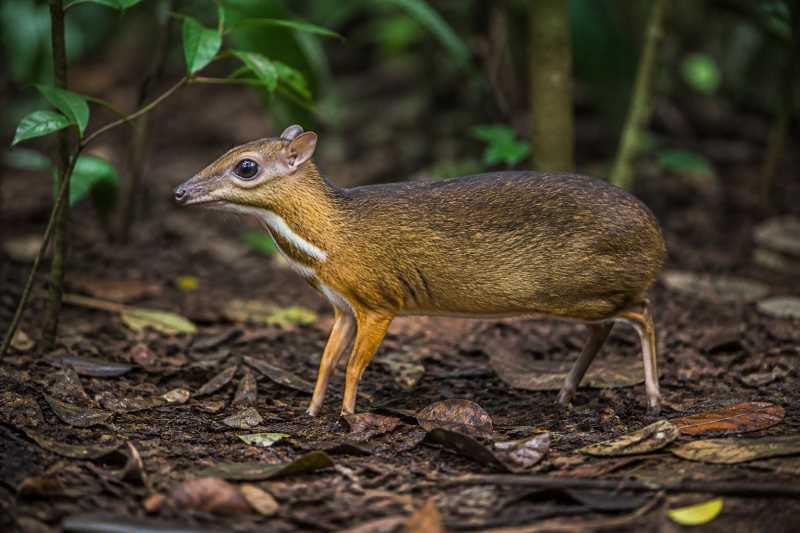
The Javan Chevrotain is the epitome of evolutionary marvel in the animal kingdom. It is the smallest hoofed mammal, with adults weighing between 1.5 to 2.5 kilograms (3.3 to 5.5 pounds) and measuring approximately 45 to 55 centimeters (18 to 22 inches) in body length. This species exhibits a distinctive coat pattern that is predominantly brown with white spots and stripes, offering excellent camouflage in the dappled light of the forest floor. The fur is sleek and fine, aiding in heat regulation and water resistance.
Its compact body is supported by slender legs, which facilitate agile movement through dense underbrush. Unlike true deer, the Javan Chevrotain lacks antlers. Instead, its upper canines are elongated and tusk-like, particularly in males, serving as a tool for defense and territorial disputes. The head is small with large, dark eyes and a pointed snout, which are characteristic of its shrew-like appearance.
Range and Habitat
The Javan Chevrotain is predominantly found in the rainforests of Java, a large Indonesian island known for its rich biodiversity. Its habitat preference includes lowland tropical forests, mangroves, and dense shrublands, where it can find ample cover and food resources. These environments offer a humid climate and dense foliage, which are crucial for its survival and reproduction.
The species has adapted well to its habitat, using the forest’s natural features to evade predators and human threats. However, habitat fragmentation and deforestation pose significant challenges to its continued existence, as these activities reduce the availability of suitable living spaces.
Behavior and Diet
The Javan Chevrotain is primarily nocturnal and elusive, making it a challenging subject for observation. Its solitary nature is typical of many forest-dwelling mammals, though occasional pairings occur during the breeding season. It relies on its keen senses of hearing and smell to navigate the forest and detect potential threats.
Dietarily, the Javan Chevrotain is an herbivore, feeding on a variety of plant materials including fruits, leaves, shoots, and buds. Its small size allows it to forage close to the ground, and it plays a critical role in seed dispersal and forest regeneration. The species is also known to frequent mineral-rich salt licks, which provide essential nutrients.
Identification Tips (Field Recognition Cues)
Identifying the Javan Chevrotain in the wild requires a keen eye and understanding of its distinctive features. Key identification tips include:
- Size and Shape: Look for a small, compact mammal with a rounded body and slender legs.
- Coat Pattern: Note the brown fur with white spots and stripes, which provide effective camouflage.
- Absence of Antlers: Unlike deer, the Javan Chevrotain lacks antlers but may exhibit visible upper canines.
- Behavior: Observe the animal’s nocturnal activity and solitary nature, often staying close to dense underbrush.
Conservation Status (with Threats and Protections)
The conservation status of the Javan Chevrotain is currently classified as "Data Deficient" by the International Union for Conservation of Nature (IUCN), primarily due to limited information on its population trends and distribution. However, the species faces several threats that could impact its survival.
Threats:
- Habitat Loss: Deforestation for agriculture, logging, and infrastructure development is the primary threat.
- Hunting: Although not typically targeted, the species can be caught in traps set for other animals.
- Climate Change: Alterations in temperature and rainfall patterns can affect habitat conditions.
Protections:
- Protected Areas: Some populations reside within protected national parks and wildlife reserves.
- Conservation Programs: Efforts are underway to study and monitor the species to develop effective conservation strategies.
Frequently Asked Questions
What is the typical lifespan of a Javan Chevrotain?
The Javan Chevrotain typically lives for about 10 to 12 years in the wild, though this can vary depending on environmental conditions and predation pressures.
How does the Javan Chevrotain contribute to its ecosystem?
The Javan Chevrotain plays a crucial role in seed dispersal, which aids in forest regeneration and biodiversity maintenance. Its feeding habits help in recycling nutrients within the ecosystem.
Are Javan Chevrotains endangered?
While the Javan Chevrotain is not classified as endangered, its "Data Deficient" status indicates a need for more research to determine its population health. Conservation efforts are essential to protect its habitat.
How can you tell a Javan Chevrotain from other similar species?
The Javan Chevrotain can be distinguished by its small size, lack of antlers, and unique coat pattern with white spots and stripes. It also has distinctive upper canines.
What efforts are being made to conserve the Javan Chevrotain?
Conservation efforts include habitat protection through national parks, research initiatives to understand its ecology, and raising awareness about threats such as deforestation and hunting.
Related posts