Northern Bushbuck (Tragelaphus scriptus): A Detailed Exploration
Introduction
The Northern Bushbuck, scientifically known as Tragelaphus scriptus, stands as a quintessential representation of Africa’s diverse and rich wildlife. As part of the Bovidae family, this species exhibits unique characteristics that make it a subject of interest for wildlife enthusiasts and researchers alike. The Northern Bushbuck is renowned for its elusive nature and striking appearance, making it a captivating subject in the study of African antelopes.
Physical Description
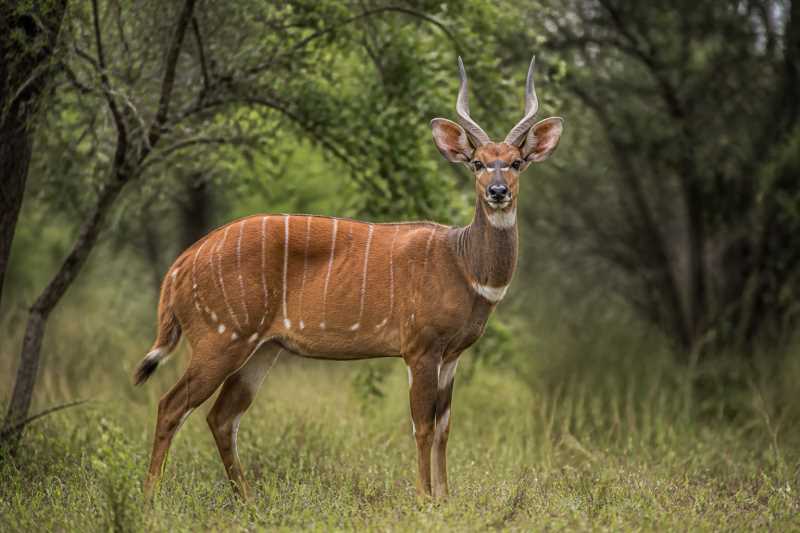
The Northern Bushbuck is a medium-sized antelope, generally weighing between 45 to 80 kilograms (99 to 176 pounds) and standing about 70 to 100 centimeters (28 to 39 inches) at the shoulder. Their coat is largely a chestnut brown, often adorned with white spots or stripes on the flanks and a white throat patch, providing a distinguished look that varies slightly depending on their habitat and range.
Males and females exhibit sexual dimorphism, with males being larger and possessing spiraled horns that can grow up to 50 centimeters (20 inches) in length. These horns are used primarily for defense and intraspecies combat during mating seasons. In contrast, females are generally hornless and display more vivid markings, especially during the breeding season.
Range and Habitat
The Northern Bushbuck is distributed across a wide range of Sub-Saharan Africa, from Senegal and Ethiopia in the north to Angola and Zambia in the south. They thrive in diverse habitats, including savannas, forests, and woodlands, often preferring areas with dense vegetation that offers adequate cover from predators.
Bushbucks are particularly adaptable animals, capable of surviving in varying environmental conditions. This adaptability allows them to inhabit both high-altitude regions and lowland areas, often close to water sources. Their flexibility in habitat choice is a key factor in their widespread distribution.
Behavior and Diet
Northern Bushbucks are predominantly solitary animals, although females may sometimes be seen with their young. Males are even more solitary, typically coming together only during the mating season. These antelopes are primarily nocturnal, with peak activity occurring during twilight hours, which helps them avoid predators.
Their diet is diverse and primarily herbivorous, consisting of leaves, twigs, flowers, and fruits. Bushbucks are also known to feed on grasses and occasionally browse on shrubs. Their ability to digest a wide range of plant materials allows them to thrive in various ecosystems.
Identification Tips (Field Recognition Cues)
Identifying the Northern Bushbuck in the field can be facilitated by several key characteristics:
- Coloration and Markings: Look for the characteristic chestnut coat with white spots or stripes. The markings can vary but are usually present on the flanks and throat.
- Horns: Only males have spiraled horns, which are easily distinguishable during close observation.
- Size and Build: Their medium size, combined with a sturdy build, distinguishes them from other antelope species.
- Behavior: Solitary behavior, especially in dense vegetation, is a typical trait of bushbucks.
Conservation Status (With Threats and Protections)
The IUCN currently classifies the Northern Bushbuck as a species of Least Concern. However, they face several threats, including habitat loss due to agricultural expansion, human encroachment, and poaching for bushmeat.
Conservation efforts focus on habitat preservation and anti-poaching measures. Protected areas and national parks play a critical role in safeguarding their populations. Community-based conservation programs are also being implemented to involve local communities in sustainable wildlife management.
Frequently Asked Questions
1. What is the lifespan of a Northern Bushbuck?
The Northern Bushbuck typically lives for about 12 to 15 years in the wild, although individuals in captivity can live longer due to the absence of predators and access to regular food and medical care.
2. How do Northern Bushbucks communicate?
Bushbucks communicate through a series of vocalizations, including grunts and whistles. They also use scent marking to establish territory and indicate reproductive status.
3. Are Northern Bushbucks dangerous to humans?
While generally shy and elusive, bushbucks can become aggressive if cornered or threatened, particularly males with their sharp horns. It is advisable to maintain a safe distance when observing them in the wild.
4. How can I help in the conservation of Northern Bushbucks?
Supporting wildlife conservation organizations, promoting sustainable tourism, and spreading awareness about the threats to bushbucks and their habitats are effective ways to contribute to their conservation.
5. What adaptations help Northern Bushbucks survive?
Their adaptability to various habitats, nocturnal behavior, and diverse diet are key adaptations that enable them to survive in the wild, even amidst environmental changes.
Related posts