Introduction
The Siberian Flying Squirrel, scientifically known as Pteromys volans, is a captivating and elusive species known for its ability to glide between trees in its forested habitat. This arboreal mammal is a member of the family Sciuridae and is primarily found across the Palearctic region. Despite its name, the Siberian Flying Squirrel does not actually fly but uses a specialized membrane to glide. This remarkable adaptation not only aids in locomotion but also plays a critical role in its survival, allowing it to escape predators and move efficiently in search of food.
Physical Description
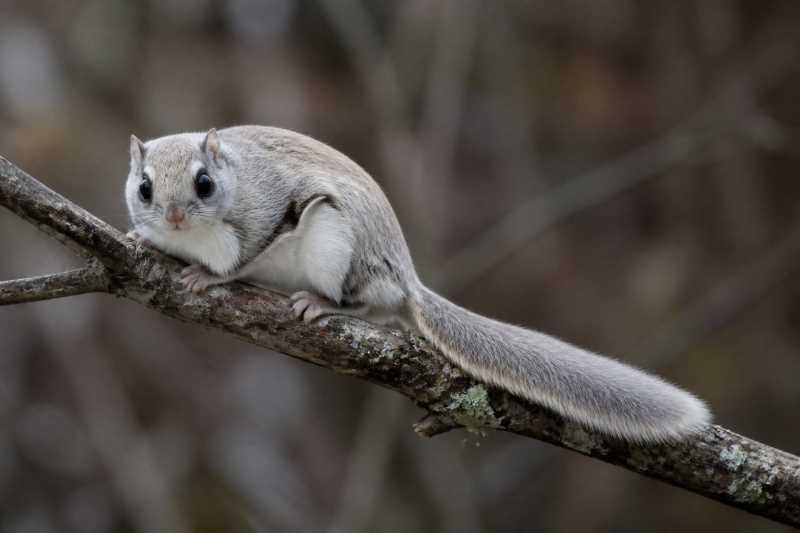
Siberian Flying Squirrels are small, nocturnal rodents with a body length ranging from 13 to 20 centimeters and a weight between 95 to 170 grams. Their most distinctive feature is the patagium, a furry membrane stretching from wrist to ankle, which enables their gliding ability. This membrane is crucial for their movement through the forest canopy. They possess large, dark eyes that are well adapted for night vision, aiding their nocturnal lifestyle. Their fur is soft and dense, typically grayish-brown on the back and white on the belly, providing camouflage against the bark of trees.
Range and Habitat
The Siberian Flying Squirrel’s range extends across the boreal forests of the Palearctic region, including parts of Scandinavia, Russia, and into parts of Japan and Korea. They predominantly inhabit mature coniferous and mixed forests, where they make their nests in tree cavities or abandoned woodpecker holes. These forests provide not only shelter but also a rich source of food, which is crucial for their survival. The presence of old trees with cavities is particularly important for their nesting and breeding.
Behavior and Diet
Being nocturnal creatures, Siberian Flying Squirrels are most active during the night. Their diet primarily consists of leaves, seeds, and nuts, but they also consume bark, buds, and lichen. This diverse diet helps them to thrive in the varied ecosystems they inhabit. They are known for their remarkable gliding ability, which they use to move between trees in search of food and to evade predators. During the day, they rest in their nests, conserving energy for their nighttime activities.
Identification Tips (Field Recognition Cues)
Identifying a Siberian Flying Squirrel in the wild can be challenging due to their nocturnal and elusive nature. However, several cues can aid in their identification:
- Size and Shape: Small size with a distinctive gliding membrane.
- Fur and Coloration: Grayish-brown back with a contrasting white belly.
- Behavior: Look for gliding activity during dusk or night.
- Sound: Listen for their soft, high-pitched calls.
- Eye Size: Large, dark eyes suitable for night vision.
Conservation Status (With Threats and Protections)
Currently, the Siberian Flying Squirrel is classified as a species of Least Concern on the IUCN Red List. However, they face several threats that could impact their populations in the future. Habitat loss due to logging and deforestation is one of the most significant threats. Additionally, climate change poses a risk to their boreal forest habitats. Conservation efforts are in place in several countries to protect their habitats and ensure the sustainability of their populations. Protected areas and regulations on logging practices are crucial for their continued survival.
Frequently Asked Questions
Why is this species unique?
The Siberian Flying Squirrel is unique due to its gliding ability, enabled by the patagium. This adaptation allows it to move efficiently through its arboreal habitat, a feature not found in many other mammals.
What is their primary habitat?
Their primary habitat is the mature coniferous and mixed forests of the Palearctic region, where they find ample food and nesting sites.
How do they contribute to their ecosystem?
As seed dispersers, Siberian Flying Squirrels play a crucial role in forest regeneration. Their feeding habits help in maintaining the ecological balance within their habitat.
Are they endangered?
Currently, they are not endangered, but habitat destruction and climate change are potential threats that could impact their populations if not addressed.
What measures are in place for their conservation?
Conservation measures include the protection of forest habitats and regulations on logging activities. International cooperation is also vital in preserving their habitats across different countries.
Related posts