Introduction
The Collared Pika (Ochotona collaris) is a small, herbivorous mammal belonging to the order Lagomorpha, which also includes rabbits and hares. Unlike their more familiar relatives, pikas are smaller, more elusive, and are often found in some of the most rugged and remote landscapes in North America. This article delves into various aspects of the Collared Pika, from their physical attributes to their ecological roles and conservation efforts.
Physical Description
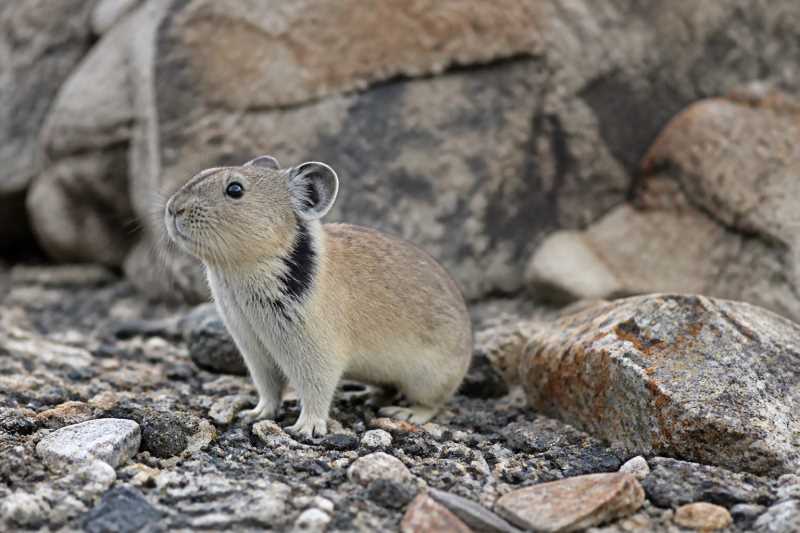
Collared Pikas are characterized by their small, compact bodies and round ears. Typically, an adult Collared Pika weighs between 160 to 200 grams (5.6 to 7 ounces) and measures about 15 to 20 centimeters (6 to 8 inches) in length. Their fur is dense and soft, providing essential insulation against harsh alpine climates. The coat is usually grayish-brown in color, allowing them to blend seamlessly with rocky environments. A distinguishing feature is the pale collar around their neck, which gives the species its name.
Range and Habitat
The Collared Pika is primarily found in the mountainous regions of Alaska and northwestern Canada, including the Yukon Territory and parts of British Columbia. They inhabit talus slopes and alpine meadows, environments characterized by rocky debris and sparse vegetation. These areas offer the necessary cover and foraging opportunities pikas require to thrive. Pikas are highly adapted to cold environments and are rarely found below the tree line, preferring altitudes above 1,000 meters (3,280 feet).
Behavior and Diet
Collared Pikas are diurnal, meaning they are active during the day. They are known for their vocalizations, which serve both as a means of communication and a warning system against predators. Pikas do not hibernate; instead, they prepare for the winter by gathering and storing ‘haypiles’ of dried vegetation. Their diet consists primarily of grasses, sedges, and other alpine plants. These haypiles are crucial for their survival during the long, harsh winters when food is scarce.
Identification Tips (field recognition cues)
Identifying a Collared Pika in the field requires keen observation skills. Key identification cues include their small size, rounded ears without visible external pinnae, and the distinct pale collar around the neck. Observers should listen for their characteristic high-pitched calls, often described as a short, sharp ‘beep’ or ‘peep.’ Additionally, spotting their haypiles can be a strong indicator of their presence in the area.
Conservation Status (with threats and protections)
Currently, the Collared Pika is classified as a species of Least Concern by the IUCN Red List. However, they face several threats, chiefly climate change, which poses a significant risk to their alpine habitats. Rising temperatures and changing precipitation patterns can lead to habitat loss and reduced availability of food resources. Conservation efforts focus on habitat preservation and monitoring population trends to ensure their continued survival. Protective measures include maintaining the integrity of their natural habitats and minimizing human disturbance in sensitive areas.
Frequently Asked Questions
What do Collared Pikas eat?
Collared Pikas primarily eat a variety of alpine plants, including grasses and sedges. They prepare for winter by collecting and storing these plants in haypiles.
Where do Collared Pikas live?
Collared Pikas inhabit mountainous regions of Alaska and northwestern Canada, preferring rocky talus slopes and alpine meadows above the tree line.
How do Collared Pikas survive the winter?
Instead of hibernating, Collared Pikas gather and store haypiles of dried vegetation during the summer to sustain themselves through the winter months.
Are Collared Pikas endangered?
Currently, Collared Pikas are not considered endangered. They are classified as Least Concern, but climate change remains a potential threat to their habitats.
How can I identify a Collared Pika?
Look for their small size, grayish-brown fur, rounded ears, and the distinctive pale collar around the neck. Their high-pitched calls and presence of haypiles are also good indicators.
Related posts