Introduction
The Kayan Slow Loris (Nycticebus kayan) is a fascinating primate that has captured the attention of wildlife enthusiasts and researchers alike. Discovered relatively recently, this species is part of the genus Nycticebus, known for its distinct nocturnal habits and unique adaptations. Found predominantly in parts of Borneo, the Kayan Slow Loris is a vital piece of the ecological puzzle in its native habitat. This article delves into the various aspects of the Kayan Slow Loris, from its physical characteristics to its conservation status.
Physical Description
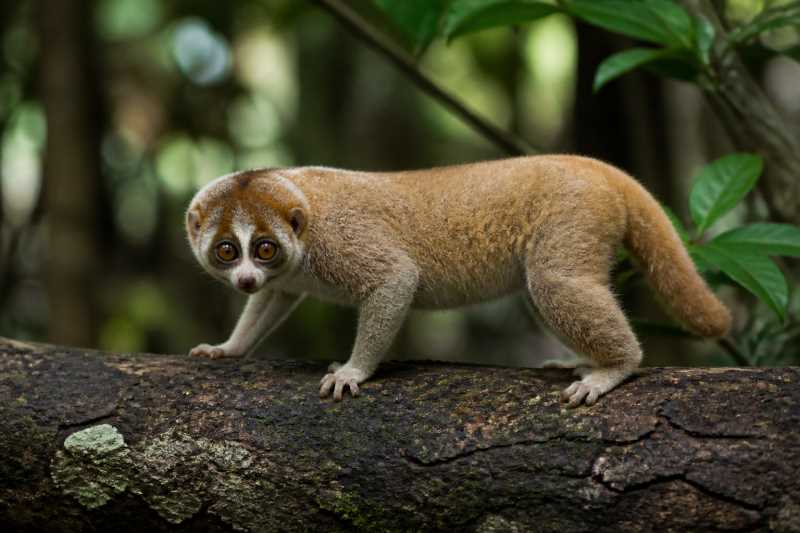
The Kayan Slow Loris is a small, nocturnal primate that stands out for its distinct features. It has a round head with large, forward-facing eyes that are well-adapted for night vision. The eyes are surrounded by dark rings, which contrast with its light-colored fur, giving it a striking appearance. The body is covered with dense, woolly fur that ranges from light brown to grayish tones.
One of the most notable physical traits of the Kayan Slow Loris is its strong, grasping hands and feet. These are specially adapted for a life spent mostly in trees, allowing the loris to move with ease among branches. Its limbs are short but powerful, aiding in its slow, deliberate movements, which are characteristic of the species.
Another distinctive feature is the presence of a gland located on the inside of its elbows, which secretes a toxin. This gland is used in grooming and serves as a defense mechanism against predators.
Range and Habitat
The Kayan Slow Loris is endemic to the island of Borneo, primarily found in the northern regions, particularly in the Malaysian state of Sabah and the Indonesian province of North Kalimantan. Borneo’s dense rainforest provides the ideal habitat for this arboreal primate.
These slow lorises thrive in primary and secondary forests, where they can easily find food and shelter. They prefer lowland and montane forests but can also adapt to disturbed habitats, although their presence is significantly reduced in such areas. The preservation of these forest habitats is crucial for their survival, as they rely heavily on the arboreal environment for feeding and nesting.
Behavior and Diet
Kayan Slow Lorises are solitary creatures, coming together only for mating purposes. They are nocturnal and arboreal, spending most of their time in trees. Their slow, deliberate movements help them avoid detection by predators and conserve energy.
Their diet primarily consists of tree gum, nectar, fruits, and small insects. They have a specialized dental structure that allows them to scrape gum from tree bark efficiently. This diet not only provides them with the necessary nutrients but also aids in their role as pollinators and seed dispersers in their ecosystem.
Identification Tips (Field Recognition Cues)
Identifying the Kayan Slow Loris in the field requires a keen eye for detail. Here are some tips to help distinguish this species:
- Eye Rings: Look for the dark circles around the eyes that contrast with the lighter fur.
- Size and Build: Note the small, robust build typical of a slow loris, with strong, grasping limbs.
- Facial Markings: Observe the facial stripe that runs from the top of the head to the nose.
- Movement: Watch for the characteristic slow, deliberate movements.
Conservation Status (With Threats and Protections)
The Kayan Slow Loris is currently classified as "Vulnerable" by the International Union for Conservation of Nature (IUCN). The primary threats facing this species include habitat loss due to logging and agricultural expansion, as well as illegal wildlife trade. Slow lorises are often captured for the pet trade, where they are subjected to inhumane conditions.
Conservation efforts are underway to protect the remaining populations of the Kayan Slow Loris. These include habitat preservation initiatives and stricter enforcement of wildlife trade regulations. Education programs are also essential to raise awareness about the importance of protecting this unique primate.
Frequently Asked Questions
What does the Kayan Slow Loris eat?
The Kayan Slow Loris primarily feeds on tree gum, nectar, fruits, and small insects. Its specialized teeth allow it to efficiently scrape gum from trees, which is a significant part of its diet.
Why is the Kayan Slow Loris endangered?
The Kayan Slow Loris is considered vulnerable due to habitat loss from deforestation and agricultural expansion, as well as capture for the illegal pet trade. Conservation efforts are essential to mitigate these threats.
How can you identify a Kayan Slow Loris?
Look for the dark eye rings, small robust build, facial stripe, and slow movements. These characteristics help distinguish the Kayan Slow Loris from other primates in its habitat.
Is the Kayan Slow Loris poisonous?
Yes, the Kayan Slow Loris has a gland on the inside of its elbows that secretes a toxin. This defense mechanism is used against predators and can cause allergic reactions in humans.
Where is the natural habitat of the Kayan Slow Loris?
The Kayan Slow Loris is native to the island of Borneo, primarily found in the northern regions, such as Sabah in Malaysia and North Kalimantan in Indonesia. Its habitat includes primary and secondary forests.
Related posts