Introduction
Shipton’s Mountain Cavy (Microcavia shiptoni) is a lesser-known but fascinating member of the Caviidae family, which includes well-known relatives such as guinea pigs and capybaras. This small mammal is native to the mountainous regions of South America and has evolved to thrive in its unique and challenging environment. Despite its relative obscurity, the Shipton’s Mountain Cavy plays a significant role in its ecosystem, serving as both a grazer and prey species. This article delves into the various aspects of this intriguing mammal, including its physical characteristics, habitat, behavior, and conservation status.
Physical Description
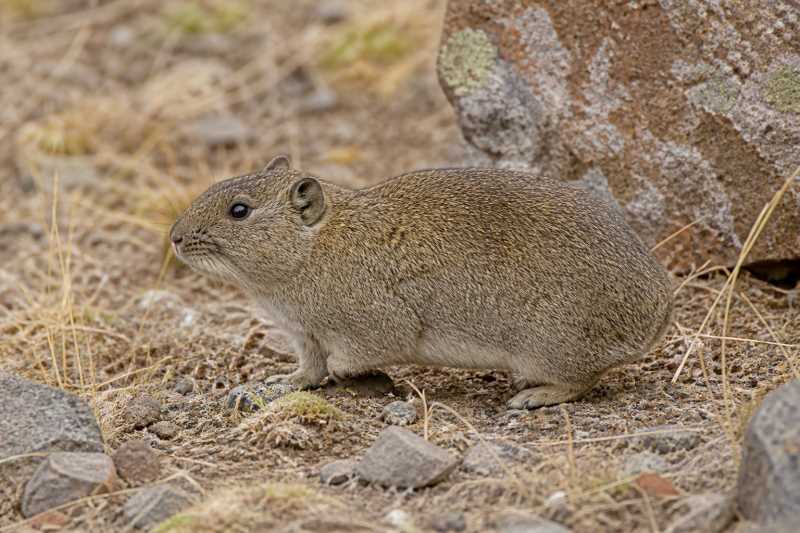
The Shipton’s Mountain Cavy is a small, robust rodent, measuring about 20 to 30 centimeters in length and weighing between 500 to 800 grams. Its body is compact and cylindrical, with a relatively short neck and limbs. The fur is typically dense and coarse, providing insulation against the cold mountain temperatures. The coloration ranges from grayish-brown to a more muted brown, which serves as excellent camouflage against the rocky terrain.
One of the distinguishing features of Shipton’s Mountain Cavy is its large, rounded ears, which are crucial for thermoregulation and detecting predators. The eyes are positioned laterally, offering a wide field of vision, which is essential for spotting threats. The cavy’s incisor teeth are sharp and ever-growing, adapted for gnawing on tough vegetation and bark.
Range and Habitat
Shipton’s Mountain Cavy is endemic to the mountainous regions of the Andes, particularly in areas of Argentina and Chile. These cavies are found at altitudes ranging from 1,500 to 3,500 meters above sea level, where they inhabit rocky outcrops, grasslands, and shrublands.
The habitat of Shipton’s Mountain Cavy is characterized by its harsh climate, with cold temperatures and strong winds. The vegetation in these areas is sparse, consisting mainly of grasses, shrubs, and occasional patches of low-lying trees. The rocky terrain provides ample hiding spots and burrow opportunities, which are essential for the cavy’s survival.
Behavior and Diet
Shipton’s Mountain Cavy is primarily crepuscular, meaning it is most active during the early morning and late afternoon. This behavior helps mitigate the risk of predation and avoids the extreme temperatures of midday. These cavies are social animals, often forming small groups or colonies. Their social structure is relatively loose, with individuals coming together primarily for foraging and protection from predators.
The diet of Shipton’s Mountain Cavy consists mainly of grasses, herbs, and shrubs. They are also known to gnaw on bark and roots, especially during the dry season when other food sources are scarce. Their digestive system is well-adapted to processing fibrous plant material, and like other caviids, they practice coprophagy, consuming their feces to extract additional nutrients.
Identification Tips (Field Recognition Cues)
Identifying Shipton’s Mountain Cavy in the wild requires careful observation and knowledge of their habitat preferences. Here are some field recognition cues:
- Size and Shape: Look for a small, robust rodent with a compact body and short limbs.
- Fur Coloration: Note the grayish-brown to muted brown fur, which provides camouflage against rocky backgrounds.
- Ear Shape: Large, rounded ears are a distinctive feature that aids in thermoregulation.
- Social Behavior: Observe for small groups or colonies, often seen foraging together.
- Habitat: Focus on rocky outcrops and shrublands at high altitudes, their preferred habitat.
Conservation Status (with Threats and Protections)
The conservation status of Shipton’s Mountain Cavy is currently classified as "Least Concern" by the International Union for Conservation of Nature (IUCN). This classification is due to its relatively stable population and wide distribution across the Andean region. However, there are several threats that could impact their populations in the future.
Threats
- Habitat Destruction: Agricultural expansion and mining activities in the Andes pose significant threats to their natural habitats.
- Climate Change: Altered weather patterns can affect the availability of food and suitable habitat.
- Predation: Introduced predators, such as domestic cats and dogs, can increase predation pressure on cavies.
Protections
- Protected Areas: Some populations of Shipton’s Mountain Cavy are located within national parks and protected reserves, which help safeguard their habitat.
- Conservation Programs: Efforts to monitor populations and study their ecology aid in conservation planning.
- Public Awareness: Educating local communities about the ecological role of cavies can help reduce human-induced threats.
Frequently Asked Questions
How does Shipton’s Mountain Cavy adapt to cold mountain environments?
Shipton’s Mountain Cavy has dense fur for insulation, large ears for thermoregulation, and a behavior pattern that avoids the coldest parts of the day.
What do Shipton’s Mountain Cavies eat?
They primarily feed on grasses, herbs, and shrubs, with a preference for fibrous plant material. During scarce times, they may eat bark and roots.
Are Shipton’s Mountain Cavies endangered?
Currently, they are classified as "Least Concern," but habitat destruction and climate change could threaten their populations in the future.
How can one identify Shipton’s Mountain Cavy in the wild?
Look for a small rodent with grayish-brown fur, large ears, and a preference for rocky, high-altitude habitats.
What role do Shipton’s Mountain Cavies play in their ecosystem?
As grazers, they help maintain plant community dynamics, and as prey, they are an essential food source for local predators.
Related posts