Introduction
The Flores Shrew, scientifically known as Suncus mertensi, is a small mammalian species native to the Indonesian island of Flores. This elusive creature belongs to the Soricidae family, which comprises various species of shrews found worldwide. Despite its diminutive size, the Flores Shrew plays a significant role in its ecosystem, primarily as an insectivore that helps control insect populations. Understanding the Flores Shrew is crucial, not only for the conservation of this species but also for the broader ecological dynamics of the region.
Physical Description
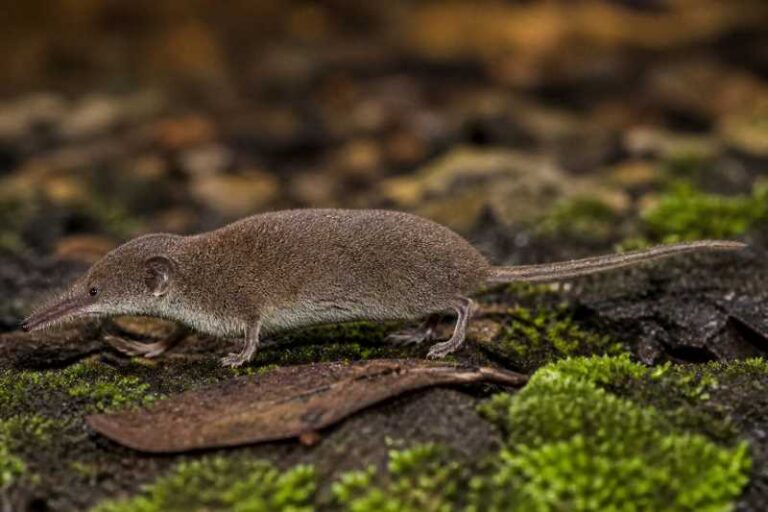
The Flores Shrew is a small, insectivorous mammal characterized by its slender body and elongated snout. Typically, an adult Flores Shrew measures between 5 to 8 centimeters in body length, with an additional tail length of about 3 to 5 centimeters. Its fur is generally dense and soft, with a grayish-brown hue that provides effective camouflage against the forest floor. The shrew’s eyes are small and bead-like, adapted for its nocturnal lifestyle, while its ears are relatively inconspicuous, blending seamlessly into the fur. The snout is long and flexible, aiding in the detection of prey in leaf litter and soil.
Range and Habitat
The Flores Shrew is endemic to the island of Flores in Indonesia, a region known for its rich biodiversity. This island forms part of the Lesser Sunda Islands and features a variety of habitats, from tropical rainforests to montane forests. The Flores Shrew predominantly inhabits the lower montane forests, where it thrives in the dense undergrowth and moist environment. The shrew is also found in secondary forests and occasionally in agricultural landscapes, although its presence in these areas is less common due to habitat disturbances caused by human activities.
Behavior and Diet
Being a nocturnal creature, the Flores Shrew is most active during the night. It exhibits solitary behavior, with individuals maintaining distinct territories marked by scent. The shrew’s diet primarily consists of insects and other small invertebrates. It uses its keen sense of smell and touch to locate prey, which it captures with rapid, precise movements. The Flores Shrew plays a critical role in controlling insect populations, thereby contributing to the ecological balance within its habitat.
Identification Tips (Field Recognition Cues)
Identifying the Flores Shrew in the wild can be challenging due to its small size and secretive nature. However, certain field recognition cues can aid in its identification:
- Size and Shape: Look for a small, compact body with a long snout.
- Coloration: Note the grayish-brown fur, which blends with the forest floor.
- Behavior: Observe its nocturnal activity, primarily during dusk and nighttime.
- Habitat: Search in the dense undergrowth of lower montane forests.
Conservation Status (With Threats and Protections)
The Flores Shrew is currently classified as Least Concern by the International Union for Conservation of Nature (IUCN), primarily due to its relatively stable population. However, the species faces several threats, including habitat loss from deforestation and agricultural expansion. Additionally, the introduction of non-native species poses a threat by predation and competition for resources. Conservation efforts focus on habitat protection and management, including the establishment of protected areas and promoting sustainable land-use practices. Continued research and monitoring are essential to ensure the long-term survival of the Flores Shrew.
Frequently Asked Questions
1. What is the Flores Shrew’s primary diet? The Flores Shrew primarily feeds on insects and other small invertebrates, playing a crucial role in controlling insect populations and maintaining ecological balance in its habitat.
2. Where can the Flores Shrew be found in the wild? The Flores Shrew is endemic to the island of Flores in Indonesia, predominantly inhabiting lower montane forests but also found in secondary forests and occasionally in agricultural areas.
3. What are the main threats to the Flores Shrew? The main threats to the Flores Shrew include habitat loss due to deforestation and agricultural expansion, as well as the introduction of non-native species that can lead to increased predation and competition for resources.
4. How can one identify a Flores Shrew in the field? Identifying a Flores Shrew involves looking for a small, compact body with a long snout, grayish-brown fur, and its nocturnal activity within the dense undergrowth of lower montane forests.
Related posts