The Enigmatic Mewing Kingfisher: An Insight into the Life of Todiramphus ruficollaris
The Mewing Kingfisher, scientifically known as Todiramphus ruficollaris, is a captivating avian species that garners interest from ornithologists and birdwatchers alike. Endemic to the Cook Islands, particularly Atiu Island, this kingfisher is distinguished by its striking plumage and distinctive vocalizations. As a member of the Alcedinidae family, the Mewing Kingfisher plays a unique role in its ecosystem, showcasing the rich biodiversity of its island habitat. This article delves into the intricate details of the Mewing Kingfisher’s life, exploring its habitat, behavior, and conservation status.
Habitat and Distribution
The Mewing Kingfisher is a territorial species primarily found on Atiu Island in the Cook Islands. The island’s dense forests and coastal areas provide an ideal habitat that supports the kingfisher’s needs. The bird thrives in subtropical or tropical moist lowland forests and occasionally ventures into gardens and plantations in search of food. The limited range of the Mewing Kingfisher makes it a species of significant interest, as its population is confined to a specific geographic location, rendering it vulnerable to environmental changes.
Physical Characteristics
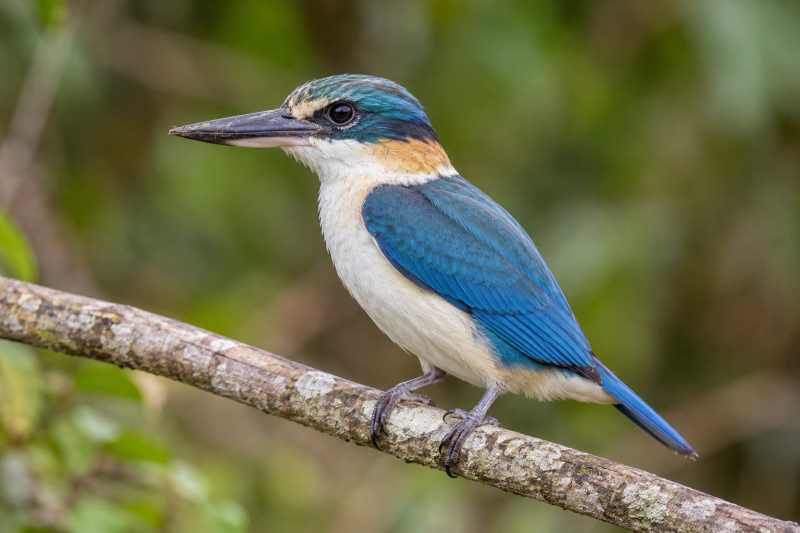
The Mewing Kingfisher is a medium-sized bird, measuring approximately 20 to 23 centimeters in length. Its plumage is a vibrant blend of colors, with a predominantly blue-green back, wings, and tail. The underparts are a contrasting white, while the head is adorned with a striking combination of rufous and blue hues. The bird’s name is derived from its distinctive mewing call, which is often heard echoing through the forests of Atiu. Its large, robust bill is perfectly adapted for catching prey, primarily consisting of insects and small vertebrates.
Behavior and Diet
The Mewing Kingfisher is known for its solitary and territorial nature. It fiercely defends its territory from intruders, using its loud calls and displays of aerial acrobatics to ward off potential threats. Feeding primarily on insects, the kingfisher employs a sit-and-wait strategy, perching silently on a branch before swooping down to capture its prey. Occasionally, it supplements its diet with small reptiles and amphibians, showcasing its adaptability as a predator.
Breeding and Nesting
Breeding typically occurs between October and December, coinciding with the rainy season on Atiu Island. The Mewing Kingfisher is a cavity nester, often excavating burrows in termite mounds or tree hollows. The female lays a clutch of two to four eggs, which both parents incubate for approximately 20 to 22 days. After hatching, the chicks are cared for by both parents, with fledging occurring around 25 to 30 days post-hatching. This cooperative breeding strategy ensures higher survival rates for the offspring in the challenging island environment.
Conservation Status
The Mewing Kingfisher is currently listed as Vulnerable on the IUCN Red List of Threatened Species. The primary threats to its survival include habitat destruction due to agricultural expansion and invasive species such as rats and cats, which prey on the kingfisher’s eggs and young. Conservation efforts are crucial to ensure the survival of this unique species. Local conservation groups and international organizations are working collaboratively to implement habitat restoration projects and predator control programs.
Importance in Ecosystem and Culture
As a predator, the Mewing Kingfisher plays a vital role in controlling insect populations, thus maintaining ecological balance within its habitat. Furthermore, it holds cultural significance for the indigenous people of the Cook Islands, often featured in local folklore and traditional stories. The bird’s presence is a symbol of natural heritage, underscoring the importance of preserving the unique biodiversity of the region.
Conclusion
The Mewing Kingfisher is a remarkable species that embodies the beauty and complexity of island ecosystems. Its vibrant plumage, distinctive calls, and ecological significance make it a subject of fascination and a priority for conservation efforts. Protecting the Mewing Kingfisher requires a comprehensive approach that includes habitat preservation, invasive species management, and community engagement. By safeguarding this species, we not only preserve a unique element of natural heritage but also contribute to the overall health of the island’s ecosystem.
Related posts