Introduction
The Formosan Serow (Capricornis swinhoei) stands as an enduring symbol of Taiwan’s unique biodiversity. This elusive and shy ungulate is one of the few large mammals endemic to the island, rendering it a species of considerable interest among researchers and wildlife enthusiasts. Known for its distinctive appearance and adaptability to various mountainous habitats, the Formosan Serow is an integral part of Taiwan’s natural heritage. As human activities increasingly encroach upon its natural habitat, understanding and preserving this fascinating species becomes ever more critical.
Physical Description
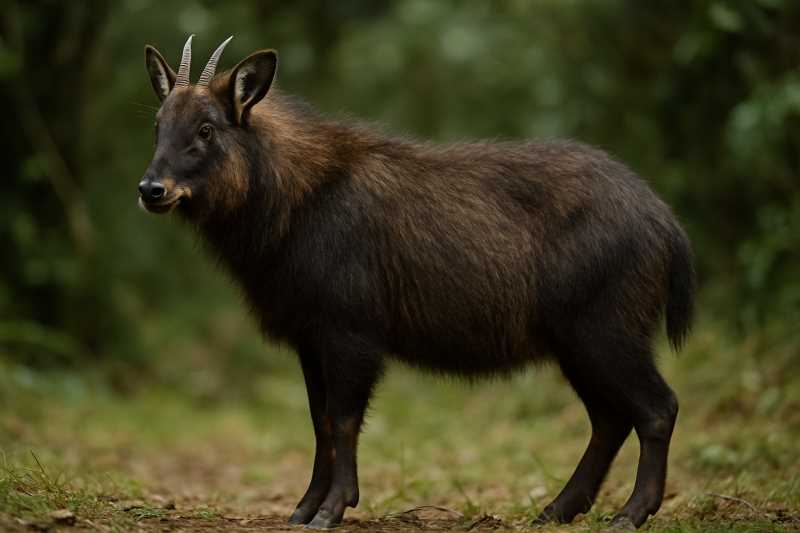
The Formosan Serow is a medium-sized mammal, often referred to as a goat-antelope due to its intermediate characteristics between goats and antelopes. Adults typically weigh between 20 to 35 kilograms and stand about 70 to 75 centimeters tall at the shoulder. Their robust bodies are covered with coarse, thick fur that varies in color from dark brown to black, providing excellent camouflage against the dense forest undergrowth.
Both male and female serows possess short, backward-curving horns that can reach up to 20 centimeters in length. These horns, along with a prominent mane of longer hair running down the neck and back, add to their distinctive appearance. The serow’s face is adorned with a pair of large, expressive eyes and small, rounded ears that enhance its auditory capabilities.
The Formosan Serow’s strong limbs and well-developed hooves are perfectly adapted for navigating the rocky and steep terrains of its mountainous habitat. This physical agility is crucial for their survival, as it allows them to escape predators and traverse difficult landscapes in search of food.
Range and Habitat
Endemic to Taiwan, the Formosan Serow primarily inhabits the island’s central mountain ranges. These areas are characterized by rugged terrain, dense forests, and steep cliffs, offering the perfect environment for this agile mammal. The serow is most commonly found at elevations ranging from 1,000 to 3,500 meters, although they may occasionally venture to lower altitudes in search of food or during certain seasons.
The serow’s habitat includes diverse vegetation zones, from mixed hardwood forests to coniferous woodlands, depending on the elevation. These forests provide essential cover and food resources, ensuring the serow’s survival in an ever-changing environment. The presence of water sources, such as streams and rivers, is also crucial, as these provide both hydration and additional plant life for grazing.
Behavior and Diet
Formosan Serows are primarily solitary animals, with each individual maintaining a specific home range. They are crepuscular, most active during the early morning and late afternoon, which helps them avoid the midday heat and potential predators.
Their diet consists mainly of a variety of plant materials, including leaves, twigs, and grasses. The serow’s ability to digest fibrous plant matter is facilitated by its complex stomach, which allows it to extract maximum nutrients from its diet. This adaptability in feeding habits enables the serow to thrive in diverse habitats, from lush forests to sparser, rocky areas.
Social interactions among Formosan Serows are limited, occurring primarily during the mating season, which lasts from October to December. During this time, males may exhibit more aggressive behaviors as they compete for the attention of females. After a gestation period of approximately seven months, females typically give birth to a single offspring, which they raise independently.
Identification Tips (Field Recognition Cues)
Recognizing a Formosan Serow in the wild can be challenging due to its elusive nature and effective camouflage. However, certain key features can aid in identification:
- Body Size and Shape: The serow’s medium size, robust body, and goat-like appearance are distinctive.
- Coloration: Look for their dark brown to black fur with a lighter underbelly, which blends well with the forest environment.
- Horns: Both sexes have short, backward-curving horns, which are a telltale sign.
- Behavior: Observe their solitary and crepuscular activity patterns, as they are often seen during early morning or late afternoon.
- Habitat: They are most likely to be found in steep, rugged terrains within Taiwan’s central mountain ranges.
Conservation Status (With Threats and Protections)
The International Union for Conservation of Nature (IUCN) currently classifies the Formosan Serow as "Least Concern," primarily due to its relatively stable population. However, this status does not imply that the species is free from threats.
Threats
- Habitat Loss and Fragmentation: Deforestation and development projects continue to encroach upon the serow’s natural habitat, reducing the available space for these animals to live and forage.
- Poaching: Although hunting of the serow is illegal in Taiwan, poaching remains a concern. The serow is hunted for its meat and horns, which are sometimes used in traditional medicine.
- Human Disturbance: Increased human activity in mountainous areas, such as hiking and tourism, can lead to habitat disturbance, affecting the serow’s natural behavior.
Protections
The Taiwanese government has implemented several measures to protect the Formosan Serow. These include the establishment of protected areas and national parks within the serow’s habitat range, as well as strict enforcement of hunting regulations. Conservation programs also focus on habitat restoration and public awareness campaigns to promote the importance of preserving this unique species.
Frequently Asked Questions
What is the natural habitat of the Formosan Serow?
The Formosan Serow is native to Taiwan and primarily inhabits the central mountain ranges. These areas provide the rugged, forested environments that the serow needs for survival, with elevations ranging from 1,000 to 3,500 meters.
How does the Formosan Serow contribute to its ecosystem?
As a herbivore, the Formosan Serow plays a crucial role in maintaining the health of its ecosystem. It helps in seed dispersal and contributes to the control of plant growth, thereby supporting biodiversity within its habitat.
What are the main threats to the Formosan Serow?
The primary threats to the Formosan Serow include habitat loss due to deforestation and development, illegal poaching for their meat and horns, and disturbances caused by increasing human activities in their habitat.
How can we help in the conservation of the Formosan Serow?
Supporting conservation efforts, such as habitat restoration projects and national park initiatives, can significantly aid in the protection of the Formosan Serow. Additionally, raising awareness about the species and its ecological importance can foster greater public support for conservation measures.
Are there any cultural significances associated with the Formosan Serow?
In Taiwanese culture, the Formosan Serow is often seen as a symbol of resilience and adaptability, reflecting the tenacious spirit of the island’s wildlife. This cultural appreciation adds an additional layer of importance to efforts aimed at preserving the species.
Related posts