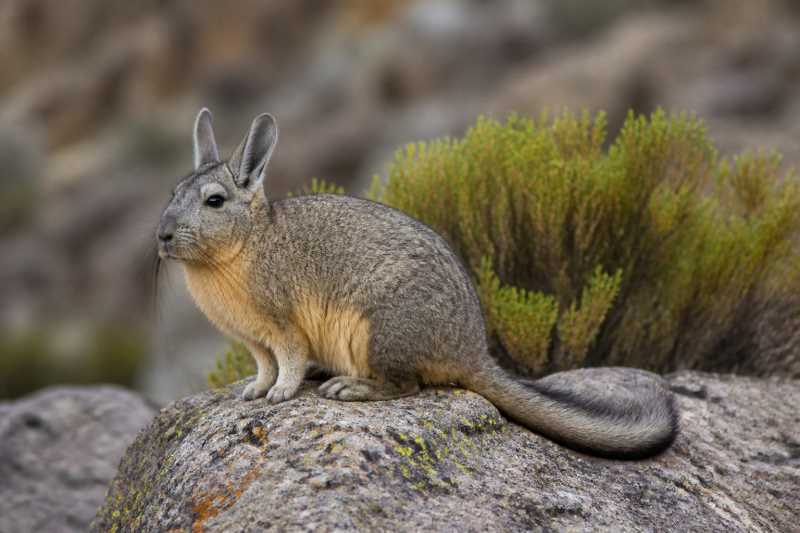
Southern Mountain Viscacha (Lagidium moreni)
Introduction
The Southern Mountain Viscacha, scientifically known as Lagidium moreni, is a small herbivorous mammal native to the rugged terrains of South America. This fascinating species belongs to the family Chinchillidae, sharing kinship with the more familiar chinchillas. Known for their remarkable agility and endearing appearance, Southern Mountain Viscachas inhabit some of the most challenging environments, thriving in the high-altitude regions of the Andes. This article delves into the various aspects of the Southern Mountain Viscacha, encompassing its physical traits, habitat preferences, behaviors, and the conservation challenges it faces.
Physical Description
Southern Mountain Viscachas are small to medium-sized mammals characterized by their dense, soft fur, which helps them withstand the cold temperatures of their high-altitude habitat. They typically weigh between 2 to 3 kilograms and measure about 30 to 45 centimeters in body length, with their bushy tails adding an additional 20 to 30 centimeters.
Their fur is predominantly gray or brown, often with a mottled appearance that provides excellent camouflage against rocky terrains. The fur on their underbellies is lighter, usually white or pale gray. Their rounded ears are covered in fur, and their large, expressive eyes are well-suited for the low-light conditions of dawn and dusk, when they are most active.
One of the most distinguishing features of the Southern Mountain Viscacha is its long, bushy tail, which aids in balance and agility as they navigate the rocky outcrops and steep hillsides of their natural habitat. Their powerful hind legs enable them to leap considerable distances, a crucial adaptation for avoiding predators and moving efficiently in their rugged surroundings.
Range and Habitat
Southern Mountain Viscachas are endemic to the Andes Mountains, primarily found in Argentina and Chile. They inhabit altitudes ranging from 3,000 to over 5,000 meters above sea level, favoring rocky outcrops, cliffs, and scree slopes where they can find shelter and food.
These high-altitude environments are characterized by extreme temperature variations, sparse vegetation, and limited water sources. Viscachas have adapted to these conditions by developing efficient water retention mechanisms and a diet that maximizes nutritional intake from the available vegetation.
The species’ range is somewhat fragmented, with populations separated by geographic barriers and human activities such as mining and agriculture. Despite these challenges, they are remarkably resilient, with a distribution that spans several protected areas and national parks within their range.
Behavior and Diet
Southern Mountain Viscachas are social animals, often found in groups ranging from small family units to larger colonies of up to several dozen individuals. These social structures provide protection against predators and facilitate cooperative care of the young.
They are primarily crepuscular, being most active during dawn and dusk to avoid the extremes of midday heat and nighttime cold. Viscachas spend much of their active time foraging for food, which consists mainly of grasses, mosses, lichens, and other high-altitude vegetation. Their diet is supplemented by bark, seeds, and small shrubs, providing a balanced intake of nutrients necessary for survival in their harsh environment.
Communication among viscachas includes a range of vocalizations, body language, and scent marking. Alarm calls are common when predators such as foxes, birds of prey, and wild cats are detected, prompting the colony to seek shelter in crevices and rocky outcrops.
Identification Tips (Field Recognition Cues)
Identifying Southern Mountain Viscachas in the field requires a keen eye and a bit of patience. Here are some tips to help you spot these elusive creatures:
- Habitat: Look for them in rocky, high-altitude areas with sparse vegetation. They are often found perched on rocks or cliffs.
- Appearance: Note their distinctive bushy tails, which are often held upright. Their fur is dense and typically gray or brown with lighter undersides.
- Behavior: Observe their movement patterns; they are agile jumpers and tend to hop between rocks.
- Social Groups: Spotting one usually means others are nearby, as they live in social groups.
- Activity Timing: They are most active during the early morning and late afternoon, so plan your observation accordingly.
Conservation Status
The conservation status of the Southern Mountain Viscacha is currently listed as Least Concern by the International Union for Conservation of Nature (IUCN). However, localized threats could affect certain populations, necessitating ongoing monitoring and conservation measures.
Threats
- Habitat Loss: Expansion of agricultural activities and mining operations pose significant threats to their habitat.
- Climate Change: Rising temperatures and changing precipitation patterns could alter their habitat and food sources.
- Predation: Natural predators, along with domestic dogs and cats introduced by humans, can impact viscacha populations.
Protections
Several protected areas within their range offer a refuge from human activities. Conservation efforts include habitat restoration projects and community education programs aimed at minimizing human-wildlife conflicts.
Frequently Asked Questions
What do Southern Mountain Viscachas eat?
Southern Mountain Viscachas primarily feed on grasses, mosses, lichens, and other vegetation found in their high-altitude habitat. They also consume bark, seeds, and small shrubs to supplement their diet.
How do Southern Mountain Viscachas adapt to cold environments?
Southern Mountain Viscachas have dense fur that provides insulation against cold temperatures. Their ability to retain water and extract maximum nutrients from sparse vegetation helps them survive in harsh alpine environments.
Are Southern Mountain Viscachas endangered?
Currently, Southern Mountain Viscachas are classified as Least Concern by the IUCN, but they face threats from habitat loss and climate change, which could impact certain populations.
Where can I see Southern Mountain Viscachas in the wild?
Southern Mountain Viscachas are commonly found in the Andes Mountains of Argentina and Chile. Look for them in rocky, high-altitude areas within national parks and protected reserves.
How do Southern Mountain Viscachas communicate?
Viscachas communicate through vocalizations, body language, and scent marking. Alarm calls are used to warn the group of predators, prompting them to seek shelter quickly.
Related posts