Introduction
Royle’s Pika (Ochotona roylii) is a captivating small mammal belonging to the family Ochotonidae. Native to the Himalayan regions, this species is known for its distinctive appearance and unique ecological role. Pikas, often referred to as "rock rabbits," are closely related to rabbits and hares but exhibit distinct behavioral and physiological traits. As climate change and habitat disruption continue to affect global biodiversity, understanding and protecting species like Royle’s Pika becomes increasingly crucial.
Physical Description
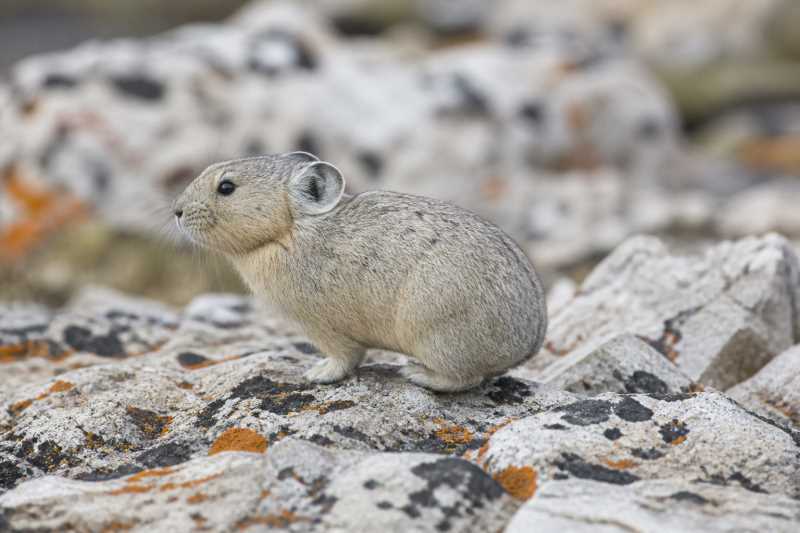
Royle’s Pika is a small mammal, typically measuring between 15 to 20 cm in length with a short, rounded body and no visible tail. The species features a dense, soft fur that varies in color from brownish-gray to reddish-brown, providing excellent camouflage against rocky terrains. The fur is lighter on the ventral side, offering additional camouflage when viewed from below. Royle’s Pika has short, rounded ears and relatively large eyes, adaptations that aid in detecting predators and communicating with other pikas.
Range and Habitat
This species is primarily found in the high-altitude regions of the Himalayas, ranging from India, Nepal, Bhutan, to parts of Tibet. Royle’s Pika thrives in rocky crevices and mountainous terrains, often at elevations between 2,000 to 5,000 meters. These habitats provide not only a refuge from predators but also a unique microclimate that suits their biological needs. The pika’s habitat preference for talus slopes and rocky outcrops is vital for thermoregulation and food storage practices that are critical for their survival through harsh winters.
Behavior and Diet
Royle’s Pika is diurnal, with peak activity observed during early morning and late afternoon. This timing helps them avoid the midday heat and potential predators. Unlike many mammals, pikas do not hibernate. Instead, they engage in a behavior known as ‘haying,’ where they collect and store vegetation during the summer months to sustain themselves through the winter. Their diet primarily consists of grasses, herbs, and leaves, although they occasionally consume lichens and mosses when other food sources are scarce. This foraging behavior is crucial for nutrient intake and survival in their nutrient-poor environments.
Identification Tips (Field Recognition Cues)
Identifying Royle’s Pika in the field requires keen observation due to their excellent camouflage. Key identification cues include:
- Size and Shape: Look for a small, rounded mammal with no visible tail and rounded ears.
- Coloration: Notice the brownish-gray to reddish-brown fur, which blends seamlessly with rocky surroundings.
- Behavior: Observe for their characteristic ‘haying’ behavior, as they are often seen carrying vegetation.
- Vocalizations: Listen for their high-pitched calls, which serve as both a communication tool and a predator alert system.
Conservation Status (with Threats and Protections)
Royle’s Pika is currently classified as a species of "Least Concern" by the IUCN Red List. However, this status should not obscure the potential threats they face. Climate change poses a significant risk, as rising temperatures can lead to habitat degradation and force pikas to move to higher, less hospitable altitudes. Human activities such as agriculture and tourism also contribute to habitat loss and fragmentation. Conservation efforts focus on habitat preservation, climate change mitigation, and raising awareness about the ecological importance of pikas. Protected areas within their range offer some refuge, but ongoing monitoring and research are essential to ensure their continued survival.
Frequently Asked Questions
1. What adaptations allow Royle’s Pika to survive in high-altitude environments? Royle’s Pika has several adaptations for high-altitude survival, including dense fur for insulation, a compact body to conserve heat, and specialized foraging and food storage behaviors to endure harsh winters.
2. How does climate change impact Royle’s Pika? Climate change affects Royle’s Pika by altering their habitat, forcing them to higher altitudes where conditions may be less favorable. This shift can lead to reduced habitat availability and increased vulnerability to predators.
3. Are Royle’s Pikas social animals? While Royle’s Pikas are generally solitary, they are known to engage in vocal communication and occasional social interactions, especially during the breeding season or when defending territories.
4. What efforts are being made to protect Royle’s Pika? Protection efforts for Royle’s Pika include habitat conservation, climate change research, and awareness campaigns to highlight the ecological roles pikas play in their environments.
5. Can Royle’s Pika be found outside the Himalayas? Royle’s Pika is endemic to the Himalayan region and is not naturally found outside this range. They are specifically adapted to the unique environmental conditions of these high-altitude habitats.
Related posts