Introduction
Nelson’s Kangaroo Rat (Dipodomys nelsoni) is a fascinating and unique rodent species that has captured the interest of biologists and wildlife enthusiasts alike. Known for its remarkable adaptations to arid environments, this small mammal is a member of the Heteromyidae family and is closely related to other kangaroo rats. Found primarily in North America, the Nelson’s Kangaroo Rat plays a crucial role in its ecosystem, serving as both a seed disperser and a prey species for larger predators.
Physical Description
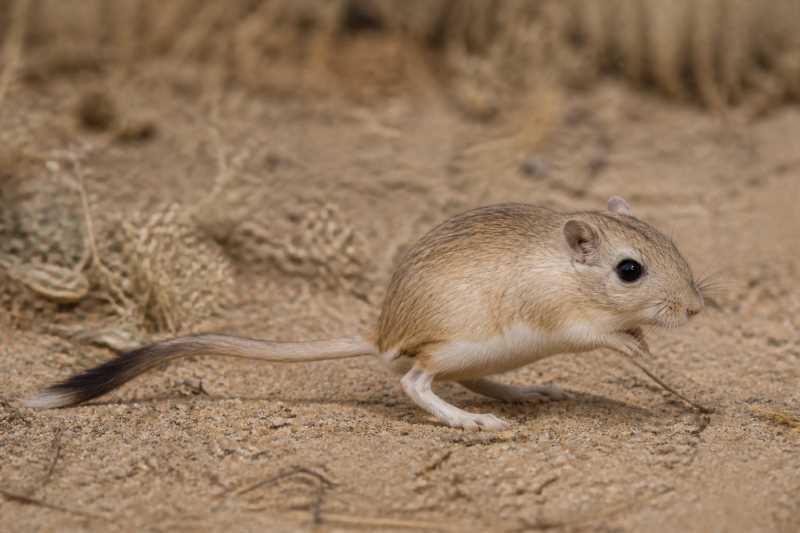
Nelson’s Kangaroo Rat is a small rodent characterized by its distinct physiognomy, adapted for life in desert environments. It exhibits a compact body with a length typically ranging from 9 to 14 centimeters, excluding its long, tufted tail, which can add another 12 to 20 centimeters. This tail is not only a balancing tool but also aids in thermoregulation.
The fur of the Nelson’s Kangaroo Rat is soft and dense, providing insulation against both the cold desert nights and hot days. Its coloration is generally a pale sandy brown on the back, with a lighter, almost white underbelly, which provides excellent camouflage against the desert sands. One of the most notable features is its large hind legs, resembling those of a kangaroo, which enable it to perform remarkable leaps of up to three meters to escape predators. Its forelimbs are shorter and adapted for digging.
Range and Habitat
Nelson’s Kangaroo Rat is primarily found in the southwestern regions of the United States and northern Mexico. This species thrives in arid and semi-arid habitats, including sandy soils, scrublands, and desert grasslands. The adaptability of this species to different desert environments is remarkable, as it can survive in areas with minimal vegetation and water resources.
The habitat preference of Nelson’s Kangaroo Rat includes areas with loose, sandy soils, which facilitate the digging of burrows for shelter and nesting. These burrows are essential for protection against predators and extreme weather conditions.
Behavior and Diet
Nelson’s Kangaroo Rat is primarily nocturnal, which helps it avoid the extreme heat of the day. During the night, it is active in foraging for food, which mainly consists of seeds, grains, and occasionally insects. This rodent is a proficient seed harvester, storing seeds in cheek pouches and later caching them in its burrow for future consumption.
The diet of Nelson’s Kangaroo Rat is highly specialized to maximize water retention. It obtains most of its moisture from the seeds it consumes, thus reducing its reliance on direct water sources. This adaptation is crucial for survival in desert habitats.
Identification Tips
Identifying Nelson’s Kangaroo Rat in the field requires attention to several key characteristics:
- Size and Shape: Look for a small rodent with a robust, compact body and a long tail with a distinctive tuft at the end.
- Hind Legs: Note the disproportionately large hind legs compared to the forelimbs, which are adapted for jumping.
- Coloration: Observe the pale sandy brown coloration on the back and the lighter underbelly.
- Behavior: Watch for its nocturnal activity and characteristic hopping movement.
Conservation Status
The conservation status of Nelson’s Kangaroo Rat varies across its range, and while it is not currently listed as endangered, it faces several threats that could impact its populations. Habitat loss due to agricultural expansion and urban development poses significant challenges. Additionally, climate change could alter the desert ecosystems that this species depends on.
Conservation efforts focus on habitat preservation and restoration. Protecting areas of critical habitat and implementing measures to mitigate habitat destruction are essential for the long-term survival of Nelson’s Kangaroo Rat.
Frequently Asked Questions
1. What adaptations help Nelson’s Kangaroo Rat survive in the desert?
Nelson’s Kangaroo Rat has several adaptations, including its ability to conserve water by deriving moisture from seeds, nocturnal behavior to avoid daytime heat, and specialized kidneys that concentrate urine to minimize water loss.
2. How does Nelson’s Kangaroo Rat contribute to its ecosystem?
As seed dispersers, Nelson’s Kangaroo Rats play a vital role in their ecosystem by aiding in plant propagation. They also serve as prey for various predators, maintaining the balance within the food chain.
3. Where can I see Nelson’s Kangaroo Rat in the wild?
To observe Nelson’s Kangaroo Rat, visit desert regions within its range in the southwestern United States and northern Mexico. Look for them during nighttime in areas with loose, sandy soils.
4. What is the primary threat to Nelson’s Kangaroo Rat populations?
The primary threat to Nelson’s Kangaroo Rat is habitat loss due to human activities such as agriculture and urbanization. Climate change also poses a long-term threat by altering their desert habitats.
5. How can I help in the conservation of Nelson’s Kangaroo Rat?
Supporting habitat conservation initiatives and raising awareness about the importance of preserving desert ecosystems can contribute to the conservation of Nelson’s Kangaroo Rat.
Related posts