Phillips’s Kangaroo Rat: A Comprehensive Guide
Introduction
Phillips’s Kangaroo Rat (Dipodomys phillipsii) is a fascinating mammal species endemic to North America. Known for its distinctive bipedal hopping movement, this small rodent plays a crucial role in its ecosystem. This article delves into various aspects of Phillips’s Kangaroo Rat, including its physical characteristics, habitat, behavior, and conservation status, offering readers a thorough understanding of this unique species.
Physical Description
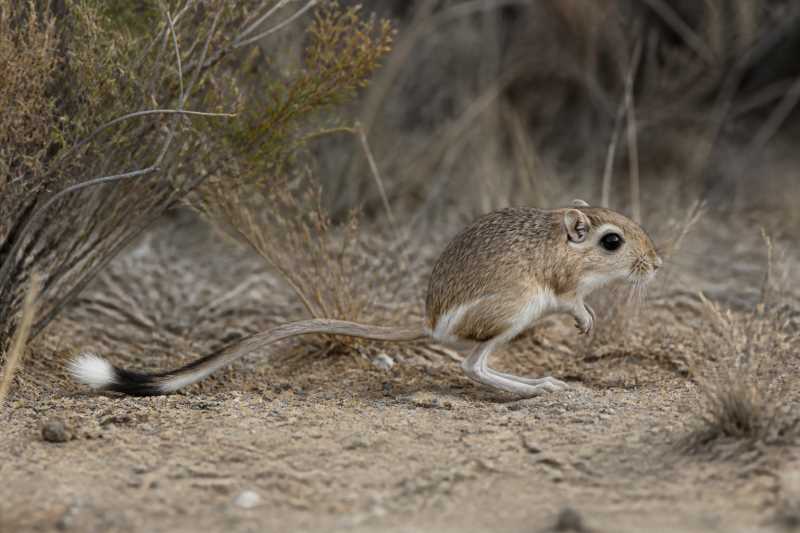
Phillips’s Kangaroo Rat is a small, nocturnal rodent, typically measuring between 10 to 14 centimeters in body length, with a tail approximately 15 to 20 centimeters long. Weighing between 35 and 50 grams, this species is characterized by its large hind legs and feet, which enable it to leap distances of up to 2 meters in a single bound. The fur of the Kangaroo Rat is generally a sandy brown color on the dorsal side, with a lighter, cream-colored underside. This coloration provides effective camouflage against the arid, sandy environments it inhabits.
The species is also noted for its large eyes and small ears, adaptations that enhance its night vision and hearing, crucial for survival in its nocturnal lifestyle. Another distinctive feature includes its cheek pouches, which are used for carrying food back to its burrow.
Range and Habitat
Phillips’s Kangaroo Rat is found primarily in the arid and semi-arid regions of the southwestern United States and parts of northwestern Mexico. Its range includes areas like southern Arizona, New Mexico, and northern Mexico, extending as far south as the Mexican states of Sonora and Chihuahua.
The ideal habitat for the Kangaroo Rat consists of sandy or gravelly soils, often in desert scrub or open grasslands. These habitats provide the necessary conditions for burrowing, which is essential for protection from predators and extreme temperatures. The presence of sparse vegetation is also crucial as it offers both food sources and cover.
Behavior and Diet
Phillips’s Kangaroo Rat is primarily nocturnal, spending the daytime hours in its burrow to avoid the harsh desert sun. At night, it emerges to forage for food, primarily seeds, which constitute the bulk of its diet. The species is well-adapted to arid environments, obtaining necessary moisture from its food and reducing water loss through highly efficient kidneys.
The Kangaroo Rat employs a bipedal hopping movement similar to that of a kangaroo, which is not only energy-efficient but also allows for rapid escape from predators. Socially, the species is solitary, with individuals maintaining territories and only coming together during the breeding season.
Identification Tips
When trying to identify Phillips’s Kangaroo Rat in the field, there are several key characteristics to note:
- Size and Proportions: Look for a small rodent with disproportionately large hind legs and a long tail.
- Coloration: The sandy brown fur with a lighter underside helps it blend into its desert surroundings.
- Movement: Observe the distinctive bipedal hopping, which is unlike the movement of most other rodents.
- Cheek Pouches: Although not always visible, these are a unique feature used to transport food.
Conservation Status
As of the latest assessments, Phillips’s Kangaroo Rat is listed as a species of Least Concern by the International Union for Conservation of Nature (IUCN). However, it faces several threats that could impact its populations in the future.
Threats
- Habitat Loss: Urbanization, agriculture, and industrial development continue to encroach on its natural habitats, leading to habitat fragmentation.
- Climate Change: Alterations in weather patterns may affect the availability of food and water resources.
- Predation: Natural predators include owls, snakes, and foxes, with predation pressures potentially increasing due to habitat changes.
Protections
Conservation efforts focus on habitat preservation and management. Protected areas within its range offer some refuge, and ongoing research aims to better understand its ecological needs and responses to environmental changes.
Frequently Asked Questions
1. What adaptations help Phillips’s Kangaroo Rat survive in the desert? Phillips’s Kangaroo Rat has several adaptations for desert survival, including efficient kidneys that conserve water, nocturnal habits to avoid daytime heat, and a diet that provides necessary moisture.
2. How does Phillips’s Kangaroo Rat contribute to its ecosystem? As seed dispersers, these rodents play a vital role in maintaining plant diversity and health in their ecosystems. Their burrowing activity also aerates the soil, benefiting plant growth.
3. Are Kangaroo Rats dangerous to humans? Kangaroo Rats are not dangerous to humans. They are generally shy and avoid contact, posing no direct threat. However, like all wild animals, they should be observed from a distance.
4. Can Phillips’s Kangaroo Rat be kept as a pet? While it might be tempting to keep a Kangaroo Rat as a pet due to its cute appearance, it is not advisable. They require specific environmental conditions and have complex ecological roles in the wild.
5. How can I help protect Phillips’s Kangaroo Rat? Supporting conservation organizations and advocating for habitat protection are effective ways to contribute to the preservation of this species.
Related posts