Introduction
The Montane Fish-eating Rat, scientifically known as Neusticomys monticolus, is a fascinating species belonging to the rodent family Cricetidae. This elusive creature is primarily found in the montane forests of South America. Despite its name, the Montane Fish-eating Rat is not a true rat but rather a small semiaquatic rodent that has adapted to a unique niche in its environment. This article will delve into the physical characteristics, habitat, behavior, and conservation status of this intriguing species, providing insights into its ecological significance and the challenges it faces in its natural habitat.
Physical Description
The Montane Fish-eating Rat exhibits several distinctive physical traits that set it apart from other rodents. Typically, this species has a compact body structure, with an average length ranging from 10 to 12 centimeters, excluding the tail, which adds an additional 8 to 10 centimeters. Its weight usually hovers around 30 to 50 grams.
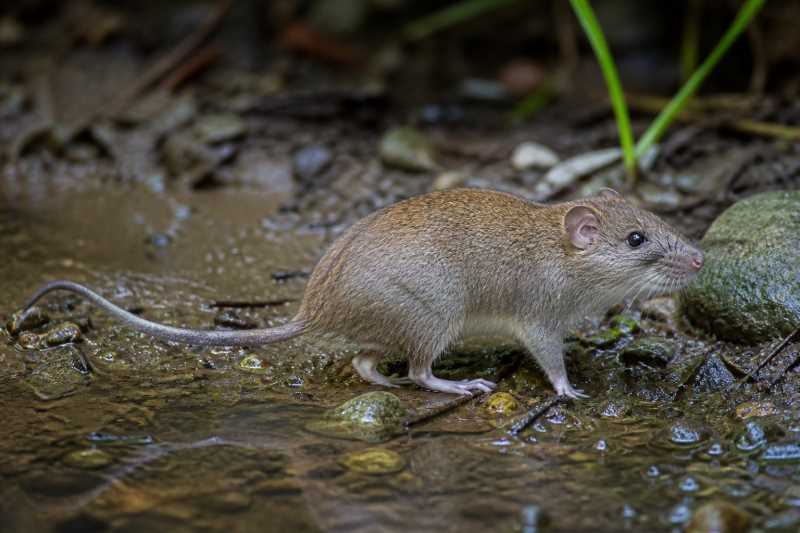
Fur coloration is generally dark brown or gray on the dorsal side, offering excellent camouflage against the forest floor. The ventral side is lighter, often displaying a creamy white hue. One of the most distinctive features of Neusticomys monticolus is its partially webbed hind feet, an adaptation that aids in swimming and foraging in aquatic environments.
The species is equipped with a pointed snout and long whiskers, which are vital for detecting prey and navigating through dense vegetation. The eyes are relatively small, adapted to the low-light conditions of its montane forest habitat.
Range and Habitat
The distribution of the Montane Fish-eating Rat is primarily confined to the Andean regions of South America, particularly in countries such as Colombia, Ecuador, and Peru. These rodents inhabit montane cloud forests, which are characterized by high humidity, frequent mist, and dense vegetation.
Within these forests, Neusticomys monticolus is often found near streams, rivers, and other bodies of water. The species thrives in environments with abundant aquatic and semi-aquatic prey. The elevation range for this species typically spans from 1,500 to 3,000 meters above sea level.
The montane forests provide a rich tapestry of ecological niches, and the presence of the Montane Fish-eating Rat is indicative of a healthy aquatic ecosystem. These habitats, however, are increasingly threatened by human activities, which pose significant challenges to the species’ survival.
Behavior and Diet
The behavior of the Montane Fish-eating Rat is as unique as its name suggests. Primarily nocturnal, this species is most active during the night when it forages for food along the banks of streams and rivers. As an adept swimmer, it primarily feeds on aquatic invertebrates, including insects, crustaceans, and small fish.
Neusticomys monticolus is a solitary animal, with individuals maintaining distinct territories that are marked by scent markings. This territorial behavior helps reduce competition for food resources among individuals. Communication within the species is facilitated through vocalizations, particularly during the breeding season.
The reproductive habits of the Montane Fish-eating Rat are not extensively documented, but it is believed that, like many rodents, they have a short gestation period and produce litters of multiple young. The young are born in nests constructed in secure, hidden locations near water bodies.
Identification Tips (Field Recognition Cues)
Identifying the Montane Fish-eating Rat in the wild can be challenging due to its elusive nature and nocturnal habits. However, certain field recognition cues can aid researchers and enthusiasts in spotting this unique species.
- Habitat Proximity: Look for the species near fast-flowing streams and rivers in montane cloud forests, particularly at elevations between 1,500 and 3,000 meters.
- Physical Traits: Note the dark brown or gray dorsal fur, lighter ventral side, and partially webbed hind feet.
- Behavioral Signs: Listen for nocturnal sounds and look for small disturbances in the water that may indicate the presence of a swimming rodent.
- Territorial Markings: Be aware of potential scent markings along the water’s edge, as these indicate territorial boundaries.
Conservation Status (With Threats and Protections)
The conservation status of the Montane Fish-eating Rat is currently classified as "Data Deficient" by the International Union for Conservation of Nature (IUCN). This classification highlights the lack of comprehensive data on the species’ population trends and distribution patterns.
Several threats pose significant challenges to the survival of Neusticomys monticolus. Habitat destruction due to deforestation, agricultural expansion, and mining activities in the Andean regions are primary concerns. These activities not only reduce available habitat but also impact water quality, which is crucial for the species’ survival.
Efforts to protect the Montane Fish-eating Rat include the establishment of protected areas within its range and initiatives to preserve montane cloud forests. Further research is needed to better understand the species’ ecology and to develop targeted conservation strategies.
Frequently Asked Questions
Why is this species unique?
The Montane Fish-eating Rat is unique due to its semiaquatic lifestyle, a rarity among rodents. Its adaptations for swimming and aquatic foraging, such as partially webbed feet and a diet rich in aquatic fauna, distinguish it from other members of the rodent family.
What are the main threats to the Montane Fish-eating Rat?
The main threats to the Montane Fish-eating Rat include habitat destruction from deforestation, agricultural activities, and mining. These activities degrade the montane cloud forests and aquatic environments essential for the species’ survival.
How can conservation efforts help protect this species?
Conservation efforts can protect the Montane Fish-eating Rat by establishing protected areas, preserving critical habitats, and conducting research to gather data on population trends and ecological needs. Public awareness and education campaigns can also play a role in safeguarding this unique species.
What is the typical diet of Neusticomys monticolus?
The diet of Neusticomys monticolus primarily consists of aquatic invertebrates, including insects, crustaceans, and small fish. This specialized diet is supported by its adept swimming abilities and nocturnal foraging behavior.
Where can the Montane Fish-eating Rat be found?
The Montane Fish-eating Rat can be found in the montane cloud forests of the Andean regions in South America, particularly in Colombia, Ecuador, and Peru. It inhabits areas near streams and rivers at elevations ranging from 1,500 to 3,000 meters.
Related posts