Introduction
Molina’s Hog-nosed Skunk, scientifically named Conepatus chinga, is a fascinating yet often overlooked member of the skunk family. Known for its distinctive elongated snout and striking coloration, this species inhabits various ecosystems across South America. Despite its name, Molina’s Hog-nosed Skunk is not related to pigs; rather, its name derives from the peculiar shape of its nose, reminiscent of a hog’s snout, which aids in its foraging behavior. This article delves into the comprehensive details of Molina’s Hog-nosed Skunk, covering its physical characteristics, habitat, behavior, and conservation status, alongside useful identification tips for wildlife enthusiasts and researchers.
Physical Description
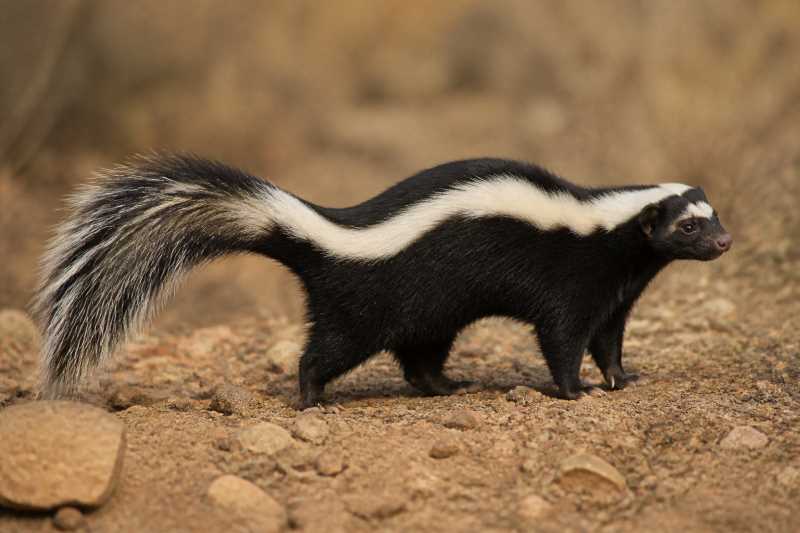
Molina’s Hog-nosed Skunk is a medium-sized mammal with a robust build and a characteristic snout. Adult skunks typically measure between 40 to 50 centimeters in body length, with a bushy tail adding another 30 to 40 centimeters. The species is easily distinguishable by its jet-black fur contrasted with a white stripe running from the top of the head, splitting into two bands down the back, and converging near the tail. This unique coloration serves as a warning signal to potential predators, a common trait shared among skunks.
The skunk’s most defining feature is its elongated, pig-like snout, which is highly adapted for digging. This specialized nose is equipped with strong, curved claws, perfect for unearthing insects and grubs from the soil. Additionally, Molina’s Hog-nosed Skunk possesses a set of sharp teeth, which it uses to consume a variety of prey items.
Range and Habitat
Molina’s Hog-nosed Skunk is native to South America, with a range extending across Argentina, Bolivia, Brazil, Chile, Paraguay, Peru, and Uruguay. The species is highly adaptable and can thrive in diverse habitats, including grasslands, savannas, scrublands, and even arid regions. They have also been observed in agricultural areas and near human settlements, demonstrating their resilience and opportunistic nature.
This skunk prefers habitats that provide ample cover, such as dense vegetation or rocky outcrops, which offer protection from predators and harsh weather conditions. Their distribution is largely influenced by the availability of food resources and suitable denning sites.
Behavior and Diet
Molina’s Hog-nosed Skunks are primarily nocturnal. They spend their nights foraging for food and their days resting in burrows or other sheltered locations. Their diet is omnivorous, consisting of insects, small vertebrates, fruits, and plant matter. The skunk’s keen sense of smell and powerful forelimbs make it an efficient hunter of ground-dwelling insects, such as beetles and larvae.
Socially, Molina’s Hog-nosed Skunks are solitary animals, except during the breeding season or when mothers are rearing their young. They communicate through a variety of vocalizations and scent markings, which play a crucial role in territory establishment and mating.
Identification Tips
Identifying Molina’s Hog-nosed Skunk in the field can be an exciting challenge for wildlife enthusiasts. Here are a few tips to help you recognize this unique species:
- Distinctive Coloration: Look for the characteristic black and white pattern, with a prominent white stripe originating at the head and splitting down the back.
- Elongated Snout: The hog-like snout is a key feature that sets this skunk apart from others.
- Foraging Behavior: Observe their behavior at dusk or night; they often dig in the ground using their snout and claws in search of food.
- Habitat Preference: Check areas with dense vegetation or near human settlements in their South American range.
- Scent: Like all skunks, Molina’s Hog-nosed Skunk can release a potent musk as a defense mechanism.
Conservation Status
Molina’s Hog-nosed Skunk is currently classified as "Least Concern" by the International Union for Conservation of Nature (IUCN). However, the species faces several threats that could impact its population in the future. Habitat destruction due to agricultural expansion and urban development poses a significant risk, as does road mortality and persecution by humans who often view them as pests.
Conservation efforts focus on habitat preservation and increasing public awareness about the ecological role of skunks. Protected areas within the skunk’s range provide a refuge from some of these threats, but continued monitoring and research are essential to ensure their long-term survival.
Frequently Asked Questions
1. What is the primary diet of Molina’s Hog-nosed Skunk?
Molina’s Hog-nosed Skunk is omnivorous, feeding on insects, small vertebrates, fruits, and plant matter. Its diet varies depending on the availability of food resources in its habitat.
2. How does Molina’s Hog-nosed Skunk defend itself from predators?
Like other skunks, Molina’s Hog-nosed Skunk can spray a foul-smelling musk from its anal glands as a defense mechanism against predators. This spray can deter predators and provide the skunk with an opportunity to escape.
3. Where can Molina’s Hog-nosed Skunk be found in the wild?
This skunk species is native to South America, with a range that includes Argentina, Bolivia, Brazil, Chile, Paraguay, Peru, and Uruguay. It inhabits diverse environments such as grasslands, savannas, and scrublands.
4. Are Molina’s Hog-nosed Skunks social animals?
No, these skunks are generally solitary except during the breeding season or when females are raising their young. They are territorial and communicate through scent marking and vocalizations.
5. What threats do Molina’s Hog-nosed Skunks face?
The main threats to Molina’s Hog-nosed Skunk include habitat destruction, road mortality, and human persecution. Conservation efforts are focused on habitat preservation and public education to mitigate these threats.
Related posts