Fraser’s Dolphin (Lagenodelphis hosei)
Introduction
Fraser’s Dolphin (Lagenodelphis hosei) is a lesser-known member of the cetacean family, belonging to the Delphinidae family, which encompasses oceanic dolphins. This species was first identified in 1956 after a specimen was found in Borneo. Named after British zoologist Louis Fraser, Fraser’s Dolphin is renowned for its distinctive physical attributes and intriguing behavior. Despite its elusive nature, this species has garnered attention due to its unique adaptations and widespread distribution in tropical and subtropical waters. Understanding Fraser’s Dolphin is crucial for marine conservation efforts and provides insights into the health of marine ecosystems.
Physical Description
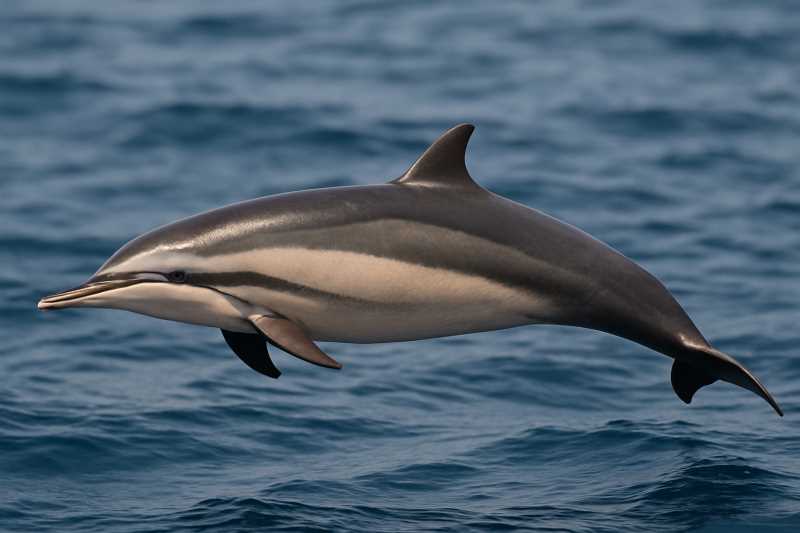
Fraser’s Dolphin is a robust and stocky species, characterized by its unique coloration and body shape. Adult dolphins typically range from 2 to 2.7 meters in length and weigh between 150 to 210 kilograms. They exhibit a distinctive color pattern; a dark gray or bluish-gray back with lighter sides and a white or pinkish belly. A notable feature is the dark stripe that extends from the face, through the eye, and along the flank to the tail, which aids in species identification.
The head of Fraser’s Dolphin is small and rounded with a short, inconspicuous beak. Their dorsal fin is triangular and centrally placed, while the flippers are small and pointed. The species exhibits sexual dimorphism, with males being slightly larger and possessing a more pronounced post-anal hump compared to females.
Range and Habitat
Fraser’s Dolphin is found in deep oceanic waters, primarily inhabiting tropical and subtropical regions. Their distribution spans the Indian, Pacific, and Atlantic Oceans, with populations observed in areas such as the Caribbean, the Gulf of Mexico, the Philippines, and around the Hawaiian Islands.
These dolphins prefer deep waters beyond the continental shelf, often inhabiting depths of over 1,000 meters. They are typically associated with areas of high productivity, where their prey is abundant. Fraser’s Dolphins are rarely seen close to shore, which has contributed to their lesser-known status compared to other dolphin species.
Behavior and Diet
Fraser’s Dolphins are highly social animals, often seen in large groups ranging from 100 to over 1,000 individuals. These groups are sometimes mixed with other cetacean species such as melon-headed whales and spinner dolphins. The species is known for its energetic behavior, frequently engaging in rapid swimming and acrobatic leaps, although they are less likely to approach boats compared to other dolphins.
Their diet primarily consists of small fish, squid, and crustaceans. Fraser’s Dolphins are deep divers, plunging to depths of up to 600 meters to forage for food. This deep-diving behavior is supported by their robust body structure and high myoglobin content in their muscles, allowing them to store and utilize oxygen efficiently during dives.
Identification Tips
Field recognition of Fraser’s Dolphin can be challenging due to their preference for deep waters and elusive behavior. However, several key features can aid in their identification:
- Body Shape: Look for a robust, stocky body with a small, rounded head and short beak.
- Coloration: Notice the dark gray back, lighter sides, and distinctive dark stripe from the face to the tail.
- Dorsal Fin: Observe the triangular dorsal fin positioned centrally on the back.
- Behavior: Large group sizes, rapid swimming, and acrobatic leaps can indicate the presence of Fraser’s Dolphins.
Conservation Status
Fraser’s Dolphin is currently classified as "Least Concern" by the International Union for Conservation of Nature (IUCN). However, like many marine species, they face several threats that could impact their populations in the future.
Threats
- Bycatch: Incidental capture in fishing gear, particularly in tuna fisheries, poses a significant threat.
- Marine Pollution: Pollution from plastics and chemical contaminants can affect their health and food sources.
- Climate Change: Changes in ocean temperatures and currents may alter their habitat and prey availability.
Protections
International agreements such as the Marine Mammal Protection Act and regional conservation efforts aim to mitigate these threats. Continued research and monitoring are essential to ensure the species remains abundant and to address any emerging conservation challenges.
Frequently Asked Questions
What do Fraser’s Dolphins eat?
Fraser’s Dolphins primarily feed on small fish, squid, and crustaceans. They are deep divers, often reaching depths of 600 meters to forage for their prey.
How can I identify a Fraser’s Dolphin?
Look for a robust, stocky body with a small, rounded head, a distinctive dark stripe from face to tail, and a centrally placed triangular dorsal fin.
Where can Fraser’s Dolphins be found?
They inhabit deep oceanic waters in tropical and subtropical regions, including the Indian, Pacific, and Atlantic Oceans.
Are Fraser’s Dolphins endangered?
Currently, Fraser’s Dolphins are listed as "Least Concern" by the IUCN, although they face threats from bycatch, pollution, and climate change.
How social are Fraser’s Dolphins?
Fraser’s Dolphins are highly social and often found in large groups ranging from 100 to over 1,000 individuals, sometimes mingling with other cetacean species.
Related posts