Introduction
The Chinese Red-cheeked Squirrel, scientifically named Dremomys ornatus, is a fascinating mammal species native to Asia. This creature, known for its distinctive red cheek patches, plays a vital role in the ecosystems it inhabits. As small, agile rodents, these squirrels contribute to seed dispersal, thus influencing forest composition and health. Despite their ecological significance, much about their lifestyle remains a mystery to the broader public, making them a subject of interest for researchers and wildlife enthusiasts alike. This article delves into the Chinese Red-cheeked Squirrel’s physical characteristics, habitat, behavior, and conservation status, providing a comprehensive overview of this intriguing species.
Physical Description
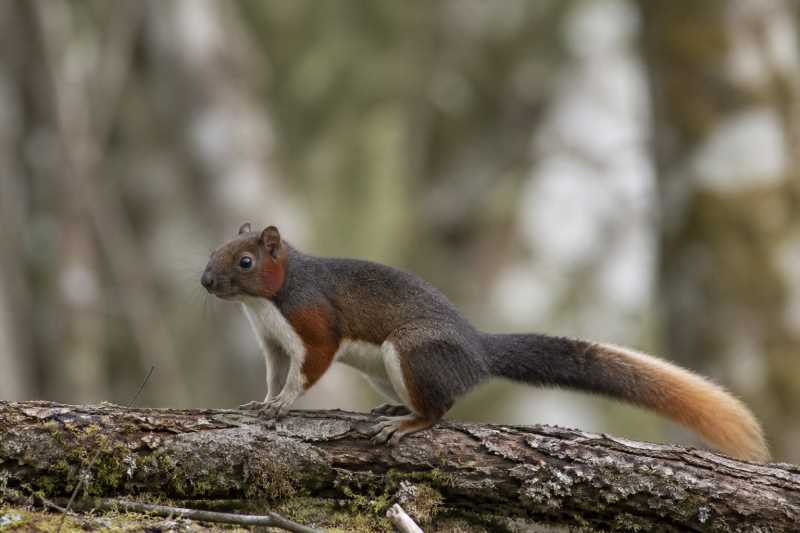
The Chinese Red-cheeked Squirrel is a medium-sized squirrel species, distinguished by its strikingly colorful appearance. Adults typically measure between 25 to 30 centimeters in body length, with a tail that extends an additional 20 to 25 centimeters, making the tail almost as long as the body itself. This species is characterized by its dense, soft fur, which is predominantly grayish-brown on the back and lighter underneath. The most distinctive feature of the Chinese Red-cheeked Squirrel is its vibrant red patches located on the cheeks, which contrast sharply with its otherwise muted fur tones. These red markings serve as a key identifying characteristic, differentiating it from other squirrel species within its range.
Range and Habitat
The Chinese Red-cheeked Squirrel is primarily found in the mountainous regions of China, with its range extending into neighboring countries such as Vietnam and Laos. It thrives in subtropical and temperate forests, usually at elevations ranging from 300 to 2,500 meters. These squirrels are arboreal, meaning they spend the majority of their lives in trees, relying on the forest canopy for shelter and food. They are particularly fond of well-forested areas where they can find ample supplies of nuts, seeds, and fruits. The presence of old-growth forests with a rich understory is crucial for their survival, as these environments provide both food and protection from predators.
Behavior and Diet
Chinese Red-cheeked Squirrels are diurnal creatures, meaning they are most active during the day, particularly in the early morning and late afternoon. Their behavior is characterized by agility and speed, which they utilize to navigate the forest canopy in search of food. Their diet primarily consists of seeds, nuts, fruits, and occasionally small insects. These squirrels play a significant role in their ecosystem by helping in the dispersion of seeds, thus contributing to forest regeneration.
Socially, Chinese Red-cheeked Squirrels are generally solitary animals, except during the breeding season when males and females come together to mate. After a gestation period of about 40 days, females give birth to litters typically consisting of two to four young. The young are raised in tree cavities or nests constructed from leaves and twigs, where they remain until they are old enough to fend for themselves.
Identification Tips (field recognition cues)
Spotting a Chinese Red-cheeked Squirrel in the wild can be a rewarding experience for wildlife enthusiasts, but it requires a keen eye and some patience. Here are a few tips for identifying this species in the field:
- Look for the red cheeks: The most distinctive feature of this squirrel is its bright red cheek patches, which stand out against the grayish-brown body.
- Observe the size and shape: Compared to other squirrels, the Chinese Red-cheeked Squirrel has a relatively large body and a long, bushy tail.
- Listen for vocalizations: These squirrels are known for their vocal nature, often emitting a series of chirps and chatters, especially when alarmed or communicating with others.
- Watch for movement in the canopy: As arboreal creatures, they are often seen leaping between branches or foraging in the treetops during daylight hours.
Conservation Status (with threats and protections)
The conservation status of the Chinese Red-cheeked Squirrel is currently listed as "Least Concern" by the International Union for Conservation of Nature (IUCN). However, like many wildlife species, they face threats from habitat destruction and fragmentation. Deforestation for agriculture and urban development poses significant risks, as it reduces the availability of suitable habitats and food sources.
Protection efforts for the Chinese Red-cheeked Squirrel include the establishment of protected areas and national parks that conserve large tracts of forested land. Additionally, conservation programs aimed at preserving biodiversity hotspots in China and neighboring regions indirectly benefit this species by maintaining the integrity of their natural habitat.
Frequently Asked Questions
What do Chinese Red-cheeked Squirrels eat?
Chinese Red-cheeked Squirrels have a diet primarily consisting of seeds, nuts, and fruits. They occasionally consume small insects to supplement their diet.
Where can I find Chinese Red-cheeked Squirrels?
These squirrels are found in the mountainous regions of China, as well as parts of Vietnam and Laos, primarily inhabiting subtropical and temperate forests.
Are Chinese Red-cheeked Squirrels endangered?
Currently, the Chinese Red-cheeked Squirrel is not considered endangered and is classified as "Least Concern" by the IUCN. However, they face threats from habitat destruction.
How can I identify a Chinese Red-cheeked Squirrel?
Look for their distinctive red cheek patches, grayish-brown fur, and listen for their vocalizations. They are active during the day, typically in the forest canopy.
What role do Chinese Red-cheeked Squirrels play in their ecosystem?
They play a crucial role in seed dispersal, aiding in forest regeneration and helping maintain the ecological balance within their habitat.
Related posts