Brooke’s Squirrel (Sundasciurus brookei): A Comprehensive Guide
Introduction
Brooke’s Squirrel, scientifically known as Sundasciurus brookei, is a fascinating species of tree squirrel found predominantly in Southeast Asia. This lesser-known rodent is named in honor of Charles Brooke, the Rajah of Sarawak, reflecting its strong ties to the region. Characterized by their adaptability and distinctive features, these squirrels play a critical role in their ecosystem. Understanding their behavior, habitat, and conservation status can provide insights into the biodiversity of Southeast Asia’s forest ecosystems.
Physical Description
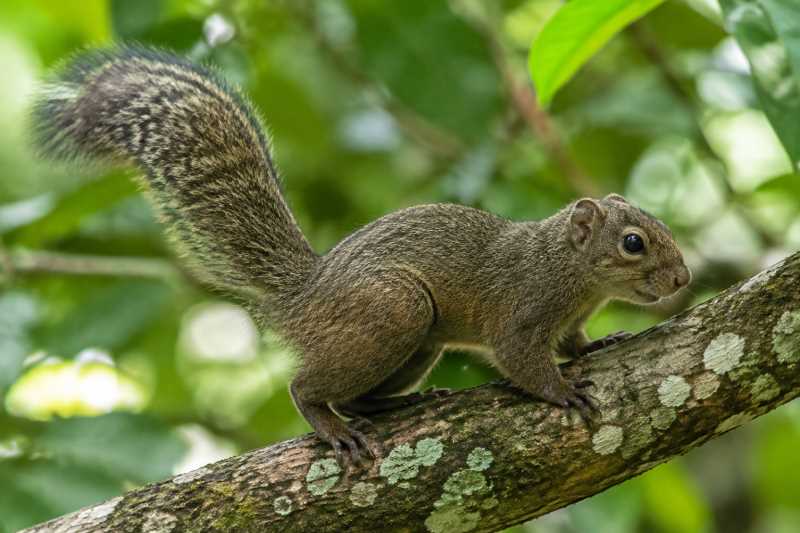
Brooke’s Squirrel is a medium-sized squirrel, typically measuring between 20 to 30 centimeters in length, with a bushy tail that adds another 15 to 25 centimeters. These squirrels exhibit a predominantly brown or grayish-brown fur coat with a lighter underbelly, which aids in camouflage among the forest canopy. The fur is dense and glossy, providing protection against the elements. Their ears are small and rounded, adorned with tufts of fur that can be more pronounced in some individuals. The eyes of Brooke’s Squirrel are large and expressive, providing them with excellent vision, crucial for navigating the dense forest foliage.
Range and Habitat
Brooke’s Squirrel is primarily found in the lowland and montane forests of Borneo. They thrive in both primary and secondary forests, showcasing their adaptability. These squirrels prefer dense, tropical environments that provide ample food resources and shelter. The forests of Borneo, rich in biodiversity, offer a complex habitat where Brooke’s Squirrel can exploit multiple ecological niches. Moreover, they are occasionally found in plantations and gardens, indicating some level of tolerance to human-disturbed environments.
Behavior and Diet
These squirrels are diurnal, most active during the early morning and late afternoon. They are arboreal, spending the majority of their lives in trees, where they skillfully navigate branches and leap between them with agility. Brooke’s Squirrel demonstrates a varied diet, primarily consisting of seeds, fruits, and nuts. They play a significant role in seed dispersal, contributing to forest regeneration. Occasionally, they may consume insects and small invertebrates, although plant matter remains their staple diet. Socially, Brooke’s Squirrel is generally solitary, except during mating season or when rearing young.
Identification Tips
Field identification of Brooke’s Squirrel can be challenging due to its similarities with other squirrel species in the region. Key recognition cues include:
- Fur Coloration: Look for the distinctive brown or grayish-brown coat with a lighter underbelly.
- Tail: Observe the bushy tail, which is often held over the back while resting.
- Size: Note the medium size, typically smaller than the sympatric giant squirrels.
- Behavior: Their quick, agile movements and arboreal lifestyle are characteristic.
- Vocalizations: Listen for their distinctive chattering calls, especially during the early morning.
Conservation Status
Brooke’s Squirrel is currently classified as Least Concern by the IUCN Red List, although its habitat is under threat from deforestation and land conversion for agriculture and palm oil plantations. Conservation efforts are primarily focused on habitat preservation and mitigating human-wildlife conflict. Protected areas and national parks within Borneo offer some refuge for these squirrels, but continued conservation measures are essential to maintain their population stability. Legal protections and environmental awareness campaigns can further aid in safeguarding their natural habitats.
Frequently Asked Questions
- What is the primary diet of Brooke’s Squirrel?
Brooke’s Squirrel primarily feeds on seeds, fruits, and nuts. They occasionally consume insects and small invertebrates, but plant matter constitutes the bulk of their diet.
- Where can Brooke’s Squirrel be found in the wild?
Brooke’s Squirrel is native to the forests of Borneo, thriving in both lowland and montane tropical forests. They can also be found in secondary forests and, occasionally, plantations.
- How can I identify Brooke’s Squirrel in the field?
To identify Brooke’s Squirrel, look for a medium-sized squirrel with a brown or grayish-brown coat and a bushy tail. Their agile arboreal movements and distinctive vocalizations are also key identification cues.
- What are the main threats to Brooke’s Squirrel?
The primary threats to Brooke’s Squirrel include habitat destruction due to deforestation, agricultural expansion, and palm oil plantations. Conservation efforts focus on habitat preservation and legal protection.
- Is Brooke’s Squirrel a solitary animal?
Yes, Brooke’s Squirrel is generally solitary, except during the mating season or when raising young. They are typically seen alone, foraging or resting in trees.
Related posts