The Many-colored Bushshrike: A Jewel of the African Avian World
Introduction
The Many-colored Bushshrike, scientifically known as Chlorophoneus multicolor, is a vibrant bird species that captivates birdwatchers and ornithologists alike. Found primarily in the dense forests of sub-Saharan Africa, this bird is renowned for its striking plumage and complex vocalizations. This article delves into the various facets of the Many-colored Bushshrike, including its taxonomy, distribution, habitat, physical characteristics, behavior, and conservation status.
Taxonomy and Classification
The Many-colored Bushshrike belongs to the family Malaconotidae, a group of birds commonly referred to as bushshrikes. The genus Chlorophoneus is distinguished by its colorful plumage and melodious calls. First described by Fraser in 1843, the species has undergone various taxonomic revisions, but it remains a distinct member of the bushshrike family.
Distribution and Habitat
The Many-colored Bushshrike is widely distributed across Central and West Africa, with populations thriving in countries like Cameroon, Gabon, Congo, and Uganda. Preferring dense, humid forests, these birds are often found in lowland tropical rainforests and sometimes venture into montane forests. Their habitat selection is influenced by the availability of food resources and suitable nesting sites.
Physical Characteristics
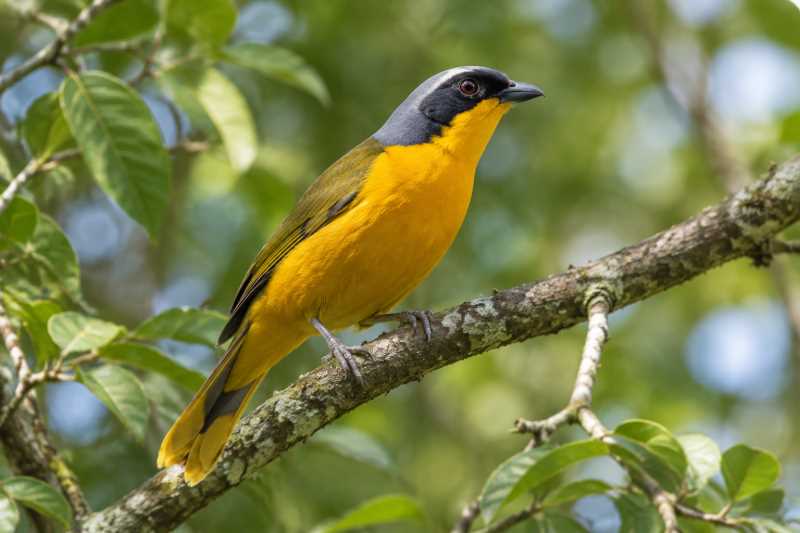
As its name suggests, the Many-colored Bushshrike is a feast for the eyes. The adult bird exhibits a kaleidoscope of colors, with its back and wings adorned in shades of green and yellow. The head is often marked with a striking combination of black, white, and red hues. Sexual dimorphism is not pronounced in this species, with both males and females displaying similar plumage patterns.
The bird’s size ranges from 18 to 20 centimeters in length, with a wingspan that complements its body size. Its robust beak is adapted for an insectivorous diet, allowing it to deftly capture prey.
Behavior and Ecology
The Many-colored Bushshrike is known for its secretive nature, often skulking in the undergrowth of forests. Despite this elusive behavior, it is an active forager, feeding primarily on insects and occasionally on small vertebrates. The bird uses its sharp beak to glean prey from leaves and bark, showcasing its adaptability in hunting strategies.
One of the most fascinating aspects of this species is its vocal repertoire. The Many-colored Bushshrike is a gifted songster, capable of producing a range of melodious calls. These vocalizations play a crucial role in communication, territory defense, and mating rituals.
Breeding and Reproduction
Breeding in the Many-colored Bushshrike occurs during the rainy season when food resources are abundant. The species is monogamous, with pairs often forming long-lasting bonds. Nesting takes place in dense foliage, where the female lays a clutch of 2 to 4 eggs. Both parents share the responsibility of incubating the eggs and feeding the hatchlings.
The nestlings are altricial at birth, relying heavily on parental care for survival. This extended period of parental investment ensures that the young develop the necessary skills for independent living.
Conservation Status
The Many-colored Bushshrike is currently listed as Least Concern by the International Union for Conservation of Nature (IUCN). However, like many forest-dependent species, it faces threats from habitat loss and degradation due to deforestation and land conversion for agricultural purposes.
Conservation efforts aimed at preserving tropical forests are crucial for the long-term survival of this species. Protected areas and sustainable forestry practices can help mitigate the impact of human activities on bushshrike populations.
Conclusion
The Many-colored Bushshrike is a testament to the rich biodiversity of the African continent. Its vibrant plumage and enchanting songs make it a cherished species among bird enthusiasts. Understanding its ecology and ensuring the conservation of its habitat is vital for preserving this avian gem for future generations.
As we continue to explore and document the wonders of the natural world, the Many-colored Bushshrike stands as a reminder of the beauty and complexity inherent in our planet’s ecosystems.
References
- BirdLife International. (2023). Chlorophoneus multicolor. The IUCN Red List of Threatened Species 2023.
- Fry, C. H., et al. (2000). The Birds of Africa Vol. VI: Picathartes to Oxpeckers. Academic Press.
- Sinclair, I., & Ryan, P. (2010). Birds of Africa South of the Sahara. Struik Nature.
Related posts