Spotted Bat (Euderma maculatum)
Introduction
The Spotted Bat, scientifically known as Euderma maculatum, is a unique and fascinating mammal species that captivates researchers and nature enthusiasts alike. Recognized by its distinctive appearance and elusive nature, the Spotted Bat plays a special role in North America’s ecosystems. This article delves into the various facets of this intriguing species, from its physical characteristics to its habitat preferences, behaviors, and conservation status.
Physical Description
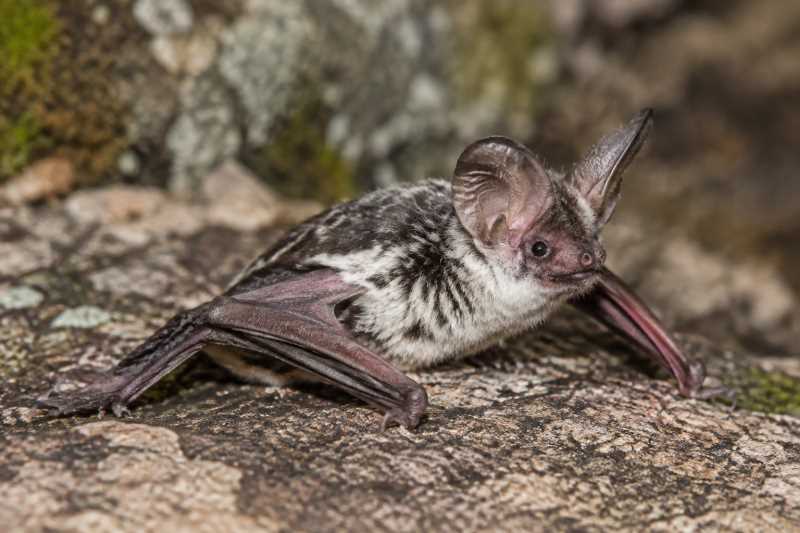
The Spotted Bat is easily identifiable by its striking appearance. It features large, pinkish ears that can measure up to 4 centimeters in length, making them one of the largest ears found in North American bats. The fur is predominantly black with three prominent white spots on its back—hence the name "Spotted Bat." The wings are black with a pinkish hue on the membrane, contributing to its distinctive look. Adult Spotted Bats typically weigh between 15 to 20 grams and have a wingspan ranging from 35 to 39 centimeters.
Range and Habitat
Spotted Bats are native to North America, with a range that extends from the southern parts of British Columbia in Canada through the western United States and into northern Mexico. They primarily inhabit arid and semi-arid regions, including deserts, open woodlands, and canyon lands. These bats are often found roosting in crevices on cliff faces or in caves, where they can avoid predators and extreme weather conditions. The availability of such roosting sites is crucial for their survival, making habitat preservation a key aspect of their conservation.
Behavior and Diet
Spotted Bats are nocturnal, emerging at dusk to hunt for food. They exhibit a highly specialized diet, feeding primarily on moths. Their echolocation calls are unique, as they are audible to humans and sound like high-pitched clicks. This adaptation allows them to navigate and hunt efficiently in their complex terrestrial habitats. Spotted Bats are solitary creatures, often seen alone except during breeding seasons.
Identification Tips
Identifying a Spotted Bat in the wild can be challenging due to its elusive nature and preference for nocturnal activity. However, certain field recognition cues can aid in their identification. Look for:
- Distinctive White Spots: The three white spots on its back are a key feature.
- Large Ears: The unusually large pinkish ears are a notable characteristic.
- Flight Pattern: Spotted Bats have a slow, graceful flight pattern compared to other bats.
- Audible Echolocation: Listen for their high-pitched echolocation calls, audible to the human ear.
Conservation Status
The Spotted Bat is currently classified as Least Concern by the International Union for Conservation of Nature (IUCN). However, it faces several threats that could impact its population in the future. Habitat destruction, particularly the loss of roosting sites due to human encroachment and agricultural expansion, poses a significant risk. Additionally, climate change could alter their habitats, affecting food availability and breeding sites. Conservation efforts focus on habitat protection, research on population dynamics, and public awareness.
Threats and Protections
- Threats: Habitat destruction, climate change, human disturbance
- Protections: Protected areas, environmental regulations, ongoing research
Frequently Asked Questions
What do Spotted Bats eat?
Spotted Bats primarily feed on moths, which they hunt using echolocation. Their diet is highly specialized to include various moth species found in their arid habitat regions.
Where can I see a Spotted Bat?
Spotted Bats are found in arid and semi-arid regions of North America, particularly in areas with rocky cliffs and canyons. Observers should visit these habitats during dusk or dawn for potential sightings.
How do Spotted Bats communicate?
Spotted Bats use echolocation to navigate and locate prey. Their calls are unique because they are audible to humans and sound like high-pitched clicks.
Are Spotted Bats endangered?
Currently, Spotted Bats are classified as Least Concern. However, ongoing threats like habitat destruction and climate change could potentially impact their populations.
What is the size of a Spotted Bat?
Adult Spotted Bats weigh between 15 to 20 grams and have a wingspan of 35 to 39 centimeters. Their large ears and distinct coloration make them stand out among other bat species.
Related posts