Introduction
The Equatorial Saki (Pithecia aequatorialis), a fascinating primate, is one of the lesser-known species of the New World monkeys. Residing primarily in the lush, biodiverse rainforests of the western Amazon Basin, this intriguing mammal plays a unique role in its ecosystem. Despite its elusive nature, the Equatorial Saki captivates the interest of primatologists and wildlife enthusiasts alike due to its distinctive physical characteristics and behaviors. Understanding the Equatorial Saki is not only essential for scientific research but also for the conservation of its habitat, which is increasingly threatened by human activities.
Physical Description
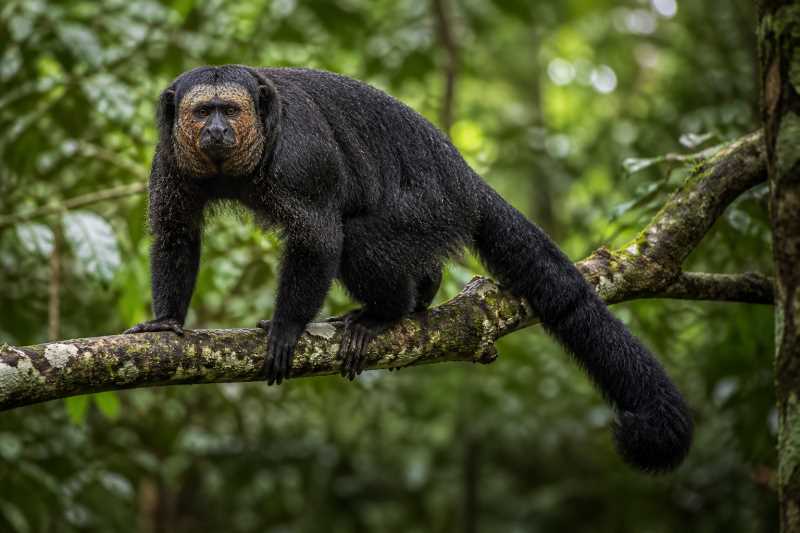
The Equatorial Saki is a medium-sized monkey, with males generally larger than females. Adult males can weigh between 2 to 3 kilograms (4.4 to 6.6 pounds), while females typically weigh slightly less. One of the most striking features of this species is its dense, bushy fur, which provides excellent camouflage in the dense forest canopy. The fur color ranges from dark brown to black, with lighter patches around the face and limbs.
The Equatorial Saki is also known for its distinctive facial features. It has a pronounced, bushy beard and a wide, flat nose, which are characteristic of the genus Pithecia. Its prominent, forward-facing eyes are adapted for stereoscopic vision, which is crucial for navigating the complex arboreal environment.
Range and Habitat
The natural range of the Equatorial Saki spans the western Amazon Basin, particularly in regions of Ecuador, Peru, and Colombia. It thrives in lowland tropical rainforests, preferring areas with dense canopy and abundant fruiting trees. These forests provide not only food but also the necessary cover for avoiding predators.
Equatorial Sakis are arboreal, spending most of their lives in the trees. They are highly adapted to life in the upper canopy, where they can find both food and safety. Their strong limbs and agile movements make them excellent climbers, able to leap between branches with ease.
Behavior and Diet
The Equatorial Saki is diurnal, meaning it is active during the day. It is primarily frugivorous, with a diet consisting mainly of fruits, but it also consumes seeds, leaves, and occasionally small insects. Sakis have strong jaws and large canines, which allow them to crack open hard nuts and seeds that other primates might avoid.
Socially, Equatorial Sakis live in small family groups, typically consisting of a monogamous pair and their offspring. These family groups are territorial and communicate using a series of vocalizations, body postures, and facial expressions to maintain bonds and defend their territory.
Identification Tips (Field Recognition Cues)
Identifying the Equatorial Saki in the wild can be challenging due to its elusive nature and the dense forest habitat it occupies. However, several key characteristics can aid in field identification:
- Fur and Coloration: Look for the distinctive bushy fur and the contrast between dark brown or black body fur and lighter facial patches.
- Facial Features: Notice the pronounced beard and wide, flat nose, which are distinctive of this species.
- Behavior: Observe their movement patterns; Equatorial Sakis are agile climbers and often seen leaping between trees.
- Vocalizations: Listen for their unique calls, which are used for communication within the group.
Conservation Status (With Threats and Protections)
The Equatorial Saki is currently classified as "Near Threatened" on the IUCN Red List of Threatened Species. The primary threats to its survival are habitat destruction and fragmentation caused by logging, agriculture, and infrastructure development. These activities not only reduce the available habitat but also isolate populations, making them more vulnerable to other threats.
Conservation efforts for the Equatorial Saki include habitat protection and restoration initiatives, as well as research programs aimed at better understanding its ecology and behavior. Several protected areas within its range offer some level of habitat security, but increased enforcement and community engagement are crucial for long-term conservation success.
Frequently Asked Questions
What is the primary diet of the Equatorial Saki?
The Equatorial Saki primarily feeds on fruits, seeds, and leaves. Its strong jaws and canines allow it to consume hard nuts and seeds that are difficult for other primates to eat.
Where can the Equatorial Saki be found in the wild?
The Equatorial Saki is found in the western Amazon Basin, particularly in Ecuador, Peru, and Colombia. It inhabits lowland tropical rainforests with dense canopy cover.
How does the Equatorial Saki communicate?
Equatorial Sakis communicate using a combination of vocalizations, body postures, and facial expressions. These communications are crucial for maintaining social bonds and defending their territory.
Why is the Equatorial Saki considered near threatened?
The Equatorial Saki is considered near threatened due to habitat destruction and fragmentation, primarily driven by human activities such as logging and agriculture. Conservation efforts are needed to protect their remaining habitat.
What are the main threats to the Equatorial Saki’s survival?
The main threats to the Equatorial Saki include habitat loss due to deforestation and human encroachment, as well as the resulting isolation of populations which increases their vulnerability to other threats.
Related posts