The Enchanting Mindanao Racket-tail: A Jewel of the Philippines
The lush archipelago of the Philippines, renowned for its biodiversity, is home to a myriad of unique and vibrant species. Among these is the Mindanao Racket-tail (Prioniturus waterstradti), an avian marvel that captivates ornithologists and bird enthusiasts alike. This article explores the fascinating world of the Mindanao Racket-tail, delving into its habitat, behavior, and the conservation efforts pivotal to its survival.
A Glimpse into the Natural Habitat
The Mindanao Racket-tail is endemic to the island of Mindanao, the second-largest island in the Philippines. It thrives in the island’s montane and mossy forests, typically at elevations ranging from 1,000 to 2,400 meters. These areas provide the perfect environment, rich in resources necessary for the survival of this vibrant bird.
The montane forests of Mindanao, characterized by their dense canopy and rich biodiversity, offer the Racket-tail an abundant supply of fruits, seeds, and flowers, which form the core of its diet. The Mindanao Racket-tail is particularly fond of consuming the fruits of the fig tree, a staple in its natural habitat.
Distinctive Physical Features
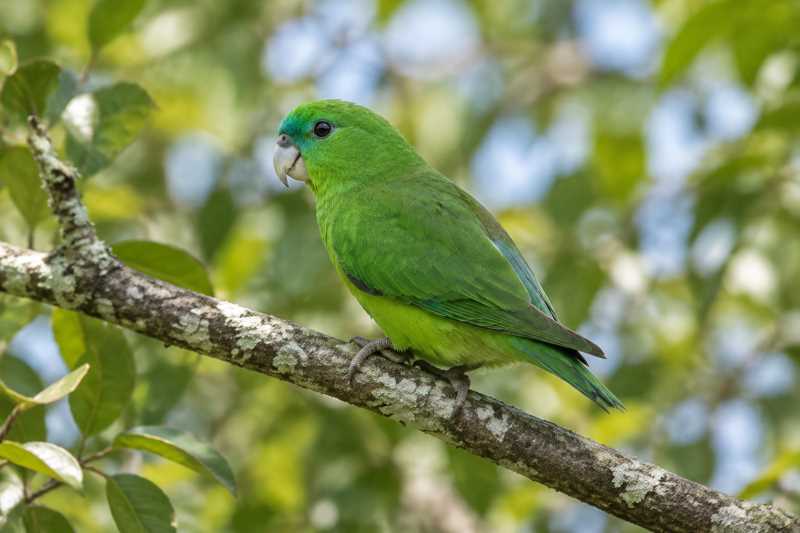
The Mindanao Racket-tail is a striking bird, celebrated for its vivid plumage and unique tail formation. It measures approximately 27 centimeters in length. Its feathers are predominantly green, which provides a striking contrast to the blue and yellow hues on its wings and tail. However, the most distinctive feature of this parrot is its tail, which ends in two elongated feathers that resemble a ‘racket,’ giving the species its name.
These tail feathers are not merely ornamental; they play a crucial role in communication during flight. The sound produced by the feathers as the bird moves is thought to serve as a means of communication between individuals, especially during courtship displays.
Behavior and Social Structure
Mindanao Racket-tails are highly social and often observed in small flocks. They are known for their playful nature and acrobatic flight patterns. This social structure not only aids in foraging but also provides safety in numbers against potential predators.
The breeding season of the Mindanao Racket-tail typically coincides with the availability of food resources, ensuring that the young have a steady food supply. These birds are known for their monogamous pair bonds, and both parents participate actively in the rearing of their chicks.
Conservation Status and Challenges
Currently, the Mindanao Racket-tail is listed as Near Threatened on the IUCN Red List. The primary threat to its survival is habitat destruction due to illegal logging and agricultural expansion. The montane forests of Mindanao are under constant threat from human activities, which encroach upon the natural habitat of this and many other species.
Conservation efforts are underway to protect the remaining habitats of the Mindanao Racket-tail. These initiatives include establishing protected areas, promoting sustainable land-use practices, and engaging local communities in conservation efforts.
The Role of Ecotourism
Ecotourism presents a promising avenue for the conservation of the Mindanao Racket-tail. By promoting birdwatching and other nature-based activities, local communities can benefit economically while fostering a culture of conservation. This approach not only raises awareness about the plight of the Mindanao Racket-tail but also generates funds that can be reinvested into conservation programs.
Conclusion
The Mindanao Racket-tail is a symbol of the rich biodiversity of the Philippines and a testament to the beauty and complexity of life on Earth. Protecting this species requires a concerted effort from conservationists, local communities, and governments. By understanding and preserving the unique habitat and behaviors of the Mindanao Racket-tail, we can ensure that future generations will continue to marvel at this avian wonder.
The fight to conserve the Mindanao Racket-tail is emblematic of broader conservation challenges faced globally. Through collaborative efforts, there is hope that this vibrant parrot, along with countless other species, will continue to thrive in its natural habitat.
Related posts