Introduction
The Blue-eyed Cuscus (Phalanger matabiru) is a fascinating marsupial that has captured the interest of scientists and nature enthusiasts alike due to its unique appearance and behaviors. Native to the lush forests of Indonesia, this arboreal mammal is not only a symbol of biodiversity but also an indicator of the health of its habitat. Despite its captivating allure, little is widely known about the Blue-eyed Cuscus, making it a creature of both mystery and scientific intrigue.
In this comprehensive article, we delve into the many aspects of the Blue-eyed Cuscus, from its physical attributes to its ecological role, and from its behavior patterns to the conservation efforts underway to protect it. Our aim is to provide a detailed and engaging exploration of this remarkable species for both casual readers and wildlife professionals.
Physical Description
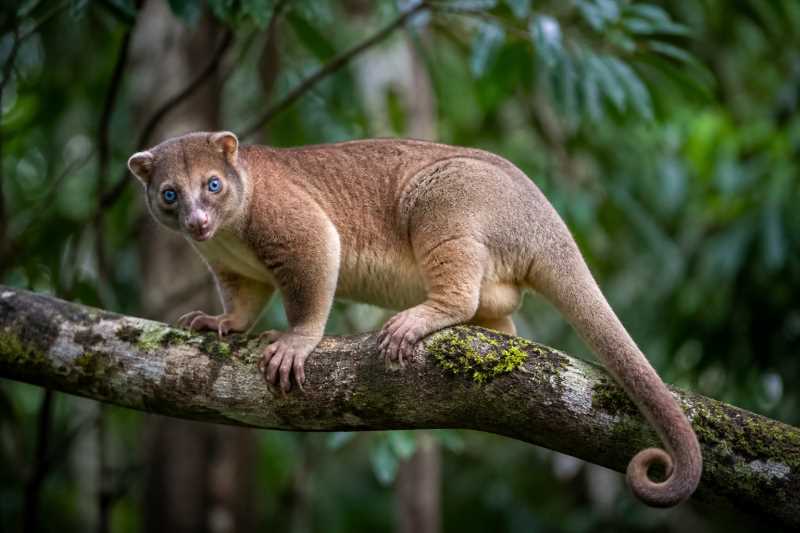
The Blue-eyed Cuscus is a medium-sized marsupial known for its distinctively striking blue eyes, a rare trait among mammals. Typically, an adult Blue-eyed Cuscus measures about 50 to 60 centimeters (20 to 24 inches) in body length, with an additional tail length of approximately 40 to 50 centimeters (16 to 20 inches). This prehensile tail is a key adaptation for its arboreal lifestyle, aiding in balance and grasping branches as it navigates through the canopy.
The fur of the Blue-eyed Cuscus is typically a creamy white color, though some individuals may exhibit patches of light brown or gray. This coloration provides camouflage against the tree bark and foliage of its forested habitat. The species has a stocky build with strong limbs, and its hands and feet are equipped with sharp claws and padded digits that facilitate climbing.
One of the most striking features of this species, as its name suggests, is its bright blue eyes. These eyes are adapted for nocturnal activity, with a reflective layer behind the retina that enhances vision in low-light conditions.
Range and Habitat
The Blue-eyed Cuscus is endemic to the island of Biak in Indonesia, although sightings have occasionally been reported on nearby islands. Biak is part of the larger Biak-Supiori archipelago located in Cenderawasih Bay, a region known for its rich biodiversity and unique ecosystems.
This species thrives in lowland tropical rainforests, where it spends the majority of its life in the tree canopy. These forests offer abundant food resources and shelter, which are crucial for the survival of the Blue-eyed Cuscus. The dense foliage provides protection from predators, while the complex structure of the forest allows for efficient foraging and movement.
Behavior and Diet
The Blue-eyed Cuscus is a solitary and primarily nocturnal animal, emerging at dusk to forage and explore its arboreal territory. During the day, it rests in tree hollows or dense foliage to avoid predators and conserve energy.
Its diet mainly consists of leaves, fruits, and flowers, which it gathers while navigating the forest canopy. The species plays a critical role in seed dispersal, as it often consumes fruits and defecates the seeds in different locations, promoting forest regeneration.
The Blue-eyed Cuscus is known for its slow and deliberate movements, a trait that aids in avoiding detection by predators. However, when threatened, it can exhibit bursts of speed to escape danger. Communication among individuals is primarily through vocalizations and scent markings, which help establish territorial boundaries and attract mates.
Identification Tips (Field Recognition Cues)
Identifying the Blue-eyed Cuscus in the wild requires keen observation due to its nocturnal habits and arboreal lifestyle. Here are some field recognition cues:
- Eye Color: Look for the distinctive blue eyes, which are unique among most mammals in its habitat.
- Fur Coloration: The creamy white fur with possible brown or gray patches aids in distinguishing it from other cuscus species.
- Tail: Observe the prehensile tail used for grasping and balancing, a defining feature in its movement through the canopy.
- Movement: Note the slow and deliberate climbing style, contrasted with occasional quick movements when startled.
Conservation Status (With Threats and Protections)
The Blue-eyed Cuscus is currently listed as Vulnerable on the IUCN Red List. Its population is declining due to several anthropogenic threats, including habitat destruction, hunting, and the illegal pet trade.
Threats
- Deforestation: Logging and land conversion for agriculture and infrastructure development are leading causes of habitat loss.
- Hunting: The Blue-eyed Cuscus is hunted for its meat and fur, which are considered valuable in local markets.
- Pet Trade: Capture for the exotic pet trade poses a significant threat to its wild population, disrupting natural behaviors and breeding.
Protections
Conservation efforts are underway to mitigate these threats, including:
- Protected Areas: Establishment of protected areas and wildlife reserves in Biak to safeguard critical habitats.
- Community Engagement: Initiatives to involve local communities in conservation efforts and promote sustainable practices.
- Research and Monitoring: Scientific studies to better understand the species’ ecology and inform conservation strategies.
Frequently Asked Questions
What makes the Blue-eyed Cuscus unique?
The Blue-eyed Cuscus is distinguished by its bright blue eyes, a rare trait among mammals, along with its creamy white fur and arboreal lifestyle, making it a unique species in its ecosystem.
Where can I see a Blue-eyed Cuscus in the wild?
The Blue-eyed Cuscus is native to Biak Island in Indonesia, where it inhabits lowland tropical rainforests. Observers should look for it in the tree canopies at night.
What is the diet of the Blue-eyed Cuscus?
The diet of the Blue-eyed Cuscus consists mainly of leaves, fruits, and flowers, which it forages from the forest canopy, playing a vital role in seed dispersal.
How can I help in conserving the Blue-eyed Cuscus?
Supporting conservation organizations, promoting sustainable practices, and raising awareness about the threats to its habitat can aid in the conservation of the Blue-eyed Cuscus.
Are Blue-eyed Cuscuses kept as pets?
While the Blue-eyed Cuscus is sometimes captured for the exotic pet trade, this practice is illegal and harmful to wild populations. It’s important to discourage keeping them as pets.
Related posts