Introduction
The Black-striped Wallaby, scientifically known as Notamacropus dorsalis, is a fascinating marsupial that belongs to the Macropodidae family. This species is native to Australia and is recognized for its distinctive black stripe that runs along its back. The Black-striped Wallaby is a medium-sized macropod and plays a vital role in the ecosystems where it resides. Understanding the biology and ecology of this species is crucial for conservation efforts, especially in the face of environmental changes and human activities.
Physical Description
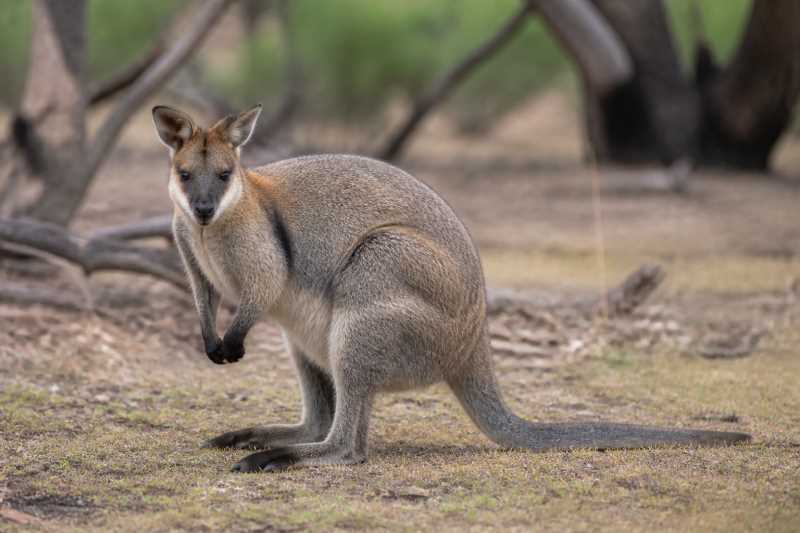
The Black-striped Wallaby is characterized by its unique and striking appearance. It is typically smaller than other macropods, with an average body length of 60 to 85 centimeters and a tail length that ranges from 70 to 95 centimeters. Adult individuals usually weigh between 10 to 20 kilograms, with males generally being larger than females.
The fur of the Black-striped Wallaby is predominantly light brown to gray, which provides excellent camouflage in its natural habitat. The most distinguishing feature is the black stripe that runs from the back of its head, along the spine, to the base of the tail. This stripe is more pronounced in males and can vary in intensity among individuals.
These wallabies have long, powerful hind legs adapted for hopping, their primary mode of locomotion. The forelimbs are shorter and are used for grasping and balancing. The ears are large and pointed, aiding in acute hearing, which is essential for detecting predators.
Range and Habitat
The natural range of the Black-striped Wallaby is primarily within eastern Australia, notably in Queensland and New South Wales. They inhabit a variety of environments, from coastal woodlands to inland forests, and are particularly associated with dry sclerophyll forests and scrublands. These habitats offer abundant food sources and sufficient cover from predators.
Black-striped Wallabies are adaptable and may also be found in areas of modified landscapes, such as agricultural lands, provided there is adequate vegetation for food and shelter. The availability of water is not a strict requirement, as they can obtain moisture from the plants they consume.
Behavior and Diet
The Black-striped Wallaby is primarily nocturnal, being most active from dusk until dawn. During the day, they rest in shaded areas to avoid the heat. They are solitary animals, although they may form loose groups when feeding in areas with abundant food.
Their diet consists mainly of grasses, herbs, and shrubs. They are selective feeders and will choose plants with high water content and nutritional value. This diet allows them to survive in environments with limited water availability. These wallabies have a complex digestive system, adapted to efficiently extract nutrients and water from fibrous plant materials.
Identification Tips (Field Recognition Cues)
Identifying the Black-striped Wallaby in the field requires attention to specific characteristics:
- Black Stripe: Look for the distinctive black stripe along the back, which is the primary identifying feature.
- Size and Build: Note the medium size and strong hind legs, typical of wallabies.
- Coloration: Observe the light brown to gray fur that helps them blend into their environment.
- Behavior: Spot them during twilight hours as they begin to forage.
- Habitat: Search in dry sclerophyll forests and scrublands in their known range.
Conservation Status (With Threats and Protections)
The current conservation status of the Black-striped Wallaby is listed as Least Concern, according to the International Union for Conservation of Nature (IUCN). However, localized populations may face threats that could affect their numbers and distribution.
Threats
- Habitat Loss: Urban development and agricultural expansion have led to habitat fragmentation.
- Predation: Introduced species such as foxes and feral cats prey on wallabies, particularly juveniles.
- Climate Change: Altered weather patterns can affect the availability of food resources.
Protections
- Conservation Areas: Protected areas and national parks provide refuge.
- Control Programs: Management of invasive species helps reduce predation pressure.
- Research and Monitoring: Ongoing studies help in understanding population dynamics and threats.
Frequently Asked Questions
Why is this species unique?
The Black-striped Wallaby is unique due to its distinctive black dorsal stripe and its adaptability to various habitats. This species’ ability to thrive in both natural and modified environments highlights its ecological importance and evolutionary success.
What is the primary diet of the Black-striped Wallaby?
The Black-striped Wallaby primarily feeds on grasses, herbs, and shrubs. Its diet is adapted to maximize water and nutrient intake, allowing it to survive in areas with limited water resources.
How does the Black-striped Wallaby communicate?
Communication in Black-striped Wallabies is primarily through body language and vocalizations. They use thumping of the hind legs to warn others of danger and have a range of vocal sounds for different social interactions.
Are Black-striped Wallabies endangered?
Currently, the Black-striped Wallaby is not considered endangered. It is classified as Least Concern by the IUCN, though certain populations may be at risk due to habitat loss and predation.
Related posts