Big-eared Hopping Mouse: A Comprehensive Guide
Introduction
The Big-eared Hopping Mouse, scientifically known as Notomys macrotis, is a fascinating and elusive rodent endemic to Australia. This small mammal is celebrated for its distinctive large ears and remarkable hopping ability, making it a unique subject of interest for scientists and wildlife enthusiasts alike. Historically widespread, the Big-eared Hopping Mouse has captured the imagination of those intrigued by Australia’s diverse fauna. This article delves into the various aspects of the Big-eared Hopping Mouse, from its physical characteristics to its behavior, diet, and conservation status.
Physical Description
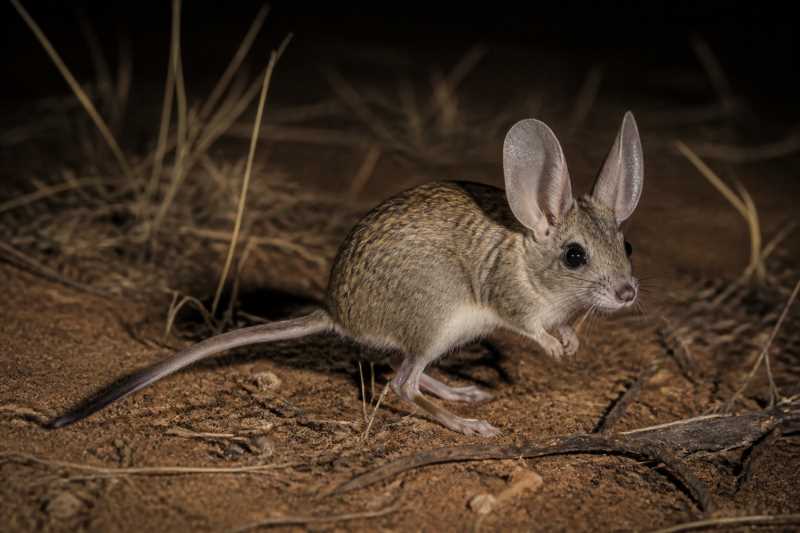
The Big-eared Hopping Mouse is aptly named for its prominent ears, which are notably larger than those of other hopping mice species. These ears are not just for show; they play a crucial role in the animal’s keen sense of hearing, which is vital for detecting predators in its arid habitat.
In terms of size, the Big-eared Hopping Mouse is relatively small, with an average body length ranging from 100 to 120 millimeters, excluding the tail. The tail is typically longer than the body, measuring up to 150 millimeters, and is used for balance while hopping. The mouse’s fur is generally soft and silky, with a sandy or greyish-brown coloration that provides camouflage against the desert landscape. The underbelly is usually a lighter shade, often white or pale grey.
The large hind legs and feet are adapted for jumping, allowing the Big-eared Hopping Mouse to move swiftly across its environment. This adaptation is essential for escaping predators and navigating the rugged terrain.
Range and Habitat
Historically, the Big-eared Hopping Mouse was found across a wide range of arid and semi-arid regions in Australia. However, its current distribution is severely restricted, primarily due to habitat destruction and other anthropogenic factors. The species was once common in areas such as Western Australia, South Australia, and parts of the Northern Territory.
The preferred habitat of the Big-eared Hopping Mouse includes sandy deserts, spinifex grasslands, and sparse shrublands. These environments provide the necessary cover and resources for survival. The mouse constructs burrows in loose, sandy soils, which offer protection from the extreme temperatures and predators.
Behavior and Diet
The Big-eared Hopping Mouse is nocturnal, meaning it is most active during the night. This behavior helps the mouse avoid the harsh daytime temperatures of its desert habitat. During the day, it remains hidden in its burrow, emerging only after sunset to forage for food.
The diet of the Big-eared Hopping Mouse is primarily herbivorous, consisting of seeds, leaves, and stems of various desert plants. It has also been known to consume insects and other invertebrates, particularly during periods when plant-based food is scarce. The mouse’s ability to obtain moisture from its food allows it to survive in environments where water is a limited resource.
Socially, the Big-eared Hopping Mouse is known to be a solitary creature, although it may form small groups during the breeding season. Communication among individuals is facilitated through a range of vocalizations and scent markings.
Identification Tips (Field Recognition Cues)
Recognizing the Big-eared Hopping Mouse in the wild can be challenging due to its elusive nature and the vastness of its habitat. However, several key identification tips can aid observers:
- Large Ears: As the name suggests, the Big-eared Hopping Mouse is distinguished by its disproportionately large ears, which are a standout feature.
- Hopping Movement: Unlike other rodents that scurry, this mouse moves in a hopping manner, similar to a small kangaroo.
- Tail: Look for a long tail that is often longer than the body, with a distinctive tuft at the end.
- Fur Color: The sandy or greyish-brown fur provides excellent camouflage against desert sands.
- Nocturnal Activity: Observations are best made at night when the mouse is active.
Conservation Status (with Threats and Protections)
The Big-eared Hopping Mouse is currently listed as extinct by the International Union for Conservation of Nature (IUCN). The last confirmed sightings were in the late 19th century. The primary threats that led to its decline include habitat destruction, predation by introduced species, and competition for food resources.
Introduced predators such as feral cats and foxes have had a significant impact on the population. Additionally, changes in fire regimes and overgrazing by livestock have altered the mouse’s habitat, making it less suitable for survival.
Despite its extinction status, efforts are being made to protect the remaining habitats and prevent further loss of other hopping mice species. Conservation programs focus on habitat restoration, predator control, and research into the ecology of related species.
Frequently Asked Questions
1. What makes the Big-eared Hopping Mouse unique among rodents?
The Big-eared Hopping Mouse is unique due to its large ears and exceptional hopping ability, which are adaptations for survival in arid environments. These features, coupled with its nocturnal habits and solitary nature, distinguish it from other rodent species.
2. Why is the Big-eared Hopping Mouse considered extinct?
The Big-eared Hopping Mouse is considered extinct primarily due to habitat loss, predation by introduced species, and competition for resources. The last confirmed sightings date back to the late 1800s, and extensive searches have not yielded any evidence of its continued existence.
3. What efforts are being made to conserve similar species?
Conservation efforts for similar species focus on habitat protection, predator control, and research. Programs aim to restore natural habitats, control invasive species, and study the ecology and behavior of related hopping mice to prevent further extinctions.
4. How can I help in the conservation of Australian native rodents?
You can contribute to conservation efforts by supporting organizations dedicated to wildlife preservation, advocating for sustainable land use practices, and raising awareness about the importance of protecting native habitats and species.
5. Are there any captive breeding programs for the Big-eared Hopping Mouse?
Currently, there are no captive breeding programs for the Big-eared Hopping Mouse due to its extinction status. However, conservationists focus on protecting and studying closely related species to prevent similar fates.
Related posts