Introduction
The Asian Long-tailed Porcupine, scientifically known as Trichys fasciculata, is a remarkable yet lesser-known member of the rodent family. Found predominantly in Southeast Asia, this porcupine species is distinguished by its elongated tail and unique defensive mechanisms. Despite its name, the Asian Long-tailed Porcupine is not closely related to the typical porcupines found in the Americas or Africa, showcasing the incredible diversity and adaptability of the rodent order.
In this comprehensive article, we will delve deep into the fascinating world of the Asian Long-tailed Porcupine, exploring its physical characteristics, natural habitat, behaviors, and the challenges it faces for survival.
Physical Description
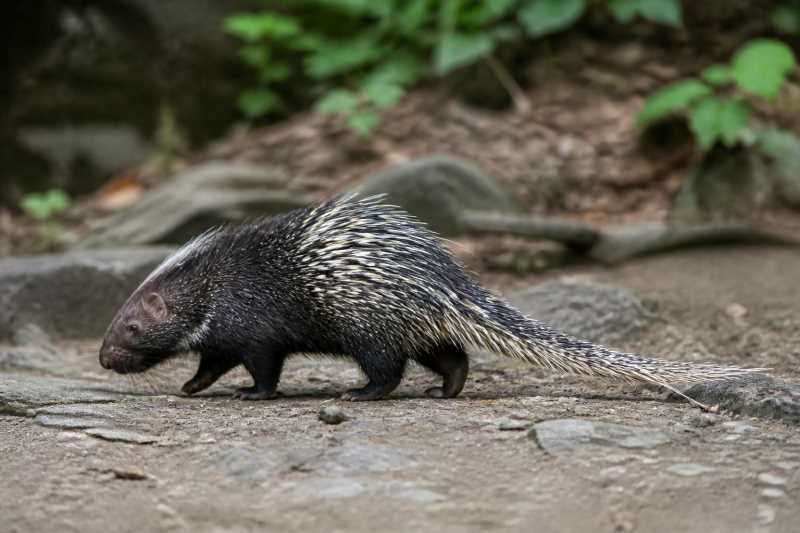
The Asian Long-tailed Porcupine is a medium-sized rodent that can be identified by its distinctive features. It possesses a robust body that ranges in length from 40 to 60 cm, excluding its notably long tail that can add an additional 15 to 30 cm. This tail distinguishes it from other porcupine species, being slender and covered in short bristles rather than spines.
The porcupine’s body is covered with a mixture of coarse, elongated quills and softer fur. The quills, which can vary in length and are often dark with pale bands, serve as a formidable defense against predators. Unlike North American porcupines, whose quills are barbed, the quills of Trichys fasciculata are not barbed but can still cause considerable discomfort if contact is made.
The Asian Long-tailed Porcupine has a small, rounded head with large eyes and ears that aid in its nocturnal lifestyle. Its limbs are strong and well-adapted for digging, allowing it to create burrows or find shelter in dense vegetation.
Range and Habitat
The Asian Long-tailed Porcupine is native to the tropical forests of Southeast Asia, primarily found in countries such as Malaysia, Thailand, and Indonesia. Its habitat ranges from lowland forests to mountainous regions, adapting to a variety of environments as long as there is ample vegetation for cover and food.
This porcupine species prefers dense, humid forests where it can easily hide from predators and find a rich supply of food. However, it is also known to venture into agricultural areas, which sometimes leads to conflict with humans due to crop raiding.
Behavior and Diet
The Asian Long-tailed Porcupine is primarily nocturnal, meaning it is most active during the night. This nocturnality helps it avoid many diurnal predators and the heat of the day. During the daylight hours, the porcupine rests in burrows, rock crevices, or dense vegetation.
Socially, the Asian Long-tailed Porcupine tends to be solitary, although it may occasionally be seen in pairs or small family groups. Communication is primarily through vocalizations and scent markings.
In terms of diet, the Asian Long-tailed Porcupine is an herbivore with a varied diet. It feeds on a wide range of plant materials, including leaves, fruits, roots, and bark. Its strong incisors are well-suited for gnawing through tough plant material, and it plays a crucial role in its ecosystem as a seed disperser.
Identification Tips (Field Recognition Cues)
Identifying the Asian Long-tailed Porcupine in the wild can be challenging due to its nocturnal and elusive nature. However, there are several key characteristics to look for:
- Long Tail: As the name suggests, the tail is a prominent feature, longer and slimmer compared to other porcupine species.
- Quills: Look for the mixture of long, banded quills interspersed with softer fur.
- Tracks and Signs: They leave distinct tracks due to their plantigrade walking pattern, and you might find signs of gnawed vegetation.
- Burrows: Look for burrow entrances or disturbed soil in areas with dense vegetation.
Conservation Status (With Threats and Protections)
The Asian Long-tailed Porcupine is currently listed as a species of Least Concern by the International Union for Conservation of Nature (IUCN). However, like many wildlife species, it faces threats that could impact its populations in the future.
Threats
- Habitat Loss: Deforestation for agriculture and urban development is a significant threat, reducing available habitat and food sources.
- Hunting: In some regions, the porcupine is hunted for its meat and quills, which are believed to have medicinal properties or are used as traditional ornaments.
- Human-Wildlife Conflict: Crop raiding can lead to conflicts with farmers, sometimes resulting in retaliatory killings.
Protections
Conservation efforts for the Asian Long-tailed Porcupine include habitat preservation and legal protections in several countries. Educating local communities about the ecological role of the porcupine can also help mitigate conflicts and reduce hunting pressures.
Frequently Asked Questions
1. What do Asian Long-tailed Porcupines eat?
Asian Long-tailed Porcupines are primarily herbivores, feeding on a diverse array of plant matter including leaves, fruits, roots, and bark. They play a vital role in their ecosystem by contributing to seed dispersal.
2. Are Asian Long-tailed Porcupines dangerous to humans?
While not inherently dangerous, Asian Long-tailed Porcupines can cause discomfort if provoked due to their sharp quills. They are generally shy and prefer to avoid human interaction.
3. How can Asian Long-tailed Porcupines be protected?
Protection can be achieved through habitat conservation, legal protections, and community education to reduce hunting and human-wildlife conflict. Supporting sustainable land-use practices also aids in their conservation.
4. Where can Asian Long-tailed Porcupines be found?
These porcupines are found in Southeast Asia, particularly in Malaysia, Thailand, and Indonesia, inhabiting tropical forests and sometimes agricultural areas.
5. How do Asian Long-tailed Porcupines defend themselves?
Their primary defense mechanism is their quills, which can deter predators. Additionally, they may use vocalizations and attempts to flee into dense vegetation or burrows.
Related posts