Introduction
The African Hammada Jerboa (Jaculus hirtipes) is a fascinating small mammal that belongs to the Dipodidae family. Known for its distinctive locomotion and adaptation to arid environments, this species of jerboa is a remarkable example of evolutionary specialization. Found primarily in North Africa, the African Hammada Jerboa has evolved various unique traits that make it well-suited to life in some of the harshest desert landscapes on Earth. This article delves into the intricacies of this lesser-known mammal, exploring its physical characteristics, natural habitat, behavior, and conservation status.
Physical Description
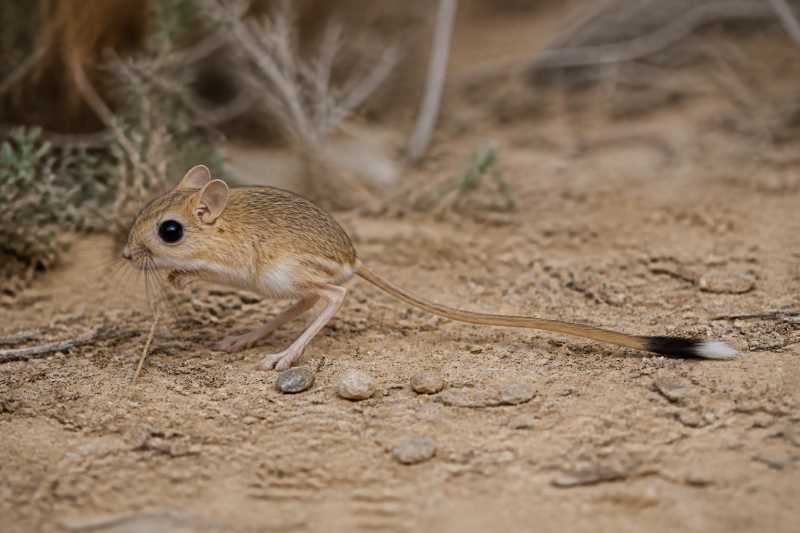
The African Hammada Jerboa is a small, nocturnal rodent characterized by its long hind legs and short forelimbs, a physical adaptation that aids in its distinctive hopping locomotion. Adult jerboas typically measure between 10 to 15 centimeters in body length, with a tail that can extend up to twice the length of their body. This tail is not only used for balance but also serves as a counterweight that aids in their agile movements.
The fur of the African Hammada Jerboa is usually pale sandy-brown or grey, which provides excellent camouflage against the desert sands. The underbelly is lighter, often white or cream-colored. One of the species’ most distinguishing features is its large ears, which enhance their auditory capacity, crucial for detecting predators in the vast desert landscapes. Their eyes are large and well-adapted to low-light conditions, facilitating their nocturnal lifestyle.
Range and Habitat
The African Hammada Jerboa is endemic to the arid and semi-arid regions of North Africa, including countries such as Algeria, Libya, and Egypt. They are primarily found in desert environments, particularly those characterized by sandy dunes and sparse vegetation. The species is named after the Hammada regions, which are rocky plateaus with minimal vegetation, providing a challenging habitat that the jerboa has adeptly adapted to.
These jerboas prefer habitats with loose, sandy soil, which facilitates their burrowing behavior. They construct complex burrow systems that serve as protection against the extreme temperatures of the desert and as a refuge from predators. These burrows also play a crucial role in their survival, as they help maintain a stable microenvironment with more consistent humidity and temperature levels.
Behavior and Diet
African Hammada Jerboas are primarily nocturnal, venturing out of their burrows under the cover of darkness to forage for food. Their diet consists mainly of seeds, desert plants, and insects. The jerboa’s ability to derive moisture from their food is a critical adaptation that allows them to survive in arid environments where water is scarce.
These animals are solitary creatures, with each jerboa maintaining its territory. They communicate primarily through vocalizations and foot drumming, a behavior thought to be used for both communication and predator deterrence. The jerboa’s long hind legs are not only adapted for jumping but also enable them to cover large distances swiftly, evading predators with their erratic, zigzag hopping patterns.
Identification Tips
Identifying the African Hammada Jerboa in the field can be challenging due to their nocturnal nature and excellent camouflage. However, there are specific cues that can aid in their identification:
- Long Hind Legs: Their disproportionately long hind legs are a distinctive feature, setting them apart from other small desert mammals.
- Tail Length: Their tails are long and often have a tufted black and white tip, which is visible even in low light conditions.
- Ear Size: The jerboa’s large ears are another distinguishing characteristic, providing a clear identification marker.
- Locomotion: Observing their unique hopping movement can also help in identification, as it is unlike the movement of most other small mammals.
- Footprints: Their footprints, often found near burrow entrances, are small with distinct impressions from the long hind feet.
Conservation Status
As of the latest assessments, the African Hammada Jerboa is not listed as endangered or threatened. However, like many desert species, they face threats from habitat destruction and climate change. Human activities, such as agriculture and urbanization, pose risks to their natural habitats. Additionally, climate change can alter the delicate balance of desert ecosystems, affecting food availability and habitat stability.
Conservation efforts for the African Hammada Jerboa focus primarily on habitat preservation. Protecting large areas of desert and semi-desert environments ensures that these unique mammals have the space and resources needed to thrive. International cooperation and local conservation initiatives are crucial in maintaining the habitats that sustain this and other desert species.
Frequently Asked Questions
1. What adaptations help the African Hammada Jerboa survive in the desert? The African Hammada Jerboa is adapted to desert life through its ability to conserve water, derive moisture from food, and its nocturnal lifestyle. Its long hind legs and agile movement help it escape predators, while its burrowing behavior provides refuge from extreme temperatures.
2. How does the African Hammada Jerboa communicate? Communication among African Hammada Jerboas is primarily through vocalizations and foot drumming. These methods are used to warn of predators and establish territories. The large ears also play a role in receiving auditory signals.
3. Is the African Hammada Jerboa endangered? Currently, the African Hammada Jerboa is not classified as endangered. However, habitat destruction and climate change pose potential threats that could impact their populations in the future.
4. What is the primary diet of the African Hammada Jerboa? The African Hammada Jerboa primarily feeds on seeds, desert plants, and insects. Their diet is adapted to provide both nutritional needs and moisture, which is vital for survival in arid conditions.
5. Where can the African Hammada Jerboa be found? This species is found in the deserts of North Africa, particularly in regions with loose, sandy soil suitable for burrowing. Countries like Algeria, Libya, and Egypt are home to the African Hammada Jerboa.
Related posts