Wied’s Tyrant-Manakin: A Hidden Jewel of the Brazilian Forests
In the verdant and vibrant ecosystems of Brazil’s Atlantic Forest, a small bird, often overlooked by the casual observer, flits through the underbrush. This bird, the Wied’s Tyrant-Manakin (Neopelma aurifrons), is a unique species that captivates ornithologists and bird enthusiasts alike. Its subtle charm and ecological significance make it a subject worthy of deeper exploration.
Introduction to Wied’s Tyrant-Manakin
The Wied’s Tyrant-Manakin, a member of the family Pipridae, is endemic to Brazil, primarily inhabiting the lowland and montane forests of the southeastern region. Named after Prince Maximilian of Wied-Neuwied, a German explorer and naturalist, the species carries an allure that combines both scientific intrigue and natural beauty.
Physical Description
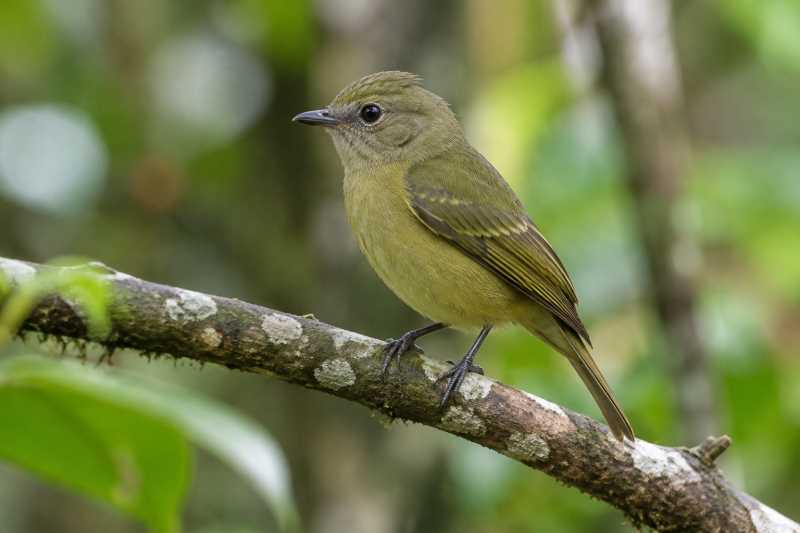
Despite its modest size, measuring about 13 centimeters in length, the Wied’s Tyrant-Manakin boasts a delicate and understated plumage. Its golden-olive crown and back, coupled with a warm yellow belly, provide effective camouflage against the dense foliage of its habitat. The bird’s wings and tail are a muted brown, complementing its overall earthy palette. Such coloration is not just a visual delight but also serves as a critical adaptation for avoiding predators.
Behavior and Ecology
The Wied’s Tyrant-Manakin is a relatively solitary bird, often seen alone or in pairs. It is known for its unobtrusive behavior, quietly flitting from branch to branch in search of insects and fruit, which constitute its primary diet. This diet not only sustains the bird but also plays a vital role in seed dispersal, contributing to the health and regeneration of its forest habitat.
Vocalization is another intriguing aspect of its behavior. While not as vocally ostentatious as other manakins, the Wied’s Tyrant-Manakin communicates through a series of soft, melodious calls that are often described as soothing and pleasant. These calls are essential for maintaining territory and facilitating mating rituals.
Breeding and Reproduction
The breeding season of Wied’s Tyrant-Manakin typically coincides with the rainy season, a time when food resources are abundant. Males engage in modest courtship displays, which are less elaborate than those of their more flamboyant manakin relatives. Nesting occurs in the dense undergrowth, with the female constructing a small cup-shaped nest where she lays two eggs.
Parental care is provided solely by the female, who incubates the eggs and tends to the chicks after hatching. This single-parent strategy, although demanding, is effective for the species, ensuring the continuity of its lineage.
Conservation Status
Currently, the Wied’s Tyrant-Manakin is classified as Near Threatened according to the IUCN Red List. The primary threat facing the species is habitat loss due to deforestation for agriculture and urban development. The Atlantic Forest, once sprawling and immensely biodiverse, has been significantly reduced, with only a fraction of its original area remaining intact.
Conservation efforts are crucial to safeguarding the future of this species. Protected areas and reforestation projects offer hope, but continued vigilance and sustainable development practices are essential to ensure that the habitats of the Wied’s Tyrant-Manakin and countless other species are preserved for future generations.
The Role of Wied’s Tyrant-Manakin in Ecosystems
Beyond its intrinsic beauty, the Wied’s Tyrant-Manakin plays a pivotal role in its ecosystem. As a frugivore, it aids in seed dispersal, facilitating the growth of new plants and the maintenance of forest biodiversity. Moreover, its presence is an indicator of forest health, as it thrives only in well-preserved environments.
The bird’s interactions with other species, including insects and plants, highlight the interconnectedness of forest life. Understanding these relationships is critical for conservationists working to maintain ecosystem balance in the face of environmental changes.
Conclusion
In the shadowy groves of Brazil’s Atlantic Forest, the Wied’s Tyrant-Manakin stands as a testament to the wonders of avian life. Its subtle beauty and ecological importance remind us of the complex interplay between species and their habitats. Protecting this small, unassuming bird is not merely an act of conservation; it is a commitment to preserving the intricate web of life that sustains our planet.
As we continue to study and appreciate the Wied’s Tyrant-Manakin, we are reminded of the responsibility we bear in safeguarding the natural world. Through concerted conservation efforts and a deeper understanding of ecological dynamics, we can ensure that this hidden jewel of the Brazilian forests continues to thrive.
Related posts