Introduction
The Black-fronted Piping Guan, scientifically known as Pipile jacutinga, is a striking bird species endemic to the Atlantic Forest of South America. This bird is a member of the Cracidae family, which includes curassows, guans, and chachalacas. The Black-fronted Piping Guan is particularly noteworthy due to its vibrant appearance and its precarious conservation status. As a critically endangered species, it serves as a flagship for conservation efforts aimed at preserving the rapidly diminishing Atlantic Forest biome.
Physical Description
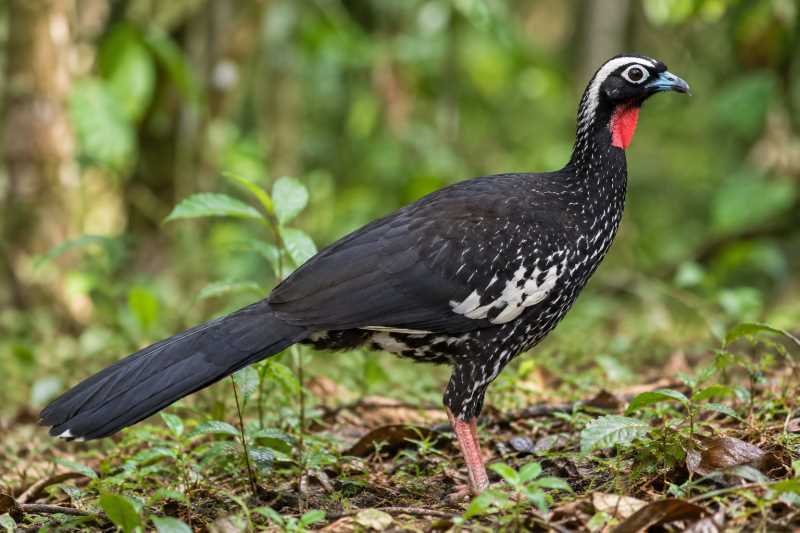
The Black-fronted Piping Guan is a visually captivating bird, sporting a predominantly black plumage with a distinctive white wing patch that becomes visible during flight. Its common name is derived from the black feathers on the forehead, contrasting with the rest of its plumage. Notably, this bird features a bright blue wattle and a red throat, which contribute to its distinctive and colorful appearance. Adult guans typically weigh between 1.2 to 1.5 kilograms and have an average length of about 65 to 75 centimeters.
Habitat and Range
This bird is endemic to the Atlantic Forest, a region that spans parts of Brazil, Argentina, and Paraguay. Historically, the Black-fronted Piping Guan inhabited a wide range of forested areas within this biome, from lowland tropical forests to montane regions. However, due to extensive habitat destruction, its range has dramatically decreased. The Atlantic Forest has been reduced to approximately 12% of its original size, primarily due to agricultural expansion, urban development, and deforestation.
Behavior and Diet
The Black-fronted Piping Guan is known for its arboreal lifestyle, spending most of its time in the forest canopy. It is primarily frugivorous, feeding on a variety of fruits, seeds, and occasionally small invertebrates. The bird plays a crucial ecological role as a seed disperser, contributing to the maintenance and regeneration of its forest habitat. The guan’s diet is highly dependent on the seasonal availability of fruit, and it often travels in small flocks to exploit fruiting trees.
Reproduction
Breeding typically occurs during the rainy season when food resources are abundant. The Black-fronted Piping Guan builds its nest high in the trees, using sticks and leaves to create a platform. Females typically lay two to three eggs, which are incubated for about 25 to 28 days. Both parents participate in nurturing the chicks, although the female plays a more prominent role in incubation.
Conservation Status
The International Union for Conservation of Nature (IUCN) has classified the Black-fronted Piping Guan as critically endangered. The primary threats to its survival include habitat loss, hunting, and the illegal pet trade. The bird’s attractive appearance and the demand for exotic pets have led to its illegal capture and trade, further exacerbating its decline.
Conservation Efforts
Several conservation organizations and governments have recognized the urgent need to protect the Black-fronted Piping Guan. Efforts are underway to conserve and restore the Atlantic Forest through reforestation and the establishment of protected areas. Initiatives such as the creation of ecological corridors aim to connect fragmented habitats, allowing for greater genetic diversity and population resilience.
Prominent conservation programs involve local communities in sustainable land-use practices, promoting eco-tourism, and raising awareness about the importance of preserving this unique bird and its habitat. Moreover, breeding programs in captivity are being developed to supplement wild populations, with the goal of future reintroductions.
Conclusion
The plight of the Black-fronted Piping Guan underscores the broader environmental challenges faced by the Atlantic Forest. As a keystone species, its conservation is integral to maintaining the ecological integrity of this biodiverse region. Continued efforts to protect and restore its habitat, alongside stringent measures to curb illegal hunting and trade, are vital for ensuring the survival of Pipile jacutinga. By safeguarding this remarkable species, we contribute to the preservation of an entire ecosystem, highlighting the interconnectedness of biodiversity and the need for comprehensive conservation strategies.
Related posts