The Stolid Flycatcher: An Enigmatic Songbird of the Caribbean
The Stolid Flycatcher (Myiarchus stolidus), a bird species belonging to the Tyrannidae family, is a captivating avian native to the Caribbean region. Known for its distinctive song and striking appearance, the Stolid Flycatcher is primarily found in Jamaica and Hispaniola, which includes the Dominican Republic and Haiti. This article delves into the fascinating world of the Stolid Flycatcher, exploring its habitat, behavior, physical characteristics, and conservation status.
Habitat and Distribution
The Stolid Flycatcher is endemic to the Caribbean, with its primary habitats being the subtropical or tropical dry forests, moist lowland forests, and montane forests. These birds are highly adaptable and can also be found in secondary growth areas and plantations, demonstrating a remarkable ability to thrive in diverse environments.
The species has a relatively restricted range, being predominantly found in Jamaica and Hispaniola. In these regions, they occupy a variety of forested landscapes, from coastal woodlands to mountainous regions, showcasing their adaptability to different ecological zones. Their presence in these environments is crucial, as they contribute to the ecological balance by controlling insect populations.
Physical Characteristics
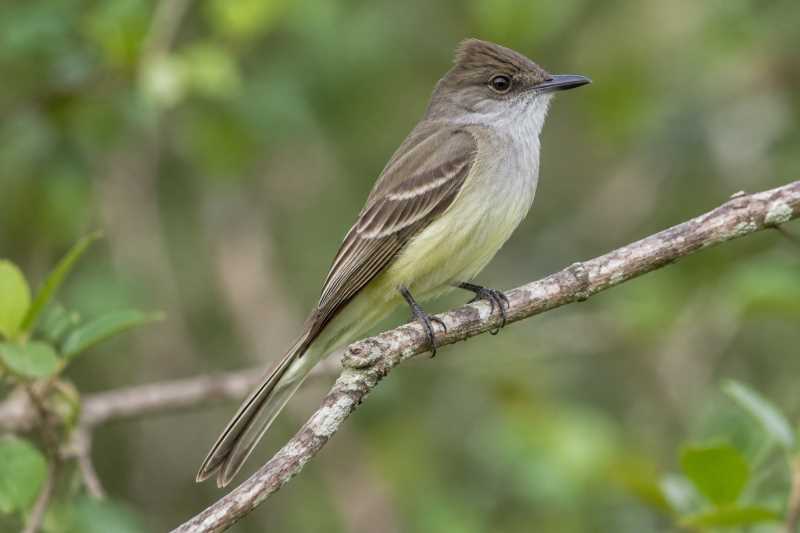
The Stolid Flycatcher is a medium-sized bird, measuring approximately 18-20 centimeters in length. One of the most distinctive features of this species is its crest, which can be raised or lowered depending on its mood or activity. The plumage of the Stolid Flycatcher is primarily olive-brown on the upperparts, with a contrasting yellowish underbelly that makes it easily identifiable among other flycatchers.
The wings of the Stolid Flycatcher are adorned with two prominent wing bars, adding to its visual appeal. Its bill is robust and slightly hooked at the tip, a characteristic feature of the Myiarchus genus, aiding in its insectivorous diet. The tail feathers are broad and rounded, providing agility and control during flight.
Behavior and Diet
The Stolid Flycatcher is known for its solitary and territorial nature, often seen perched conspicuously on branches as it surveys its surroundings. This bird is a quintessential flycatcher, capturing insects in mid-air with remarkable precision. Its diet primarily consists of insects such as beetles, flies, and caterpillars, although it may occasionally consume small fruits and berries.
A fascinating aspect of the Stolid Flycatcher’s behavior is its vocalization. The species is known for its rich and melodious song, which plays a crucial role in territory establishment and mate attraction. The calls are often described as a series of clear, whistled notes, providing a soundtrack to the lush Caribbean forests they inhabit.
Breeding and Reproduction
Breeding for the Stolid Flycatcher typically occurs from March to July, coinciding with the region’s wet season. During this time, the availability of food resources is abundant, supporting the energy demands of raising young. The species is cavity-nesting, utilizing natural tree cavities or abandoned woodpecker holes for laying eggs.
The female Stolid Flycatcher is primarily responsible for building the nest, lining it with soft materials such as feathers, plant fibers, and hair. Clutch size generally ranges from two to four eggs, with the female incubating the eggs for approximately two weeks. Both parents participate in feeding and caring for the nestlings, which fledge about two weeks after hatching.
Conservation Status and Challenges
The Stolid Flycatcher is currently classified as a species of Least Concern by the International Union for Conservation of Nature (IUCN), indicating that it faces no immediate threat of extinction. However, like many bird species, it is not immune to habitat destruction and environmental changes.
Deforestation and land conversion for agriculture pose significant threats to the natural habitats of the Stolid Flycatcher. Conservation efforts are essential to ensure that these birds continue to thrive in their native regions. Protecting forested areas and promoting sustainable land-use practices are critical measures to safeguard the future of the Stolid Flycatcher.
The Importance of Conservation
Despite its current classification, the Stolid Flycatcher serves as an important indicator of ecosystem health. As an insectivore, it plays a vital role in controlling insect populations, thereby maintaining the ecological balance. Healthy populations of Stolid Flycatchers signify robust forest ecosystems, underscoring the need for continued conservation efforts.
Birdwatchers and ornithologists alike cherish the Stolid Flycatcher for its unique characteristics and melodious song. Protecting this species not only preserves the biodiversity of the Caribbean but also enriches the natural heritage of the region.
In conclusion, the Stolid Flycatcher is a remarkable bird that embodies the rich biodiversity of the Caribbean. Its adaptability, striking appearance, and enchanting song make it a true gem of the avian world. As we continue to explore and appreciate the wonders of nature, let us also commit to preserving the habitats and species that make our world so vibrant and diverse.
Related posts