Exploring the Fascinating World of the Black-chinned Yuhina: A Jewel of the Himalayas
The Black-chinned Yuhina (Yuhina nigrimenta), a small, charismatic bird, has captivated ornithologists and bird enthusiasts alike with its unique appearance and intriguing behaviors. Native to the subtropical and tropical montane forests of the eastern Himalayas, this species is a member of the Zosteropidae family, which includes white-eyes and their allies. In this article, we delve into the ecology, behavior, and conservation of the Black-chinned Yuhina, highlighting its significance in the avian world.
Description and Identification
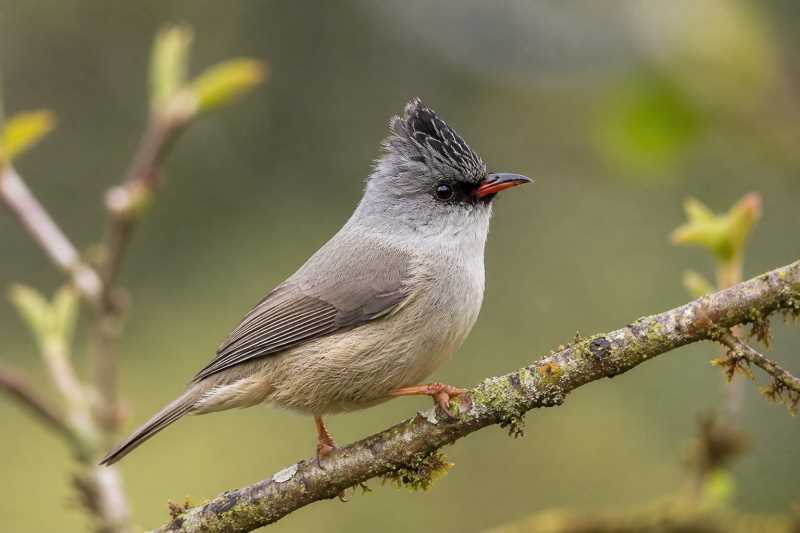
The Black-chinned Yuhina is a medium-sized songbird, measuring approximately 11 to 13 centimeters in length. Its most distinguishing feature is its striking black chin, which contrasts sharply with its soft brown and gray plumage. The bird’s crown is adorned with a conspicuous tufted crest, giving it a distinctive, regal appearance. Its underparts are a pale, creamy white, and the wings and tail exhibit subtle rufous tones. The eyes are bright and alert, surrounded by a faint white eye-ring that enhances its expressive features.
Both males and females share similar plumage, though subtle sexual dimorphism can be observed, with males generally exhibiting slightly more pronounced coloration. The Black-chinned Yuhina’s vocalizations are a series of melodious whistles and chirps, often heard echoing through the forest canopy.
Habitat and Distribution
The Black-chinned Yuhina is primarily found in the lush, evergreen forests of the eastern Himalayas, spanning across parts of India, Bhutan, Nepal, and Myanmar. It thrives at altitudes ranging from 900 to 3,600 meters, favoring dense undergrowth and bamboo groves. These birds are highly adaptable and can also be found in secondary growth and disturbed habitats, reflecting their resilience to some degree of habitat alteration.
In these montane environments, the Black-chinned Yuhina often forms mixed-species foraging flocks, associating with other yuhinas, warblers, and babblers. This social behavior not only enhances their foraging efficiency but also provides added protection against predators.
Behavior and Ecology
The Black-chinned Yuhina is a highly social and gregarious species, often observed in small groups that display remarkable coordination and communication. These birds are active foragers, flitting through foliage in search of insects, spiders, and small invertebrates. They also supplement their diet with nectar and fruits, playing a role in pollination and seed dispersal.
During the breeding season, which typically occurs from April to June, these birds become particularly vocal and territorial. Courtship displays include elaborate aerial maneuvers and mutual preening, strengthening pair bonds. The species constructs cup-shaped nests in thick vegetation, where the female lays a clutch of 2 to 4 eggs. Both parents participate in incubation and chick-rearing, showcasing strong parental investment.
Conservation Status and Threats
Currently, the Black-chinned Yuhina is classified as a species of Least Concern by the International Union for Conservation of Nature (IUCN). However, its population is suspected to be declining due to habitat loss and degradation. The expansion of agriculture, logging, and infrastructure development in the Himalayan region poses significant threats to their forest habitats.
Conservation efforts for the Black-chinned Yuhina focus on preserving its natural habitat through the establishment of protected areas and promoting sustainable land-use practices. Additionally, further research is needed to monitor population trends and understand the ecological requirements of this species.
The Role of Citizen Science and Birdwatching
Citizen science and birdwatching play crucial roles in the conservation of the Black-chinned Yuhina. Enthusiasts and researchers contribute valuable data on distribution, behavior, and population dynamics, informing conservation strategies. Platforms like eBird enable birdwatchers to record sightings, facilitating the tracking of this species across its range.
Promoting ecotourism in the Himalayan region can also contribute positively to conservation efforts. By raising awareness about the unique biodiversity of these forests and generating economic incentives for local communities, ecotourism can help preserve the habitats that the Black-chinned Yuhina and other species depend on.
Conclusion
The Black-chinned Yuhina is a testament to the rich biodiversity of the Himalayan forests. Its captivating appearance and social behavior make it a favorite among birdwatchers and researchers. While currently not under immediate threat, proactive conservation measures are essential to ensure the long-term survival of this species. By fostering a deeper understanding of its ecological role and promoting sustainable practices, we can safeguard the future of the Black-chinned Yuhina and its enchanting montane home.
In conclusion, the Black-chinned Yuhina is more than just a beautiful bird; it is a vital component of its ecosystem, contributing to the intricate tapestry of life in the Himalayas. As we strive to protect our planet’s natural treasures, the story of the Black-chinned Yuhina serves as a reminder of the wonders of avian diversity and the importance of conservation.
Related posts