Swainson’s Thrush: A Melodious Migrant of North America
Swainson’s Thrush (Catharus ustulatus) is a small, elusive bird renowned for its enchanting song and remarkable migration patterns. This thrush species, named in honor of the British ornithologist William Swainson, is a member of the Turdidae family, encompassing thrushes and their relatives. Known for its adaptability and resilience, Swainson’s Thrush captivates bird enthusiasts and scientists alike.
Physical Characteristics
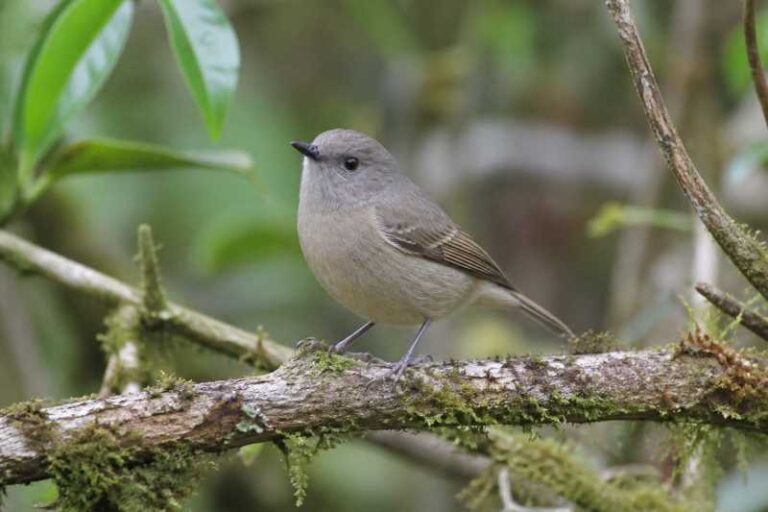
Swainson’s Thrush is a medium-sized thrush, measuring around 6.3 to 7.5 inches in length with a wingspan of approximately 11.4 to 12.6 inches. The bird is characterized by its olive-brown upperparts, buffy eye-rings, and a distinct pale underbelly speckled with dark spots. This plumage provides excellent camouflage in its natural habitat, allowing it to blend seamlessly into the dense foliage of forests.
Habitat and Distribution
Swainson’s Thrush breeds in boreal and montane forests across North America, from Alaska and Canada down to the northern United States. Preferring moist, coniferous woodlands, these birds are also found in mixed forests and along riverbanks rich with dense understory. During the non-breeding season, Swainson’s Thrush embarks on a long migration to Central and South America, traveling as far south as Argentina. This extensive migratory pattern makes it one of the longest migratory routes among thrush species.
Migratory Patterns
The migration of Swainson’s Thrush is a subject of considerable fascination. Each fall, these birds leave their breeding grounds and undertake an arduous journey across the Americas. They are nocturnal migrants, navigating by the stars and Earth’s magnetic field. Research suggests that their migratory route follows a clockwise loop, where they take a more inland route southward and a coastal route back north in the spring. This loop migration is believed to optimize energy efficiency and reduce risks associated with adverse weather conditions and predation.
Diet and Feeding Behavior
Swainson’s Thrush primarily feeds on insects and other invertebrates during the breeding season, which provides the protein necessary for raising young. Its diet shifts to include a higher proportion of fruits and berries during migration and in its wintering grounds. This dietary flexibility is crucial for its survival, allowing it to exploit a variety of food sources throughout the year.
Breeding and Nesting
The breeding season for Swainson’s Thrush typically spans from late May to early August. They build their nests in low shrubs or trees, usually near water sources. The female selects the nest site and constructs the nest using twigs, grasses, and moss. She lays a clutch of about 3 to 4 pale blue eggs and incubates them for 11 to 14 days. Once hatched, both parents are involved in feeding the chicks, which fledge about 12 to 15 days after hatching.
Vocalizations
One of the most distinctive features of Swainson’s Thrush is its song—a fluty, ascending spiral of notes that resonates through the forest canopy. This song is not only a means of attracting mates but also serves as a territorial call to ward off competitors. The complexity and variation in their song can provide insights into the health of bird populations and the environment.
Conservation Status
Currently, Swainson’s Thrush is listed as a species of Least Concern by the International Union for Conservation of Nature (IUCN). However, it faces several threats, including habitat loss due to logging, urban development, and climate change. Conservation efforts focus on preserving critical breeding and wintering habitats, as well as understanding the impacts of climate change on their migratory patterns.
Conclusion
Swainson’s Thrush is a remarkable species that continues to intrigue ornithologists and bird watchers with its melodious song and extraordinary migratory journeys. As a sentinel species, it provides valuable insights into the health of forest ecosystems across its range. Conservation efforts will be vital to ensure that future generations can continue to enjoy the beauty and song of this captivating bird.
Related posts