
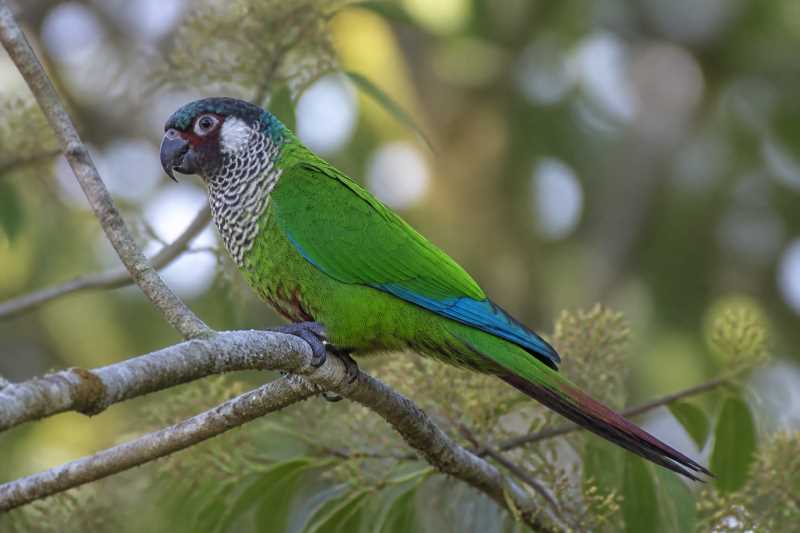
The Painted Parakeet: A Comprehensive Overview
Bird enthusiasts and ornithologists worldwide have long admired the vibrant charm of the Painted Parakeet (Pyrrhura picta), a member of the Psittacidae family. Known for its striking colors and social nature, this parakeet is a true gem of the avian world. This article takes an in-depth look at the Painted Parakeet, exploring its taxonomy, habitat, behavior, and conservation status, among other aspects.
Taxonomy and Classification
The Painted Parakeet belongs to the genus Pyrrhura, which is part of the larger Psittacidae family, encompassing all parrots. The scientific name, Pyrrhura picta, reflects the bird’s colorful appearance, with ‘Pyrrhura’ derived from Greek words meaning ‘flame-colored tail’ and ‘picta’ meaning ‘painted’ in Latin.
This species is divided into several subspecies, with the primary ones being:
- P. p. picta – The nominate subspecies.
- P. p. emma – Distinguished by subtle differences in plumage.
- P. p. caeruleiceps – Known for its unique head coloration.
Each subspecies is adapted to slightly different ecological niches, primarily found in varying regions within the Painted Parakeet’s range.
Distribution and Habitat
The Painted Parakeet is native to the tropical and subtropical regions of South America, particularly in countries like Venezuela, Colombia, northern Brazil, and Guyana. Its preferred habitats include humid lowland forests, montane forests, and occasionally, forest edges. These environments provide ample food sources and nesting sites, crucial for their survival.
In the wild, Painted Parakeets are typically found at elevations ranging from sea level to about 1,500 meters. However, some populations have been recorded at higher altitudes, depending on the availability of resources. Their adaptability to different forest types has allowed them to maintain stable populations in many areas.
Physical Characteristics
The Painted Parakeet is a medium-sized parrot, measuring about 22 to 25 cm in length. Its plumage is predominantly green, with distinctive red and blue markings on the wings and tail. The face and throat often exhibit a scaly pattern, adding to its unique appearance. The beak is strong and curved, ideal for cracking open seeds and nuts.
Juvenile Painted Parakeets resemble adults but may have duller plumage and lack some of the vibrant colors present in mature birds. This coloration helps them blend into their environment, providing some protection from predators.
Behavior and Social Structure
Painted Parakeets are highly social birds, often seen in flocks ranging from a few individuals to several dozen. Their social structure is complex, with strong pair bonds and cooperative behaviors observed within groups. These parakeets communicate through a variety of vocalizations, including squawks and chirps, used to coordinate movements and maintain social bonds.
In addition to vocal communication, Painted Parakeets engage in mutual preening, a behavior that reinforces social bonds and helps maintain plumage health. They are also known for their playful nature, engaging in acrobatic displays and interactive games with conspecifics.
Diet and Foraging
The diet of the Painted Parakeet is diverse, primarily consisting of seeds, fruits, berries, and flowers. They forage in the forest canopy, using their dexterous feet and beak to access food. During the breeding season, their diet may expand to include insects and larvae, providing additional protein for developing chicks.
Painted Parakeets play a vital role in their ecosystem as seed dispersers. By consuming fruits and excreting seeds, they contribute to forest regeneration and the maintenance of plant diversity.
Breeding and Reproduction
Breeding in Painted Parakeets typically occurs during the rainy season when food is abundant. Nests are usually constructed in tree cavities or abandoned woodpecker holes, offering protection from predators and environmental conditions.
A typical clutch consists of 3 to 6 eggs, which are incubated by the female for about 23 to 25 days. Both parents partake in feeding and caring for the chicks, which fledge approximately 7 to 8 weeks after hatching. During this period, parental investment is crucial, as chicks are entirely dependent on adults for nourishment and protection.
Conservation Status and Threats
The Painted Parakeet is currently listed as Least Concern on the IUCN Red List. However, like many avian species, it faces threats from habitat destruction, illegal pet trade, and climate change. Deforestation for agriculture and urban development poses the most significant risk, reducing available habitat and resources.
Conservation efforts are underway in several regions to preserve the Painted Parakeet’s natural habitat. These include establishing protected areas, promoting sustainable land-use practices, and engaging local communities in conservation initiatives.
The Painted Parakeet in Captivity
Due to its vibrant colors and lively personality, the Painted Parakeet is a popular choice in aviculture. Captive breeding programs have been established to meet the demand for these birds while reducing pressure on wild populations.
In captivity, Painted Parakeets require spacious enclosures, a varied diet, and social interaction to thrive. Prospective owners must be aware of the commitment involved in caring for these intelligent and active birds.
Conclusion
The Painted Parakeet is a fascinating species, showcasing the diversity and beauty of the avian world. Understanding its ecology, behavior, and conservation needs is essential for ensuring its long-term survival. Through continued research and conservation efforts, we can help preserve this remarkable bird for future generations to admire and enjoy.
References
- Juniper, T., & Parr, M. (1998). Parrots: A Guide to Parrots of the World. Yale University Press.
- Collar, N. J. (1997). Family Psittacidae (Parrots). In J. del Hoyo, A. Elliott, & J. Sargatal (Eds.), Handbook of the Birds of the World, Vol. 4. Lynx Edicions.
- BirdLife International. (2021). Pyrrhura picta. The IUCN Red List of Threatened Species 2021.
Related posts


