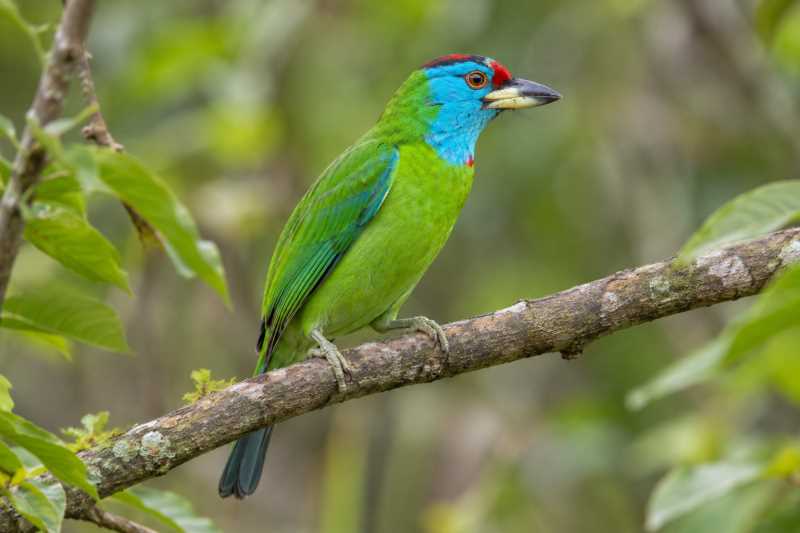
The Blue-eared Barbet (Psilopogon cyanotis) is a strikingly beautiful bird, celebrated for its vivid plumage and melodious calls. Native to the dense tropical forests of Southeast Asia, this species is a member of the Megalaimidae family. Barbets are known for their vibrant colors and distinctive features, and the Blue-eared Barbet is no exception. Its striking appearance, combined with intriguing behavioral traits, makes it a subject of interest for ornithologists and bird enthusiasts alike.
Taxonomy and Distribution
The Blue-eared Barbet belongs to the genus Psilopogon, which comprises several species of Asian barbets. It is primarily found in the subtropical or tropical moist lowland forests and montane forests, inhabiting regions such as India, Sri Lanka, Myanmar, Thailand, Laos, Vietnam, and parts of southern China. These regions provide the lush vegetation and abundant fruit supply that are essential for the bird’s survival.
Physical Characteristics
One of the most captivating aspects of the Blue-eared Barbet is its vibrant plumage. This medium-sized bird, approximately 17-20 cm in length, showcases a rich tapestry of colors. Its most distinctive feature is the blue “ear” patches on either side of its head, which contrast beautifully with the green body. The barbet also has a red forehead and a yellow throat, adding to its colorful appearance. Its stout bill is adapted for its frugivorous diet, capable of handling various fruit sizes.
Behavior and Diet
The Blue-eared Barbet is primarily frugivorous, meaning its diet consists mainly of fruits. It plays a critical role in its ecosystem as a seed disperser, aiding in forest regeneration. Occasionally, it supplements its diet with insects, particularly during the breeding season when its nutritional needs increase.
This bird is known for its territorial nature, often seen alone or in pairs. It communicates with others through a series of calls, which are loud, repetitive, and melodious. These calls serve multiple purposes, from marking territory to attracting mates. The barbet’s song is a familiar sound in its natural habitat, contributing to the rich soundscape of the forest.
Breeding and Nesting
The breeding season of the Blue-eared Barbet typically aligns with the onset of the rainy season, ensuring an abundance of food for the young. The species is a cavity nester, often taking advantage of natural tree holes or excavating its own in dead wood. Both male and female barbets participate in nest building, showcasing a cooperative approach to parenting.
After laying eggs, both parents share the responsibilities of incubation and feeding the chicks. The young barbets fledge after several weeks, during which time they are cared for and fed by the parents. This cooperative breeding strategy helps ensure high survival rates for the offspring.
Conservation Status
Currently, the Blue-eared Barbet is listed as a species of Least Concern by the International Union for Conservation of Nature (IUCN). However, like many forest-dependent species, it faces threats from habitat destruction due to logging, agricultural expansion, and urban development. Conservation efforts focus on preserving its natural habitats and promoting sustainable practices that allow both human and avian populations to thrive.
Importance in Ecosystem
The ecological role of the Blue-eared Barbet extends beyond its visual appeal. As a frugivore, it contributes significantly to seed dispersal, promoting plant diversity and forest health. The bird’s presence is an indicator of a healthy ecosystem, and its vocalizations are integral to the auditory landscape of the forest.
Conclusion
The Blue-eared Barbet is a fascinating species that encapsulates the beauty and complexity of tropical ecosystems. Its vivid colors, distinct calls, and ecological importance make it a valuable subject for study and conservation. Protecting this species and its habitat is crucial, not only for the barbet itself but for the overall health of the biodiverse regions it inhabits.
For bird watchers and nature enthusiasts, the Blue-eared Barbet offers a glimpse into the intricate web of life within Southeast Asia’s forests. By fostering awareness and encouraging conservation efforts, we can help ensure that this vibrant species continues to thrive for generations to come.
Related posts